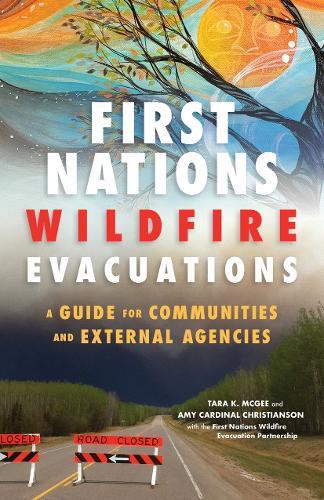
Full Product Details
Author: Tara K. McGee ,
Amy Cardinal Christianson ,
First Nations Wildfire Evacuation Partnership ,
First Nations Wildfire Evacuation Partnership
Publisher: University of British Columbia Press
Imprint: University of British Columbia Press
Weight: 0.230kg
ISBN: 9780774880664
ISBN 10: 077488066
Pages: 172
Publication Date: 03 March 2021
Audience:
Professional and scholarly
,
Professional & Vocational
Format: Paperback
Publisher's Status: Active
Availability: In Print

This item will be ordered in for you from one of our suppliers. Upon receipt, we will promptly dispatch it out to you. For in store availability, please contact us.
Reviews
Combining research and the powerful voices of community members, this book provides a holistic approach to wildfire evacuations. It is an important resource not only for First Nations, but for any community wanting to plan for any kind of emergency evacuation. -Amber MacLean-Hawes, emergency management project manager, Confederacy of Mainland Mi'kmaq We have seen fire evacuations on the news and read reports of confusion, panic, and trauma both during and after these evacuations. McGee, Christianson, and their colleagues enable First Nation communities to tell their stories, while also rigorously analyzing successes, failures, and lessons learned. If future reports show better-run and less stressful evacuations, it may well be because community leaders and emergency managers have read this book. -Stephen Wyatt, Universite de Moncton Combining research and the powerful voices of community members, this book provides a holistic approach to wildfire evacuations. It is an important resource not only for First Nations, but for any community wanting to plan for any kind of emergency evacuation. -- Amber MacLean-Hawes, emergency management project manager, Confederacy of Mainland Mi'kmaq We have seen fire evacuations on the news and read reports of confusion, panic, and trauma both during and after these evacuations. McGee, Christianson, and their colleagues enable First Nation communities to tell their stories, while also rigorously analyzing successes, failures, and lessons learned. If future reports show better-run and less stressful evacuations, it may well be because community leaders and emergency managers have read this book. -- Stephen Wyatt, Universite de Moncton
Combining research and the powerful voices of community members, this book provides a holistic approach to wildfire evacuations. It is an important resource not only for First Nations, but for any community wanting to plan for any kind of emergency evacuation. --Amber MacLean-Hawes, emergency management project manager, Confederacy of Mainland Mi'kmaq We have seen fire evacuations on the news and read reports of confusion, panic, and trauma both during and after these evacuations. McGee, Christianson, and their colleagues enable First Nation communities to tell their stories, while also rigorously analyzing successes, failures, and lessons learned. If future reports show better-run and less stressful evacuations, it may well be because community leaders and emergency managers have read this book. --Stephen Wyatt, Universite de Moncton Combining research and the powerful voices of community members, this book provides a holistic approach to wildfire evacuations. It is an important resource not only for First Nations, but for any community wanting to plan for any kind of emergency evacuation.--Amber MacLean-Hawes, emergency management project manager, Confederacy of Mainland Mi'kmaq We have seen fire evacuations on the news and read reports of confusion, panic, and trauma both during and after these evacuations. McGee, Christianson, and their colleagues enable First Nation communities to tell their stories, while also rigorously analyzing successes, failures, and lessons learned. If future reports show better-run and less stressful evacuations, it may well be because community leaders and emergency managers have read this book.--Stephen Wyatt, Universite de Moncton
First Nations Wildfire Evacuations: A Guide for Communities and External Agencies is a critical step-by-step guide for all parties affected. * Wawa-news *
Author Information
Tara K. McGee is a professor in the Department of Earth and Atmospheric Sciences at the University of Alberta. Her work focuses on the human dimensions of wildfire – including wildfire mitigation and preparedness by homeowners and governments – as well as on how people respond to wildfires, including evacuation decision-making, evacuations, and recovery. Amy Cardinal Christianson is a Métis woman from Treaty 8 territory, currently living in Treaty 6, and a research scientist with the Canadian Forest Service, Natural Resources Canada. Her research explores Indigenous fire stewardship, Indigenous wildland firefighters, wildfire evacuations, and Indigenous research methodology. Amy also co-hosts the Good Fire podcast, which looks at Indigenous fire use around the world. The First Nations Wildfire Evacuation Partnership is made up of representatives from seven First Nations, as well as researchers and agencies involved in providing support during wildfire evacuations. Its aim is to learn about how First Nation peoples and communities have been affected by evacuations and to make recommendations for how to reduce their negative impacts.