Overview
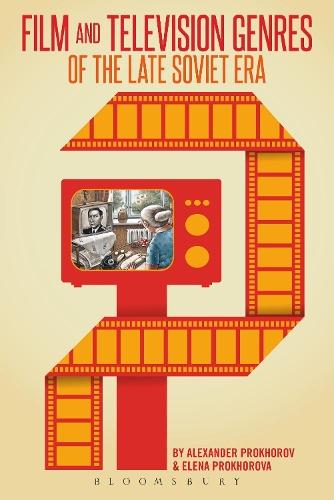
Most histories of Soviet cinema portray the 1970s as a period of stagnation with the gradual decline of the film industry. This book, however, examines Soviet film and television of the era as mature industries articulating diverse cultural values via new genre models. During the 1970s, Soviet cinema and television developed a parallel system of genres where television texts celebrated conservative consensus while films manifested symptoms of ideological and social crises. The book examines the genres of state-sponsored epic films, police procedural, comedy and melodrama, and outlines how television gradually emerged as the major form of Russo-Soviet popular culture. Through close analysis of well-known film classics of the period as well as less familiar films and television series, this groundbreaking work helps to deconstruct the myth of this era as a time of cultural and economic stagnation and also helps us to understand the persistence of this myth in the collective memory of Putin-era Russia. This monograph is the first book-length English-language study of film and television genres of the late Soviet era.
Full Product Details
Author: Alexander Prokhorov (College of William and Mary, USA) ,
Elena Prokhorova (College of William and Mary, USA)
Publisher: Bloomsbury Publishing Plc
Imprint: Bloomsbury Academic
Dimensions:
Width: 15.20cm
, Height: 1.80cm
, Length: 23.20cm
Weight: 0.480kg
ISBN: 9781441177292
ISBN 10: 1441177299
Pages: 240
Publication Date: 01 December 2016
Audience:
College/higher education
,
Undergraduate
,
Postgraduate, Research & Scholarly
Format: Hardback
Publisher's Status: Active
Availability: Manufactured on demand

We will order this item for you from a manufactured on demand supplier.
Language: English
Reviews
Alexander Prokhorov and Elena Prokhorova have written an excellent, highly informative, analytically deep, and lucid book that will impact the field with exponentially increasing force. They have laid the foundation for a new conceptualization of late Soviet cinema, TV, and culture in general. Their definitions and descriptions of late Soviet cinematic and TV genres offer an arsenal of tools that can be applied to other works, spheres, and periods of Russian cinema and culture in general. * The Russian Review * Thorough, engaging, and easy to read, Film and Television Genres of the Late Soviet Era brings a much needed corrective to our notions of late Soviet cinema. The book ably addresses the different genres that characterize Soviet cinematic and televisual production of the Brezhnev era, moving beyond notions of Socialist Realism or stagnation to demonstrate the ways in which Soviet cinema and television adapted Western cinematic genres, while at the same time, developing their own specific cinematic and televisual language. The book's strengths lie in its ability to closely engage with both film and television, drawing connections between them without sacrificing media specificity, as well as to extend the analysis of genre and form to recent film and television productions. Film and Television Genres of the Late Soviet Era is the first book to thoughtfully address the late socialist period and the first to provide a thorough analysis of Soviet genre film. It will become standard reading for anyone interested in Soviet cinema after 1968. * Lilya Kaganovsky, Associate Professor of Slavic, Comparative Literature, and Cinema & Media Studies, University of Illinois, Urbana-Champaign, USA * If you want to understand a particular cultural moment after World War II, you have to know the television that people were watching (or not watching). If you want to understand late Soviet and post-Soviet television, you have to read the Prokhorovs. * Eliot Borenstein, Professor of Russian & Slavic Studies and Provostial Fellow, New York University, USA * A thorough, insightful, and groundbreaking analysis of late Soviet genres in both film and television that provides an historical overview of the topic (and its theoretical underpinnings) as well as discerning discussions of such genres as the prestige film, the police procedural, the comedy, and the melodrama. * Lucy Fischer, Distinguished Professor of Film and English, University of Pittsburgh, USA *
Thorough, engaging, and easy to read, Film and Television Genres of the Late Soviet Era brings a much needed corrective to our notions of late Soviet cinema. The book ably addresses the different genres that characterize Soviet cinematic and televisual production of the Brezhnev era, moving beyond notions of Socialist Realism or stagnation to demonstrate the ways in which Soviet cinema and television adapted Western cinematic genres, while at the same time, developing their own specific cinematic and televisual language. The book's strengths lie in its ability to closely engage with both film and television, drawing connections between them without sacrificing media specificity, as well as to extend the analysis of genre and form to recent film and television productions. Film and Television Genres of the Late Soviet Era is the first book to thoughtfully address the late socialist period and the first to provide a thorough analysis of Soviet genre film. It will become standard reading for anyone interested in Soviet cinema after 1968. Lilya Kaganovsky, Associate Professor of Slavic, Comparative Literature, and Cinema & Media Studies, University of Illinois, Urbana-Champaign, USA If you want to understand a particular cultural moment after World War II, you have to know the television that people were watching (or not watching). If you want to understand late Soviet and post-Soviet television, you have to read the Prokhorovs. Eliot Borenstein, Professor of Russian & Slavic Studies and Provostial Fellow, New York University, USA A thorough, insightful, and groundbreaking analysis of late Soviet genres in both film and television that provides an historical overview of the topic (and its theoretical underpinnings) as well as discerning discussions of such genres as the prestige film, the police procedural, the comedy, and the melodrama. Lucy Fischer, Distinguished Professor of Film and English, University of Pittsburgh, USA
Author Information
Alexander Prokhorov is Associate Professor of Russian and Film Studies at the College of William and Mary, USA. He is the author of Inherited Discourse: Paradigms of Stalinist Culture in Literature and Cinema of the Thaw (2007). Elena Prokhorova is Associate Professor of Russian and Film Studies at the College of William and Mary, USA. Her articles have appeared in Slavic Review, Slavic and East European Journal, Kinokultura, and edited volumes.