Overview
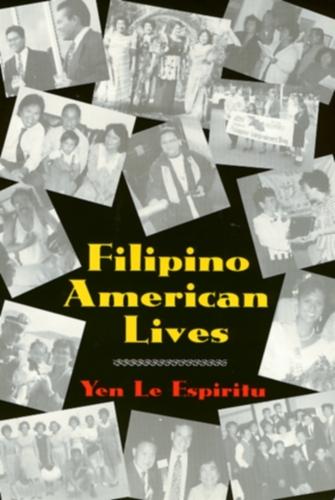
Filipino Americans are now the second largest group of Asian Americans as well as the second largest immigrant group in the United States. As reflected in this collection, their lives represent the diversity of the immigrant experience and their narratives are a way to understand ethnic identity and Filipino American history. Men and women, old and young, middle and working class, first and second generation, all openly discuss their changing sense of identity, the effects of generational and cultural differences on their families, and the role of community involvement in their lives. Pre- and post-1965 immigrants share their experiences, from the working students who came before WWII, to the manongs in the field, to the stewards and officers in the U.S. Navy, to the ""brain drain"" professionals, to the Filipinos born and raised in the United States. As Yen Le Espiritu writes in the Introduction, ""each of the narratives reveals ways in which Filipino American identity has been and continues to be shaped by a colonial history and a white-dominated culture.It is through recognizing how profoundly race has affected their lives that Filipino Americans forge their ethnic identities identities that challenge stereotypes and undermine practices of cultural domination. "" Author note: Yen Le Espiritu is Associate Professor in the Department of Ethnic Studies at the University of California, San Diego, and the author of Asian American Panethnicity: Bridging Institutions and Identities (Temple).
Full Product Details
Author: Yen Espiritu
Publisher: Temple University Press,U.S.
Imprint: Temple University Press,U.S.
Dimensions:
Width: 15.20cm
, Height: 1.50cm
, Length: 22.90cm
Weight: 0.363kg
ISBN: 9781566393171
ISBN 10: 1566393175
Pages: 232
Publication Date: 23 March 1995
Audience:
Professional and scholarly
,
Professional & Vocational
Format: Paperback
Publisher's Status: Active
Availability: Awaiting stock

The supplier is currently out of stock of this item. It will be ordered for you and placed on backorder. Once it does come back in stock, we will ship it out for you.
Reviews
...a useful means of understanding ethnic identity and Filipino American history. --The Diversity Factor Filipino American Lives offers a collection of 13 life stories as told by the people who lived them... [F]rom these disparate backgrounds, a Filipino American identity emerges and Espiritu does an excellent job of letting the reader see its complexity. --Pacific Reader
""...a useful means of understanding ethnic identity and Filipino American history."" --The Diversity Factor ""Filipino American Lives offers a collection of 13 life stories as told by the people who lived them... [F]rom these disparate backgrounds, a Filipino American identity emerges and Espiritu does an excellent job of letting the reader see its complexity."" --Pacific Reader
...a useful means of understanding ethnic identity and Filipino American history. -The Diversity Factor Filipino American Lives offers a collection of 13 life stories as told by the people who lived them... [F]rom these disparate backgrounds, a Filipino American identity emerges and Espiritu does an excellent job of letting the reader see its complexity. -Pacific Reader
Author Information
Yen Le Espiritu is Associate Professor in the Department of Ethnic Studies at the University of California, San Diego, and the author of Asian American Panethnicity: Bridging Institutions and Identities (Temple).