|
|
|||
|
||||
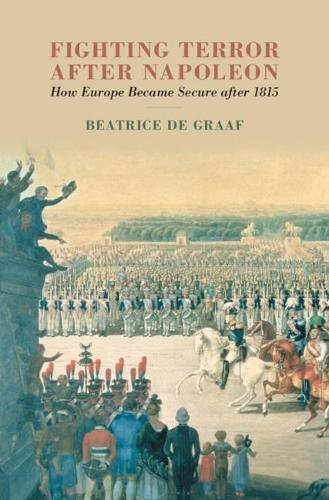
OverviewFull Product DetailsAuthor: Beatrice de Graaf (Universiteit Utrecht, The Netherlands)Publisher: Cambridge University Press Imprint: Cambridge University Press Dimensions: Width: 15.80cm , Height: 2.90cm , Length: 23.50cm Weight: 0.960kg ISBN: 9781108842068ISBN 10: 1108842062 Pages: 518 Publication Date: 01 October 2020 Audience: Professional and scholarly , Professional & Vocational Format: Hardback Publisher's Status: Active Availability: Manufactured on demand We will order this item for you from a manufactured on demand supplier. Table of ContentsPrologue, 1. Introduction: Napoleon's frustration; 2. Providence in Paris; 3. Balancing in a climate of distress; 4. 'A moderate occupation'; 5. 'Fausses nouvelles' and 'Black lists': the Allied struggle against 'armed Jacobinism'; 6. Fighting 'terroristes' together: towards a 'European police directorate'?; 7. The price of security; 8. Fortress Europe: constructing the 'Wellington barrier'; 9. Beyond Europe; 10. Conclusion; Bibliography.Reviews'Beatrice de Graaf provides a deep and brilliantly original history of the idea of Europe, not as an imagined essence, but as a dynamic co-operative platform, a trans-national way of legitimating authority and action. Compellingly argued, elegantly written and rich in arresting episodes, Fighting Terror after Napoleon is a stimulating and provocative re-reading of early nineteenth-century Europe.' Sir Christopher Clark, author of The Sleepwalkers: How Europe Went to War in 1914 'International history at its best. Analysing the Vienna system after 1815 as a security culture, the book not only unfolds a stimulating new view on post-Napoleonic Europe, but also demonstrates the enormous potential of historical security research.' Eckart Conze, co-editor of Nuclear Threats, Nuclear Fear, and the Cold War of the 1980s 'A celebrity scholar of terrorism in the Netherlands, the indomitable Beatrice de Graaf now delivers us a new history of terror and security. Fighting Terror after Napoleon makes the nineteenth century matter again, as a way of understanding our present, not only the international order we are on the verge of losing, but its wildest realistic ambitions.' Glenda Sluga, author of Internationalism in the Age of Nationalism 'An absorbing and insightful account of the Allied occupation of France after Waterloo that shows how its mechanisms served as the keystone for the broader efforts to maintain peace and security after the French Revolution and Napoleon, across Europe and beyond.' Brian Vick, author of The Congress of Vienna: Power and Politics after Napoleon Author InformationBeatrice de Graaf is Distinguished Professor and holds the Chair of History of International Relations at Utrecht University. She was awarded the Stevin Prize in 2018, the highest distinction in Dutch academia. Tegen de Terreur, the Dutch version of this book, was shortlisted for the Libris Prize. Tab Content 6Author Website:Countries AvailableAll regions |
||||