Overview
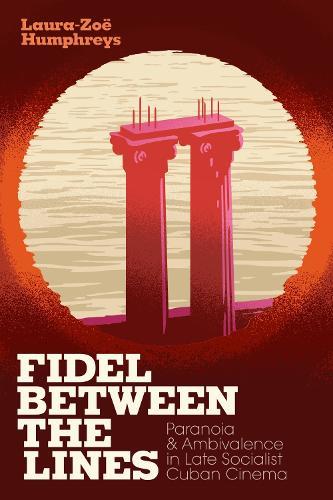
In Fidel between the Lines Laura-Zoe Humphreys traces the changing dynamics of criticism and censorship in late socialist Cuba through a focus on cinema. Following the collapse of the Soviet Union, the Cuban state strategically relaxed censorship, attempting to contain dissent by giving it an outlet in the arts. Along with this shift, foreign funding and digital technologies gave filmmakers more freedom to criticize the state than ever before, yet these openings also exacerbated the political paranoia that has long shaped the Cuban public sphere. Drawing on ethnographic fieldwork, textual analysis, and archival research, Humphreys shows how Cuban filmmakers have historically turned to allegory to communicate an ambivalent relationship to the Revolution, and how such efforts came up against new forms of suspicion in the 1990s and the twenty-first century. Offering insights that extend beyond Cuba, Humphreys reveals what happens to public debate when freedom of expression can no longer be distinguished from complicity while demonstrating the ways in which combining anthropology with film studies can shed light on cinema's broader social and political import.
Full Product Details
Author: Laura-Zoë Humphreys
Publisher: Duke University Press
Imprint: Duke University Press
Weight: 0.431kg
ISBN: 9781478006244
ISBN 10: 1478006242
Pages: 304
Publication Date: 25 October 2019
Audience:
Professional and scholarly
,
Professional & Vocational
Format: Paperback
Publisher's Status: Active
Availability: In Print

This item will be ordered in for you from one of our suppliers. Upon receipt, we will promptly dispatch it out to you. For in store availability, please contact us.
Reviews
By complicating notions of censorship, criticism, and participatory politics in a repressive nation-state such as Cuba, Laura-Zoe Humphreys challenges prevailing interpretations of Cuban films as either supporting or criticizing the Revolution and its leader or as simply negotiating Cuba's political crisis. Drawing on personal interviews with directors and audiences, and textual analysis of films, articles, and reviews, Humphreys shows how allegorical filmmaking and spectators' 'reading between the lines' operate through political paranoia where spectators impose a political meaning on cinematic texts forcing filmmakers to defend their artistic creations. -- Yeidy M. Rivero, author of * Broadcasting Modernity: Cuban Commercial Television, 1950-1960 * Based on many years of fieldwork, this book makes an important contribution to our understanding of Cuban cinema and its cultural politics. Laura-Zoe Humphreys addresses canonical texts, both artistic and political, within the context of some of the island's most important cultural and political developments. This impressive accomplishment is both timely and extremely useful to the understanding of contemporary Cuba and to socialist and postsocialist cultures more broadly. -- Masha Salazkina, author of * In Excess: Sergei Eisenstein's Mexico * Cinema has long held a privileged place in the Cuban public sphere, and this creative study represents a major advance in understanding the island's cultural politics. -- D. West * Choice * Fidel between the Lines is an examination of cinema and censorship, and it does an excellent job of trying to understand the various paradoxes and complications therein.... This is an energetic, highly readable, well-researched account that makes a valuable contribution to the field. -- Guy Baron * New West Indian Guide * Fidel between the Lines is backed by a sharp intellectual curiosity, deep observation, and meticulous research. It is the result of an anthropological effort that encompasses a wide-ranging assemblage of elements that contribute to a complete and well-informed analysis of the Cuban film-making reality during the past decades. -- Hugo Garcia Gonzalez * Journal of Anthropological Research * [Fidel between the Lines] is an energetic, highly readable, well-researched account that makes a valuable contribution to the field. -- Guy Baron * New West Indian Guide *
Based on many years of fieldwork, this book makes an important contribution to our understanding of Cuban cinema and its cultural politics. Laura-Zoe Humphreys addresses canonical texts, both artistic and political, within the context of some of the island's most important cultural and political developments. This impressive accomplishment is both timely and extremely useful to the understanding of contemporary Cuba and to socialist and postsocialist cultures more broadly. --Masha Salazkina, author of In Excess: Sergei Eisenstein's Mexico By complicating notions of censorship, criticism, and participatory politics in a repressive nation-state such as Cuba, Laura-Zoe Humphreys challenges prevailing interpretations of Cuban films as either supporting or criticizing the Revolution and its leader or as simply negotiating Cuba's political crisis. Drawing on personal interviews with directors and audiences, and textual analysis of films, articles, and reviews, Humphreys shows how allegorical filmmaking and spectators' 'reading between the lines' operate through political paranoia where spectators impose a political meaning on cinematic texts forcing filmmakers to defend their artistic creations. --Yeidy M. Rivero, author of Broadcasting Modernity: Cuban Commercial Television, 1950-1960
Based on many years of fieldwork, this book makes an important contribution to our understanding of Cuban cinema and its cultural politics. Laura-Zoe Humphreys addresses canonical texts, both artistic and political, within the context of some of the island's most important cultural and political developments. This impressive accomplishment is both timely and extremely useful to the understanding of contemporary Cuba and to socialist and postsocialist cultures more broadly. -- Masha Salazkina, author of * In Excess: Sergei Eisenstein's Mexico * By complicating notions of censorship, criticism, and participatory politics in a repressive nation-state such as Cuba, Laura-Zoe Humphreys challenges prevailing interpretations of Cuban films as either supporting or criticizing the Revolution and its leader or as simply negotiating Cuba's political crisis. Drawing on personal interviews with directors and audiences, and textual analysis of films, articles, and reviews, Humphreys shows how allegorical filmmaking and spectators' 'reading between the lines' operate through political paranoia where spectators impose a political meaning on cinematic texts forcing filmmakers to defend their artistic creations. -- Yeidy M. Rivero, author of * Broadcasting Modernity: Cuban Commercial Television, 1950-1960 *
Author Information
Laura-ZoË Humphreys is Assistant Professor of Communication at Tulane University.