Overview
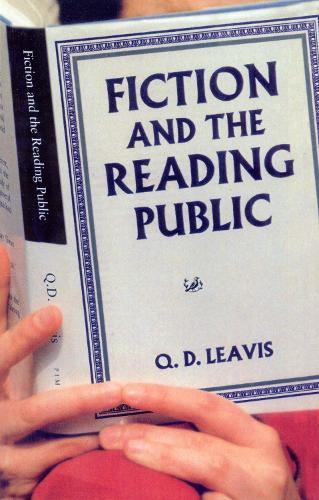
A classic and one of the most controversial books of literacy criticism published this century. Fiction and the Reading Public provoked fierce controvers when first published in 1932, and it has since come to be recognised as a classic in its field. In her fascinating study, Q D Leavis investigates what has happened to the public taste in the last three centuries and what effect this has had on both the life of the nation and the equality of living for the individual. A brilliant piece of literary exegesis and an illuminating anthropological commentary - DAILY MAIL An illuminating study. . . it offers a rich store of interest, not only in its vigorous scrutiny of the novel and the influences which have shaped it, but also in its study of changing attitudes and tempos of life amont the general public who read novels. . . An achievement of distinguished quality and high value. New Republic. She has performed a noble office by inquiring into the case of the bestseller. The result is no less entertaining than instructive -SATURDAY REVIEW.
Full Product Details
Author: Literary Exors Of Q D Leavis
Publisher: Vintage
Imprint: Pimlico
Dimensions:
Width: 13.80cm
, Height: 2.60cm
, Length: 21.60cm
Weight: 0.415kg
ISBN: 9780712665049
ISBN 10: 0712665048
Pages: 384
Publication Date: 03 February 2000
Recommended Age: From 0 years
Audience:
General/trade
,
College/higher education
,
Professional and scholarly
,
General
,
Tertiary & Higher Education
Format: Paperback
Publisher's Status: Active
Availability: Manufactured on demand

We will order this item for you from a manufactured on demand supplier.
Reviews
Mrs Leavis's remarkable book is an energetic, rigorous, analytical study of popular fiction; a breaker of new ground. She was a pioneer, helping us to understand better the assumptions and language which make bestsellers. But we have always quarrelled with her. She set 18th-century readership against that of the 20th century, to the later's discredit; that was a mistaken comparison. Her root-and-branch rejection of popular reading was too 'external'. C S Lewis and George Orwell later made some of the right qualifications. F R Leavis thought that after his wife's book this work need not be done again. He was of course wrong, and had to be. We live now in a world different in two major ways: more good books are being read by a small percentage of the population, certainly; the hold of the commercial people is all the stronger on the rest; we are more firmly stratifield in our reading, as in much else. Even worse, we live in a valueless world in which, even if you speak to a university audience, someone will challenge you with: 'Who are you to say that George Eliot is a better writer than Jeffrey Archer?' It would be exhilarating if Mrs Leavis could come back and could lay about her again. Review by RICHARD HOGGART Editor's note: Richard Hoggart is the author of First and Last Things: The Uses of Old age, which was reviewed in the October 1999 Guide.To re-read this book after about half a century is to recall that it was a key text for many of us, especially after we came back from the last world war, and became teachers. This was particularly true for those of us who went into university extra-mural teaching. Increasingly, we wanted to set books and reading into their social contexts; within the increasing commercialization of the 'book industry'. Mrs Leavis's remarkable book is an energetic, rigorous, analytical study of popular fiction; a breaker of new ground. We cannot today use her solid language of judgement: 'highbrow', 'middlebrow', 'lowbrow', 'intelligentsia', 'the ordinary man' and the rest; we have had to find a language of analysis for our times. But she was the pioneer; she helped us to understand better the assumptions and language which make bestsellers. And we have always quarrelled with her. She set 18th-century readership against that of the 20th century, to the later's discredit; that was a mistaken comparison. That was why, when I wrote The Uses of Literacy, I set my examination of popular reading against working-class culture of the same time. That wasn't a perfect fit either, but more defensible than Mrs Leavis's. Her root-and-branch rejection of popular reading was too 'external'. C S Lewis and George Orwell later made some of the right qualifications. Leavis thought that after his wife's book this work need not be done again. He was of course wrong, and had to be. We live now in a world different in two major ways: more good books are being read by a small percentage of the population, certainly; the hold of the commercial people is all the stronger on the rest; we are more firmly stratifield in our reading, as in much else. Even worse, we live in a valueless world in which, even if you speak to a university audience, someone will challenge you with: 'Who are you to say that George Eliot is a better writer than Jeffrey Archer?' It would be exhilarating if Mrs Leavis could come back and lay about her again. Review by RICHARD HOGGART Editor's note: Richard Hoggart is the author of First and Last Things: The Uses of Old age, which was reviewed in the October 1999 Guide. (Kirkus UK)