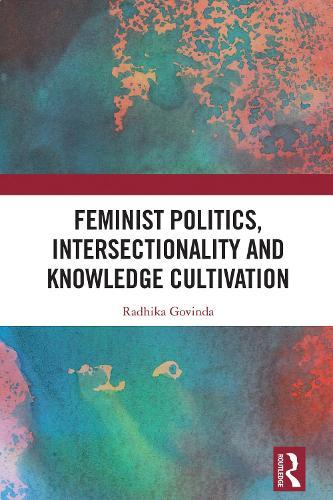
Full Product Details
Author: Radhika Govinda (Lecturer in Sociology, University of Edinburgh, UK)
Publisher: Taylor & Francis Ltd
Imprint: Routledge India
ISBN: 9780367853679
ISBN 10: 0367853671
Pages: 322
Publication Date: 21 May 2026
Audience:
College/higher education
,
Tertiary & Higher Education
Format: Paperback
Publisher's Status: Forthcoming
Availability: Not yet available

This item is yet to be released. You can pre-order this item and we will dispatch it to you upon its release.
Reviews
""Feminist Politics, Intersectionality and Knowledge Cultivation makes a new and dynamic contribution to debates on intersectionality, decolonisation, social movements and NGOs. A product of 15 years of research and the researcher's own migratory trajectory across the global North and the South, the book shows how intersectional positionality is dynamic, relational and contextualized, and secondly, that it is only by engaging the margins that we can have a truly global feminist theory and praxis. Drawing on a wide swathe of epistemic and political traditions - from black feminism in the US to Dalit feminism in India and Euro-American feminist studies to Indian sociology - Govinda moves deftly from the British classroom to research fields and movements sites in India. This book is set to be compulsory reading for all interested in the dynamic and generative quality of intersectionality."" Srila Roy, Professor of Sociology at the University of the Witwatersrand ""Weaving together fieldnotes and research findings, fragments of autobiography and poetry, critical theory, and reflections on pedagogy and classroom experience, this beautifully written book brings fresh – and ultimately hopeful – insights on knowledge-making around the ‘sticky and complicated’ feminist politics of India and beyond. Govinda makes the case for the relevance and use of intersectionality as critical theory, critical methodology and critical pedagogy as well as the need for all aspects of progressive academic practice to cultivate anti-colonial and emancipatory knowledges. An unflinchingly honest account of her own intellectual and personal journey as a feminist academic and Southern scholar now based in the North and an important contribution to intersectional feminist and post-colonial studies."" Fiona Mackay, Professor of Politics at the University of Edinburgh ""Foregrounding intersectionality in feminist politics, this book is a wonderful exploration, quilting together field(s) – classroom, feminist NGO, urban villages and digital media. Govinda commits to an extremely important resource on feminist methodology, delving into the ‘troubles’ and promises of contemporary feminist knowledge creation."" Rukmini Sen, Professor of Sociology at Ambedkar University Delhi
Author Information
Radhika Govinda is Senior Lecturer in Sociology at the University of Edinburgh, UK and the Director of GENDER.ED – the University’s interdisciplinary hub for gender and sexualities studies. Her research and teaching bridge the fields of sociology of gender, international development and South Asian Studies. She is co-editor of Doing Feminisms in the Academy, and Gender in South Asia and Beyond.