Overview
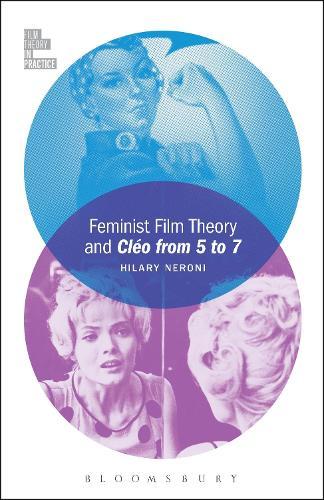
The Film Theory in Practice series fills a gaping hole in the world of film theory. By marrying the explanation of a film theory with the interpretation of a film, the volumes provide discrete examples of how film theory can serve as the basis for textual analysis. Feminist Film Theory and Cléo from 5 to 7 offers a concise introduction to feminist film theory in jargon-free language and shows how this theory can be deployed to interpret Agnes Varda's critically acclaimed 1962 film Cléo from 5 to 7. Hilary Neroni employs the methodology of looking for a feminist alternative among female-oriented films. Through three key concepts—identification, framing the woman’s body, and the female auteur—Neroni lays bare the debates and approaches within the vibrant history of feminist film theory, providing a point of entry to feminist film theory from its inception to today. Picking up one of the currents in feminist film theory - that of looking for feminist alternatives among female-oriented films - Neroni traces feminist responses to the contradictions inherent in most representations of women in film, and she details how their responses have intervened in changing what we see on the screen.
Full Product Details
Author: Hilary Neroni (University of Vermont, USA)
Publisher: Bloomsbury Publishing Plc
Imprint: Bloomsbury Academic
Dimensions:
Width: 12.20cm
, Height: 1.40cm
, Length: 20.20cm
Weight: 0.180kg
ISBN: 9781501313691
ISBN 10: 150131369
Pages: 168
Publication Date: 24 March 2016
Audience:
Professional and scholarly
,
Professional & Vocational
Format: Paperback
Publisher's Status: Active
Availability: Manufactured on demand

We will order this item for you from a manufactured on demand supplier.
Reviews
Neroni's eloquent prose educates the novice while delighting the expert. Through a deft analysis of the contradictions of femininity-particularly the conflicting ideals of sexuality and motherhood-Neroni brings to life key concerns of feminist film theory, including identification, engagement, ideology, desire, and the cinematic framing of the female body. Her subtle interpretation of Agnes Varda as a female auteur is feminist film theory at its most compelling: a dazzling addition to the theoretical tradition her volume explicates. Mari Ruti, Professor of Critical Theory, University of Toronto, Canada, and author of The Age of Scientific Sexism In this useful entry in Bloomsbury's Film Theory in Practice series, Neroni (The Subject of Torture) clearly and helpfully explains concepts that are important to feminist film theory, using French director Agnes Varda's 1962 film Cleo from 5 to 7 as a case study ... Cleo is a rich subject for study, and the author's analysis is nuanced ... the work's accessibility makes this an invaluable primer on film theory. One hopes the rest of the series is just as well executed and that Neroni's voice will often be heard in future. Publishers Weekly A highly engaging and incisive introduction to the history of feminism and feminist film theory that explores their role for contemporary debates and feminist film practice through lucid and subtle discussion of a range of women film-makers. Elizabeth Cowie, Professor Emeritus of Film Studies, University of Kent, UK
In this useful entry in Bloomsbury's Film Theory in Practice series, Neroni (The Subject of Torture) clearly and helpfully explains concepts that are important to feminist film theory, using French director Agnes Varda's 1962 film Cleo from 5 to 7 as a case study ... Cleo is a rich subject for study, and the author's analysis is nuanced ... the work's accessibility makes this an invaluable primer on film theory. One hopes the rest of the series is just as well executed and that Neroni's voice will often be heard in future. Publishers Weekly Neroni's eloquent prose educates the novice while delighting the expert. Through a deft analysis of the contradictions of femininity-particularly the conflicting ideals of sexuality and motherhood-Neroni brings to life key concerns of feminist film theory, including identification, engagement, ideology, desire, and the cinematic framing of the female body. Her subtle interpretation of Agnes Varda as a female auteur is feminist film theory at its most compelling: a dazzling addition to the theoretical tradition her volume explicates. Mari Ruti, Professor of Critical Theory, University of Toronto, Canada, and author of The Age of Scientific Sexism A highly engaging and incisive introduction to the history of feminism and feminist film theory that explores their role for contemporary debates and feminist film practice through lucid and subtle discussion of a range of women film-makers. Elizabeth Cowie, Professor Emeritus of Film Studies, University of Kent, UK
Neroni's eloquent prose educates the novice while delighting the expert. Through a deft analysis of the contradictions of femininity-particularly the conflicting ideals of sexuality and motherhood-Neroni brings to life key concerns of feminist film theory, including identification, engagement, ideology, desire, and the cinematic framing of the female body. Her subtle interpretation of Agnes Varda as a female auteur is feminist film theory at its most compelling: a dazzling addition to the theoretical tradition her volume explicates. Mari Ruti, Professor of Critical Theory, University of Toronto, Canada, and author of The Age of Scientific Sexism A highly engaging and incisive introduction to the history of feminism and feminist film theory that explores their role for contemporary debates and feminist film practice through lucid and subtle discussion of a range of women film-makers. Elizabeth Cowie, Professor Emeritus of Film Studies, University of Kent, UK
Author Information
Hilary Neroni is Professor of Film and Television Studies at the University of Vermont, USA. She is the author of The Subject of Torture (2015) and The Violent Woman (2005), and has also published numerous essays on female directors.