Overview
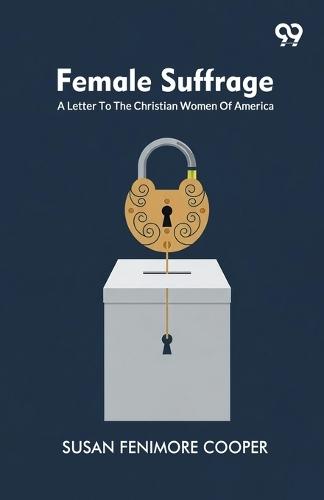
Female suffrage: A letter to the Christian women of America offers a reflective examination of the social and moral questions surrounding the growing demand for political rights for women. The text presents a viewpoint shaped by religious conviction and traditional social expectations, expressing concern that expanding political participation may disrupt established patterns of family life and communal order. It contrasts public authority with the quieter but influential responsibilities often associated with home and community, suggesting that lasting social well-being arises from personal integrity, ethical conduct, and the nurturing guidance offered within domestic spaces. The work argues that moral influence can be more transformative than legal power, framing the household as a place where values are shaped and reinforced. It also warns against rapid changes driven by political enthusiasm, encouraging readers to consider how shifting duties might affect broader social stability. By appealing to spiritual responsibility, it invites reflection on whether meaningful societal progress can emerge from strengthening inner character and communal bonds rather than seeking formal political authority.
Full Product Details
Author: Susan Fenimore Cooper
Publisher: Double 9 Books
Imprint: Double 9 Books
Dimensions:
Width: 14.00cm
, Height: 0.20cm
, Length: 21.60cm
Weight: 0.054kg
ISBN: 9789375550730
ISBN 10: 9375550737
Pages: 38
Publication Date: 01 November 2025
Audience:
General/trade
,
General
Format: Paperback
Publisher's Status: Active
Availability: Available To Order

We have confirmation that this item is in stock with the supplier. It will be ordered in for you and dispatched immediately.
Author Information
Susan Augusta Fenimore Cooper was born on April 17, 1813, in Scarsdale, New York, to James Fenimore Cooper and Susan Augusta DeLancey. Growing up in a household surrounded by literature, she developed a deep appreciation for writing, observation, and the natural world. When her family moved to Cooperstown, she became increasingly involved in documenting daily life, seasonal transformations, and the relationship between people and the environment. Her interest in nature and local history informed much of her work, including essays and journals in which she carefully recorded the details of her surroundings. She later assisted her father, acting as his secretary and manuscript copyist, gaining further experience with the literary process. Beyond writing, she devoted considerable energy to charitable work. She founded an orphanage in Cooperstown and managed it with commitment and care, ensuring it became a stable and well-regarded institution that supported the needs of local children. She died on December 31, 1894, in Cooperstown, leaving behind a legacy of compassion, discipline, and literary curiosity.