Overview
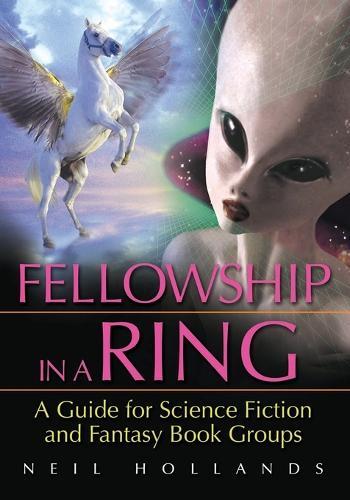
This comprehensive, spirited, and often laugh-out-loud funny handbook will help you start, maintain, or enhance a science fiction and fantasy book group. Bring fantasy and science fiction readers together for scintillating discussions with Fellowship in a Ring: A Guide for Science Fiction and Fantasy Book Groups. Providing everything you need to get started, the book offers detailed guidelines for some 50 fantasy and science fiction titles, plus guides for some 40 popular speculative fiction themes. For each of the featured titles, the book provides bibliographic information, author background, a plot summary, notes on appeal points, discussion questions, other resources to consult, and suggested read-alikes. You'll find instructions on how to get a group started, tips for helping fantasy and sci-fi readers get along, hints for understanding the genres and subgenres, and more. The book also offers materials useful to collection development, display building, and programming. Featuring books that run the gamut from literary genre novels to classic pulp stories, Fellowship in a Ring can help you avoid common pitfalls and build a flourishing community of satisfied book group adherents.
Full Product Details
Author: Neil Hollands
Publisher: Bloomsbury Publishing Plc
Imprint: Libraries Unlimited Inc
Dimensions:
Width: 17.50cm
, Height: 2.00cm
, Length: 24.90cm
Weight: 0.635kg
ISBN: 9781591587033
ISBN 10: 1591587034
Pages: 300
Publication Date: 30 December 2009
Recommended Age: From 7 to 17 years
Audience:
Professional and scholarly
,
College/higher education
,
Professional & Vocational
,
Tertiary & Higher Education
Format: Paperback
Publisher's Status: Active
Availability: Manufactured on demand 
We will order this item for you from a manufactured on demand supplier.
Table of Contents
"Acknowledgments Preface Introduction Chapter 1—Starting and Facilitating Your Group Why Start a Science Fiction/Fantasy Book Group? Forming a Science Fiction/Fantasy Book Group Finding Members The Organizational Meeting The Meeting: Time, Place, and Format The Roles of Group Leaders Basic Communications Managing and Leading the Discussion Resolving Controversies and Problems Motivating and Energizing Selecting Titles Book Characteristics That Lead to Good Discussions In Print and Easy to Find Length Stand-Alones vs. Series Character-Driven, Idea-Driven, Plot-Driven, or Style-Driven Established Writers vs. Newer Writers Political, Ethical, and Philosophical Choices Genre Ideas with Real-World Analogs Strong Settings and Frames Young Adult and Children's Books Controversial Books Seasonal Appropriateness and Recurring Topics Award Winners and Classics Balance Talking about Books Successfully Managing Discussion Introduce the Book, Author, and Topic Clearly Prepare and Use Discussion Questions Wisely Find Out What Your Readers Want to Discuss Select a Few Short Passages to Read Aloud in a Pinch Once the Conversation Gets Rolling, Stay out of the Way Watch Out for Signs of Trouble One Thing at a Time Don't Let Generalizations Kill the Discussion In a Pinch, Use Formal Means to Combat Recurring Problems Suggestions for Talking about a Shared Book General Reactions Author Time and Place of Origin Point of View Characters Pacing Settings and Frames Central and Secondary Conflicts Plotting Genre Style Connections The Ending Dare to Theme: An Alternative to Reading the Same Book Problems of the One-Book Group The Thematic Group: Methods and Benefits Preventing and Combating the Downside of Themes Advice for Discussion: Thematic Groups Success with Fantasy and Science Fiction Readers Wizards vs. Androids: Helping Fantasy and Science Fiction Readers Get Along Bestiary: The Care and Feeding of Common Science Fiction/Fantasy Reader Types Ideas for Extra Fun Answer a Reading Question Invite an Author Watch a Movie or Television Program Together Bring Thematic Food and Drink Design Games and Puzzles Have a Book or Toy Exchange Change the Location Read outside Your Usual Parameters Rate the Book Stage a Group Reading Try a Service Project Celebrate or Remember Together Invite Guests Compile Your Favorites Start a Group Scrapbook, Website, or Blog Make Reading Resolutions Chapter 2—Understanding the Genres Classifying Fantasy and Science Fiction The Subgenres of Fantasy Epic/Quest/High Fantasy Coming-of-Age Fantasy Political Fantasy Alternate Historical Fantasy ""Realistic"" Epic Fantasy Hero Fantasy Dark Fantasy Urban Fantasy Adventures Fantasy Romance Humorous Fantasy Literary Fantasy The New Weird Fables Mythic Fantasy Science Fantasy The Subgenres of Science Fiction Space Opera Planetary Romance/Up Close with Aliens Hard SF Time Travel/Alternate History New Wave/Social Science Fiction Future History Utopia/Dystopia/Political SF Apocalypse and Post-Apocalypse Cyberpunk/Pessimistic Futures Mystery Crossovers and Future Thrillers Military and Other Adventure Science Fiction Coming-of-Age Science Fiction Slipstream/Literary SF Science Fiction Humor Short Stories Science Fantasy Glossary Basic Discussion Questions for Science Fiction Basic Discussion Questions for Fantasy Fiction Chapter 3—25 Great Fantasy Novels for Book Groups 25 Great Fantasy Novels for Book Groups 100 More Recommended Fantasy Authors and Books for Discussion Chapter 4—25 Great Science Fiction Novels for Book Groups 25 Great Science Fiction Novels for Book Groups 100 More Recommended Science Fiction Authors and Books for Discussion Chapter 5—Themes for Speculative Fiction Discussion A Note on Thematic Book Selections Adapted into Films: Screen-Worthy Speculative Fiction Alternate Histories: Stitches in Time Ancient and Medieval Worlds: Give 'Em an Old Times Revision Animals: Feature Creatures in Speculative Fiction Antiheroes: Black Hat, Heart of Gold Apocalyptic Fiction: Stop the World; We Want to Get On Computers, Internet, and Virtual Realities: Books with Byte The Cost of Magic: Spell-Bound and Over-Cast in Fantasy Fiction Diversity: A Fantastic Choir of Many Voices Environmental Issues: Reading the Green The Fairy World: ""Sidhe"" Moves in Mysterious Ways Families: Relative-ly Good Speculative Fiction Fantasy before 1970: The Genre before Tolkien Gender Roles: A Woman's Place Is in the Tome Gods and Religion: A Divine Collection of Speculative Fiction Golden Age and New Wave: Science Fiction through 1980 Good and Evil: The Story of the Moral Is… Graphic Novels: Stand-Up Comics in Science Fiction and Fantasy Hard SF: Putting the Science in Science Fiction Health, Medicine, Biology, and Genetics: Science Fiction Gets Up Close and Physical Horror Crossovers: Speculative Fiction So Scary It's Good Immortals, Longevity, and Rejuvenation: The Door to Forever Jokers Wild: Humor in Speculative Fiction Literary Crossovers: Gentrifying Genre Fiction Military Speculative Fiction: Genre Get Your Gun Monster Mash: Reading Where the Wild Things Are Musical Extravaganza: Song Books the Speculative Fiction Way Mystery Crossovers: Crimes of the Imagination Myths, Fables, and Legends: The Lure of Lore Paranormal Adventures: Hex and the City Planetary Romance: Seeking Out Strange New Worlds, Red Shirt Optional Political Science Fiction and Fantasy: Governing Pleasures Quests: Searching for the Best in Speculative Fiction Rebellion in Speculative Fiction: You Say You Want a Revolution Robots, Cyborgs, Androids, and AI: Breathing Artificial Life into Science Fiction Science Fantasy: Two Genres for the Price of One Short Stories: Quick Reads, Big Ideas Slipstream and the New Weird: Frontiers of the Imagination Space Opera: Reading the Masters of the Universe Steampunk and Victoriana: High Adventure, High Attitude, High Tea Time Travel: Across the Space-Time Continuum in Speculative Fiction Watery Worlds: Speculative Fiction on the High Seas Wormholes and Wardrobes: The World Next Door Young Adult Fantasy: Not Just for Teens Young Adult Science Fiction: Not Just for Teens 100 More Themes to Explore Appendix A: Chronology of Science Fiction/Fantasy History Appendix B: Resources for Further Study Author Index Title and Series Index"
Reviews
While book groups are an excellent means of outreach, these idiosyncrasies pose a particular challenge to librarians seeking to facilitate successful groups for fans of these genres. Fortunately, this comprehensive guide comes to the rescue. It is an excellent resource for both novices looking to initiate groups, and veterans seeking to breathe new life into existing factions....Although the book is not specifically aimed toward those who work with teenagers, young adult librarians (and educators that are so inclined) will have no difficulty adapting the suggestions and themes to young adults as needed for a book group, as well as utilizing it as a general collection-development tool. Particularly in these genres, where there is a lack of functional ideas of how to appeal to fans, this manual is indispensable. - VOYA
<p> While book groups are an excellent means of outreach, these idiosyncrasies pose a particular challenge to librarians seeking to facilitate successful groups for fans of these genres. Fortunately, this comprehensive guide comes to the rescue. It is an excellent resource for both novices looking to initiate groups, and veterans seeking to breathe new life into existing factions....Although the book is not specifically aimed toward those who work with teenagers, young adult librarians (and educators that are so inclined) will have no difficulty adapting the suggestions and themes to young adults as needed for a book group, as well as utilizing it as a general collection-development tool. Particularly in these genres, where there is a lack of functional ideas of how to appeal to fans, this manual is indispensable. - <p>VOYA
Author Information
Neil Hollands is an MLS-degreed librarian working at Williamsburg Regional Library in Williamsburg, VA. His published works include Libraries Unlimited's Read On…Fantasy Fiction.
Tab Content 6
Author Website:
Countries Available
All regions
|