Overview
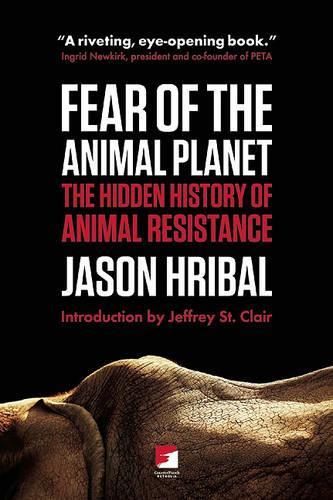
'Until the lion has its historian, the hunter will always be a hero'. Jason Hribal fulfils the promise of this proverb, taking the reader deep inside the circus, zoo and other animal operations providing insight into the hidden struggle and resistance that occurs daily. Chimpanzees escape their cages, elephants attack their trainers, orcas demand more food and tigers refuse to perform. An extraordinary collection of behind-the-scenes stories, Fear of the Animal Planet also makes a well-researched argument for the ethical treatment of animals.
Full Product Details
Author: Jason Hribal
Publisher: AK Press
Imprint: AK Press
Dimensions:
Width: 12.60cm
, Height: 1.50cm
, Length: 19.00cm
Weight: 0.212kg
ISBN: 9781849350266
ISBN 10: 1849350264
Pages: 172
Publication Date: 06 January 2011
Audience:
General/trade
,
General
Format: Paperback
Publisher's Status: Active
Availability: In Print

This item will be ordered in for you from one of our suppliers. Upon receipt, we will promptly dispatch it out to you. For in store availability, please contact us.
Reviews
Animal fables, jungle books, Aesopian tales were the discursive evidence of cross-species interaction that survived into modernity as children's literature. When the carceral replaced the domestic system, as the zoos, circuses, and laboratories became the primary site of interaction replacing the barnyard and the wild wood, the animals began to resist. Here are their hidden stories. Jason Hribal takes us behind the zoo scenes, the phoney exhibits, and cute displays to reveal an ugly economy of exploitation, international trafficking in exotic animals, over-work, cruelty in training, incessant and insolent teasing from the public. He chronicles the escapes, the assaults, the demand of food, and the refusals to reproduce that resulted. Here is animal resistance neither wild nor instinctual but responses to specific injustices. Single-minded, eccentric, and delightfully cranky, Hribal is the annalist non pareil of animal escape. With light but unforgiving misanthropy he carefully nam
"""Animal fables, jungle books, Aesopian tales were the discursive evidence of cross-species interaction that survived into modernity as children's literature. When the carceral replaced the domestic system, as the zoos, circuses, and laboratories became the primary site of interaction replacing the barnyard and the wild wood, the animals began to resist. Here are their hidden stories. Jason Hribal takes us behind the zoo scenes, the phoney exhibits, and cute displays to reveal an ugly economy of exploitation, international trafficking in exotic animals, over-work, cruelty in training, incessant and insolent teasing from the public. He chronicles the escapes, the assaults, the demand of food, and the refusals to reproduce that resulted. Here is animal resistance neither ""wild"" nor ""instinctual"" but responses to specific injustices. Single-minded, eccentric, and delightfully cranky, Hribal is the annalist non pareil of animal escape. With light but unforgiving misanthropy he carefully names the animals (the pachyderms - Jumbo and Tinkerbelle, the primates - Moe, Kumang, Little Joe, the sea lions, dolphins, and Orcas (Corky, Kasatka) while leaving the keepers, trainers, and showmen in shameful anonymity. From the escape of Tatiana, the Siberian tiger from the San Francisco zoo, to the latest orca killing Hribal relentlessly gathers the evidence to witness these risings of the creatures. ""—Peter Linebaugh, author of The Magna Carta Manifesto and The London Hanged ""Jason Hribal stacks up the evidence, and the conclusions are inescapable. Zoos, circuses and theme parks are the strategic hamlets of American's long war against nature itself."" —Susan Davis, author Spectacular Nature: Corporate Culture and the Sea World Experience ""Jason Hribal's Fear of the Animal Planet does a great service in chronicling the resistance of nonhuman animals against the multiplicity of human institutions of exploitation and oppression. It is a timely and vitally important book that promises to dramatically reshape debates in science, law, philosophy, and the burgeoning -- but largely sterile -- field of animal studies. One radical upshot of the book is to extend the notion of agency to nonhuman animals and to show many of them -- such as elephants, tigers, and orcas -- to be political in their revolt against human oppression. Moreover, humanists and leftists of all stripes, cannot, without embarrassment, persist in reducing nonhuman animals to the status of objects while restricting the discourse of intentionality, rebellion, autonomy, and liberation to human actors only. In addition, ""animal advocates"" will have to check their own historical biases and speciesist distortions upon learning that moral progress and the animal ethics paradigm shift was not brought about solely through their own campaigns. Progressive change is also driven by nonhuman animals themselves in their revolt against their captors and in the evolving awareness in human society their resistance precipitates. Unfortunately, as fascinating and chronic as their self-liberation struggles have been throughout the world -- in zoos, circuses, and other exploitative institutions -- their defiance to human supremacism cannot amount to a revolution without the organized radical politics of enlightened and militant sectors of humanity. The fate of nonhuman animal species continues to hang on whether or not humans can overcome the violent proclivities of their own animality and dismantle the omnicidal machines of global capitalism. This book, however, takes us far in the right direction toward grasping the complexity of nonhuman animals' emotions, minds, and social life such that we can recognize them as political agents and shapers of history in their own right.""—Dr. Steven Best, Associate Professor of Philosophy, University of Texas, El Paso, co-editor of Terrorists or Freedom Fighters: Reflections on the Liberation of Animals ""Zoos, Circuses and Guantanamo Bay...Beatened, whiped and shot! Oh why?! Jason Hribal exposes the perverted species we really are. Life, liberty and the pursuit of happiness is but a dream. Especially for our fellow beings.""—Allison Lance, director Galapagos Preservation Society"
Author Information
Jason Hribal: Jason Hribal is an independent historian, who teaches in the field of adult education. He is the contemporary editor of John Oswald's 1791 classic, The Cry of Nature: An Appeal to Mercy and to Justice on Behalf of the Persecuted Animals (2000).