Overview
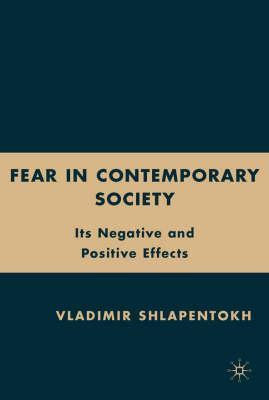
Opposing mainstream social science, usually hostile towards coercion and the state, the author sees social order as based on self regulation and the allegiance of the individual to the dominant culture. He points out the flaws in what is chiefly a Lockean-Parsonian tradition and then proposes that the Hobbesian view be included in social analysis.
Full Product Details
Author: V. Schlapentokh
Publisher: Palgrave USA
Imprint: Palgrave Macmillan
Edition: 2006 ed.
Dimensions:
Width: 15.50cm
, Height: 1.80cm
, Length: 23.50cm
Weight: 0.535kg
ISBN: 9781403973894
ISBN 10: 140397389
Pages: 236
Publication Date: 03 November 2006
Audience:
College/higher education
,
Professional and scholarly
,
Tertiary & Higher Education
,
Professional & Vocational
Format: Hardback
Publisher's Status: Active
Availability: Out of stock

The supplier is temporarily out of stock of this item. It will be ordered for you on backorder and shipped when it becomes available.
Reviews
This book deals with some big themes in historic and contemporary sociology - power, legitimation, sanctions, coercion, and terror for the maintenance of social order. Its head-on challenge to the remaining post-World War II Parsonian paradigm focused on value consensus and socialization should spark not only some intellectual fireworks but engender some vital debates in the contemporary public square. - Suzanne Keller, Professor Emeritus of Sociology, Princeton University Sociologists have largely ignored the role of fear in society, both as a deliberate policy of oppressive regimes and as a necessary element in the maintenance of social order. Shlapentokh has successfully taken on the task of rectifying this situation. In doing so, he has rekindled debates about social order that have long remained dormant. The result is a nuanced, scholarly, at times personal, sociological, and always challenging perspective on fear. - Lawrence Busch, University Distinguished Professor of Sociology, Michigan State University Vladimir Shlapentokh is undoubtedly one of the most erudite, sophisticated and productive scholars in the field of Soviet and Russian studies. His interests range far and wide and cover various aspects of Soviet and Russian society. This time he decided to tackle the role of fear as an important force maintaining social order and, as always, he does it in a masterful way. He links fear to the system of values which he believes is indispensable for sustaining that order. - Andrzej Korbonski, Professor of Political Science, UCLA International Institute Shlapentokh has provided both a critique of Western sociology's failings as well as a careful examination ofa central, but often overlooked, feature of society: that it is held together as much by fearas bythe customary processes of socialization, familial contact, and peer pressures. What is especially useful about thisfeature isthat, since 9/11, American foreign and domestic policyhas been developed with this central premise in mind. The civil wars that gave birth to the greatest English theorist of fear, Thomas Hobbes, have not receded. Democracy, education, and technology have not changed fear's central role in the social calculus. Shlapentokh's work recognizes this and establishes the basis for future serious research. - Peter Stavrakis, Professor of Political Science, National Defense University
This book deals with some big themes in historic and contemporary sociology--power, legitimation, sanctions, coercion, and terror for the maintenance of social order. Its head-on challenge to the remaining post-World War II Parsonian paradigm focused on value consensus and socialization should spark not only some intellectual fireworks but engender some vital debates in the contemporary public square. --Suzanne Keller, Professor Emeritus of Sociology, Princeton University Sociologists have largely ignored the role of fear in society, both as a deliberate policy of oppressive regimes and as a necessary element in the maintenance of social order. Shlapentokh has successfully taken on the task of rectifying this situation. In doing so, he has rekindled debates about social order that have long remained dormant. The result is a nuanced, scholarly, at times personal, sociological, and always challenging perspective on fear. --Lawrence Busch, University Distinguished Professor of Soci
This book deals with some big themes in historic and contemporary sociology--power, legitimation, sanctions, coercion, and terror for the maintenance of social order. Its head-on challenge to the remaining post-World War II Parsonian paradigm focused on value consensus and socialization should spark not only some intellectual fireworks but engender some vital debates in the contemporary public square. --Suzanne Keller, Professor Emeritus of Sociology, Princeton University Sociologists have largely ignored the role of fear in society, both as a deliberate policy of oppressive regimes and as a necessary element in the maintenance of social order. Shlapentokh has successfully taken on the task of rectifying this situation. In doing so, he has rekindled debates about social order that have long remained dormant. The result is a nuanced, scholarly, at times personal, sociological, and always challenging perspective on fear. --Lawrence Busch, University Distinguished Professor of Sociology, Michigan State University Vladimir Shlapentokh is undoubtedly one of the most erudite, sophisticated and productive scholars in the field of Soviet and Russian studies. His interests range far and wide and cover various aspects of Soviet and Russian society. This time he decided to tackle the role of fear as an important force maintaining social order and, as always, he does it in a masterful way. He links fear to the system of values which he believes is indispensable for sustaining that order. --Andrzej Korbonski, Professor of Political Science, UCLA International Institute Shlapentokh has provided both a critique of Western sociology's failings as well as a careful examination of a central, but often overlooked, feature of society: that it is held together as much by fear as by the customary processes of socialization, familial contact, and peer pressures. What is especially useful about this feature is that, since 9/11, American foreign and domestic policy has been developed with this central premise in mind. The civil wars that gave birth to the greatest English theorist of fear, Thomas Hobbes, have not receded. Democracy, education, and technology have not changed fear's central role in the social calculus. Shlapentokh's work recognizes this and establishes the basis for future serious research. --Peter Stavrakis, Professor of Political Science, National Defense University
This book deals with some big themes in historic and contemporary sociology--power, legitimation, sanctions, coercion, and terror for the maintenance of social order. Its head-on challenge to the remaining post-World War II Parsonian paradigm focused on value consensus and socialization should spark not only some intellectual fireworks but engender some vital debates in the contemporary public square. --Suzanne Keller, Professor Emeritus of Sociology, Princeton University Sociologists have largely ignored the role of fear in society, both as a deliberate policy of oppressive regimes and as a necessary element in the maintenance of social order. Shlapentokh has successfully taken on the task of rectifying this situation. In doing so, he has rekindled debates about social order that have long remained dormant. The result is a nuanced, scholarly, at times personal, sociological, and always challenging perspective on fear. --Lawrence Busch, University Distinguished Professor of Sociology, Michigan State University Vladimir Shlapentokh is undoubtedly one of the most erudite, sophisticated and productive scholars in the field of Soviet and Russian studies. His interests range far and wide and cover various aspects of Soviet and Russian society. This time he decided to tackle the role of fear as an important force maintaining social order and, as always, he does it in a masterful way. He links fear to the system of values which he believes is indispensable for sustaining that order. --Andrzej Korbonski, Professor of Political Science, UCLA International Institute Shlapentokh has provided both a critique of Western sociology's failings as well as a careful examination of a central, but oftenoverlooked, feature of society: that it is held together as much by fear as by the customary processes of socialization, familial contact, and peer pressures. What is especially useful about this feature is that, since 9/11, American foreign and domestic policy has been developed with this central premise in mind. The civil wars that gave birth to the greatest English theorist of fear, Thomas Hobbes, have not receded. Democracy, education, and technology have not changed fear's central role in the social calculus. Shlapentokh's work recognizes this and establishes the basis for future serious research. --Peter Stavrakis, Professor of Political Science, National Defense University
Author Information
VLADIMIR SCHLAPENTOKH is Professor of Sociology at Michigan State University, USA.