Overview
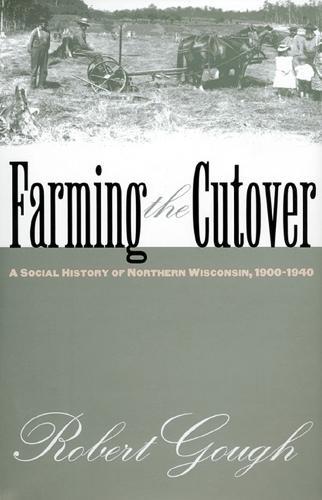
After northern Wisconsin was cleared by commercial loggers early in the twentieth century, enthusiastic promoters and optimistic settlers envisioned transforming this ""cutover"" into a land of yeoman farmers. Here thousands of families--mostly immigrants or second-generation Americans--sought to recreate old worlds and build new farms on land that would come to be considered agriculturally worthless. In the end, they succumbed not to drought or soil depletion but to social and political pressures from those who looked askance at their way of life. Farming the Cutover describes the visions and accomplishments of these settlers from their own perspective. People of the cutover managed to forge lives relatively independent of market pressures; and for this they were characterized as backward by outsiders and their part of the state was seen as a hideout for organized crime figures. State and federal planners, county agents, and agriculture professors eventually determined that the cutover could be engineered and the lives of its inhabitants improved. By 1940, they had begun to implement public policies that discouraged farming and they eventually decided that the region should be depopulated and the forests replanted. By exploring the history of an eighteen-county region, Robert Gough illustrates the travails of farming in ""marginal"" areas. He juxtaposes the social history of the farmers with the opinions and programs of the experts who sought to improve the region, and shows how what occurred in the Wisconsin cutover anticipated the sweeping changes that would transform American agriculture after World War II. Farming the Cutover is a readable story of the hopes and failures of people who struggled to build new lives in an inhospitable environment. It makes an important counterpoint to Turnerian myths and the more commonly-told success stories of farming history.
Full Product Details
Author: Robert Gough
Publisher: University Press of Kansas
Imprint: University Press of Kansas
Dimensions:
Width: 15.70cm
, Height: 2.70cm
, Length: 23.30cm
Weight: 0.333kg
ISBN: 9780700608508
ISBN 10: 0700608508
Pages: 320
Publication Date: 31 October 1997
Audience:
College/higher education
,
Professional and scholarly
,
Undergraduate
,
Postgraduate, Research & Scholarly
Format: Hardback
Publisher's Status: Active
Availability: Out of stock

The supplier is temporarily out of stock of this item. It will be ordered for you on backorder and shipped when it becomes available.
Reviews
A tender elegy to yeoman farming and to the American dream that it represented for centuries. Gough sets forth a tenacious indictment of those who fancied themselves the best and the brightest, who wrought the destruction of that dream. His achingly sad account teems with tantalizing implications for our understanding of our history as a rural society and of our fragile future as a capitalist nation. Michael Zuckerman, author of Almost Chosen People: Oblique Biographies in the American Grain Gough has an ear for the telling anecdote. He really knows the cutover and demonstrates an admirable affection for it. David Danbom, author of A History of Rural America A meticulously researched analysis of one of the sadder episodes in the rural history of the United States that is informed by both the new rural history and an understanding of environmental and policy issues. Hal S. Barron, author of Those Who Stayed Behind: Rural Society in Nineteenth-Century New England An engaging history. John Gjerde, author of The Minds of the West Farming the Cutover revisits a sad chapter in American agricultural history, and this time puts a human face on on it. The strength is in the narrative which weaves together the lives of many people who struggled against the environment physical, financial, social, and political to start new lives in the cutover. H-Net Reviews This book is valuable for readers interested in the sustainable agricultural movement, as the values of that movement are similar to the values of the cutover farmers. Journal of American History A detailed, informative, and enjoyable account of the agricultural settlements and farms that sprouted in the desolate cutover region of northern Wisconsin. Choice A major contribution to the agricultural history of Wisconsin and American agriculture in general. Wisconsin Magazine of History An important study for understanding the human experience in the denuded forest lands of Michigan, Wisconsin, and Minnesota. Michigan Historical Review Gough tells a fascinating story of the people who inhabited the farms of the cutover and the social and economic world they built. Annals of Iowa
-A tender elegy to yeoman farming and to the American dream that it represented for centuries. Gough sets forth a tenacious indictment of those who fancied themselves the best and the brightest, who wrought the destruction of that dream. His achingly sad account teems with tantalizing implications for our understanding of our history as a rural society and of our fragile future as a capitalist nation.---Michael Zuckerman, author of Almost Chosen People: Oblique Biographies in the American Grain -Gough has an ear for the telling anecdote. He really knows the cutover and demonstrates an admirable affection for it.---David Danbom, author of A History of Rural America -A meticulously researched analysis of one of the sadder episodes in the rural history of the United States that is informed by both the new rural history and an understanding of environmental and policy issues.---Hal S. Barron, author of Those Who Stayed Behind: Rural Society in Nineteenth-Century New England -An engaging history.---John Gjerde, author of The Minds of the West
A tender elegy to yeoman farming and to the American dream that it represented for centuries. Gough sets forth a tenacious indictment of those who fancied themselves the best and the brightest, who wrought the destruction of that dream. His achingly sad account teems with tantalizing implications for our understanding of our history as a rural society and of our fragile future as a capitalist nation. --<b>Michael Zuckerman</b>, author of <i>Almost Chosen People: Oblique Biographies in the American Grain</i> Gough has an ear for the telling anecdote. He really knows the cutover and demonstrates an admirable affection for it. --<b>David Danbom</b>, author of <i>A History of Rural America</i> A meticulously researched analysis of one of the sadder episodes in the rural history of the United States that is informed by both the new rural history and an understanding of environmental and policy issues. --<b>Hal S. Barron</b>, author of <i>Those Who Stayed Behind: Rural Society in Nineteenth-Century New England</i> An engaging history. --<b>John Gjerde</b>, author of <i>The Minds of the West</i>
A tender elegy to yeoman farming and to the American dream that it represented for centuries. Gough sets forth a tenacious indictment of those who fancied themselves the best and the brightest, who wrought the destruction of that dream. His achingly sad account teems with tantalizing implications for our understanding of our history as a rural society and of our fragile future as a capitalist nation. --Michael Zuckerman, author of Almost Chosen People: Oblique Biographies in the American Grain Gough has an ear for the telling anecdote. He really knows the cutover and demonstrates an admirable affection for it. --David Danbom, author of A History of Rural America A meticulously researched analysis of one of the sadder episodes in the rural history of the United States that is informed by both the new rural history and an understanding of environmental and policy issues. --Hal S. Barron, author of Those Who Stayed Behind: Rural Society in Nineteenth-Century New England An engaging history. --John Gjerde, author of The Minds of the West Farming the Cutover revisits a sad chapter in American agricultural history, and this time puts a human face on on it. The strength is in the narrative which weaves together the lives of many people who struggled against the environment--physical, financial, social, and political--to start new lives in the cutover. --H-Net Reviews This book is valuable for readers interested in the sustainable agricultural movement, as the values of that movement are similar to the values of the cutover farmers. --Journal of American History A detailed, informative, and enjoyable account of the agricultural settlements and farms that sprouted in the desolate 'cutover' region of northern Wisconsin. --Choice A major contribution to the agricultural history of Wisconsin and American agriculture in general. --Wisconsin Magazine of History An important study for understanding the human experience in the denuded forest lands of Michigan, Wisconsin, and Minnesota. --Michigan Historical Review Gough tells a fascinating story of the people who inhabited the farms of the cutover and the social and economic world they built. --Annals of Iowa