Overview
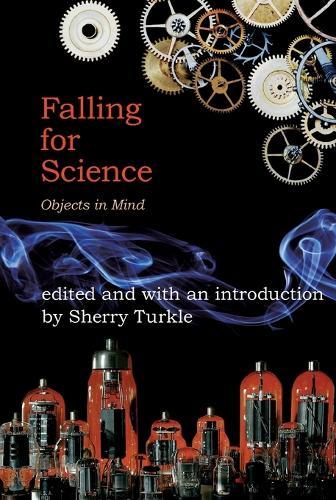
Passion for objects and love for science- scientists and students reflect on how objects fired their scientific imaginations.""This is a book about science, technology, and love,"" writes Sherry Turkle. In it, we learn how a love for science can start with a love for an object-a microscope, a modem, a mud pie, a pair of dice, a fishing rod. Objects fire imagination and set young people on a path to a career in science. In this collection, distinguished scientists, engineers, and designers as well as twenty-five years of MIT students describe how objects encountered in childhood became part of the fabric of their scientific selves. In two major essays that frame the collection, Turkle tells a story of inspiration and connection through objects that is often neglected in standard science education and in our preoccupation with the virtual. The senior scientists' essays trace the arc of a life- the gears of a toy car introduce the chain of cause and effect to artificial intelligence pioneer Seymour Papert; microscopes disclose the mystery of how things work to MIT President and neuroanatomist Susan Hockfield; architect Moshe Safdie describes how his boyhood fascination with steps, terraces, and the wax hexagons of beehives lead him to a life immersed in the complexities of design. The student essays tell stories that echo these narratives- plastic eggs in an Easter basket reveal the power of centripetal force; experiments with baking illuminate the geology of planets; LEGO bricks model worlds, carefully engineered and colonized. All of these voices-students and mentors-testify to the power of objects to awaken and inform young scientific minds. This is a truth that is simple, intuitive, and easily overlooked. Passion for objects and love for science- scientists and students reflect on how objects fired their scientific imaginations.""This is a book about science, technology, and love,"" writes Sherry Turkle. In it, we learn how a love for science can start with a love for an object-a microscope, a modem, a mud pie, a pair of dice, a fishing rod. Objects fire imagination and set young people on a path to a career in science. In this collection, distinguished scientists, engineers, and designers as well as twenty-five years of MIT students describe how objects encountered in childhood became part of the fabric of their scientific selves. In two major essays that frame the collection, Turkle tells a story of inspiration and connection through objects that is often neglected in standard science education and in our preoccupation with the virtual. The senior scientists' essays trace the arc of a life- the gears of a toy car introduce the chain of cause and effect to artificial intelligence pioneer Seymour Papert; microscopes disclose the mystery of how things work to MIT President and neuroanatomist Susan Hockfield; architect Moshe Safdie describes how his boyhood fascination with steps, terraces, and the wax hexagons of beehives lead him to a life immersed in the complexities of design. The student essays tell stories that echo these narratives- plastic eggs in an Easter basket reveal the power of centripetal force; experiments with baking illuminate the geology of planets; LEGO bricks model worlds, carefully engineered and colonized. All of these voices-students and mentors-testify to the power of objects to awaken and inform young scientific minds. This is a truth that is simple, intuitive, and easily overlooked.
Full Product Details
Author: Sherry Turkle (Abby Rockefeller Mauzé Professor of the Social Studies of Science and Technology at MIT and Founder , Massachusetts Institute of Technology) ,
Sherry Turkle (Abby Rockefeller Mauze Professor of the Social Studies of Science and Technology at MIT and Founder, Massachusetts Institute of Technology) ,
Susan Hockfield (President Emerita, Massachusetts Institute of Technology) ,
Donald Ingber (Founding Director, Wyss Institute)
Publisher: MIT Press Ltd
Imprint: MIT Press
Dimensions:
Width: 13.70cm
, Height: 1.70cm
, Length: 20.30cm
Weight: 0.431kg
ISBN: 9780262516761
ISBN 10: 0262516764
Pages: 330
Publication Date: 30 September 2011
Recommended Age: From 18 years
Audience:
General/trade
,
General
Format: Paperback
Publisher's Status: Inactive
Availability: In Print

Limited stock is available. It will be ordered for you and shipped pending supplier's limited stock.
Reviews
Turkle's thought-provoking collection represents an admirable invitation to further exploration of science and human sensibility, of the mysterious web of human choice and feeling. American Scientist
<p> Turkle's thought-provoking collection represents an admirable invitationto further exploration of science and human sensibility, of the mysterious web ofhuman choice and feeling. American Scientist
Author Information
Sherry Turkle is Abby Rockefeller Mauze Professor of the Social Studies of Science and Technology at MIT and Founder and Director of the MIT Initiative on Technology and Self. A psychoanalytically trained sociologist and psychologist, she is the author of The Second Self- Computers and the Human Spirit (Twentieth Anniversary Edition, MIT Press), Life on the Screen- Identity in the Age of the Internet, and Psychoanalytic Politics- Jacques Lacan and Freud's French Revolution. She is the editor of Evocative Objects- Things We Think With, Falling for Science- Objects in Mind, and The Inner History of Devices, all three published by the MIT Press. Sherry Turkle is Abby Rockefeller Mauze Professor of the Social Studies of Science and Technology at MIT and Founder and Director of the MIT Initiative on Technology and Self. A psychoanalytically trained sociologist and psychologist, she is the author of The Second Self- Computers and the Human Spirit (Twentieth Anniversary Edition, MIT Press), Life on the Screen- Identity in the Age of the Internet, and Psychoanalytic Politics- Jacques Lacan and Freud's French Revolution. She is the editor of Evocative Objects- Things We Think With, Falling for Science- Objects in Mind, and The Inner History of Devices, all three published by the MIT Press. Business Week has named Don Norman one of the world's most influential designers. He has been both a professor and an executive- he was Vice President of Advanced Technology at Apple; his company, the Nielsen Norman Group, helps companies produce human-centered products and services; and he has been on the faculty at Harvard, the University of California, San Diego, Northwestern University, and KAIST, in South Korea. He is the author of many books, including The Design of Everyday Things, The Invisible Computer (MIT Press), Emotional Design, and The Design of Future Things. The late Seymour A. Papert was a Professor in MIT's AI Lab (1960-1980s) and MIT's Media Lab (1985-2000) and the author of Mindstorms- Children, Computers, and Powerful Ideas. Moshe Safdie is Ian Woodner Studio Professor of Architecture and Urban Design at Harvard University, where he was Director of the Urban Design Program at the Graduate School of Design from 1978 to 1984. His previous books include Beyond Habitat, For Everyone a Garden, and Form and Purpose. Scott Brave is Chief Technology Officer at Baynote, Inc. Sherry Turkle is Abby Rockefeller Mauze Professor of the Social Studies of Science and Technology at MIT and Founder and Director of the MIT Initiative on Technology and Self. A psychoanalytically trained sociologist and psychologist, she is the author of The Second Self- Computers and the Human Spirit (Twentieth Anniversary Edition, MIT Press), Life on the Screen- Identity in the Age of the Internet, and Psychoanalytic Politics- Jacques Lacan and Freud's French Revolution. She is the editor of Evocative Objects- Things We Think With, Falling for Science- Objects in Mind, and The Inner History of Devices, all three published by the MIT Press.