Overview
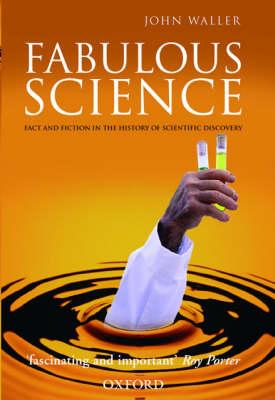
The great biologist Louis Pasteur suppressed data that didn't support the case he was making. Albert Einstein's theory of general relativity was only 'confirmed' in 1919 because an eminent British scientist massaged his figures. Joseph Lister's famously spotless hospital wards were actually notoriously dirty. Gregor Mendel, supposed father of the science of heredity, never grasped the fundamental principles of 'Mendelian' genetics. The history of science used to be presented as a heroic saga, in which a few far-seeing geniuses overcame the petty opposition of lesser minds to establish new scientific truths. But over recent decades, historians of science have cast a much more critical eye over their subject. Delving into laboratory notebooks and reconstructing once-fierce debates, they have challenged many of our basic assumptions about the nature of science and the roles its greatest heroes played. Fabulous Science reveals many of these findings to the general reader for the first time. Often startling and always enthralling, they show that some of our most important scientific theories were initially accepted only because famous scientists fudged data, pulled rank, or were propped up by religious and political elites. Striking case-studies show that science is not always driven on by pure rationality: human factors can play at least as big a role in the origin and reception of scientific ideas. Even poorly attested theories can gain widespread acceptance if put forward by scientists with sufficient clout. The new history of science also demonstrates that many standard portraits of scientific heroes are little more than romantic inventions. Classic accounts of men before their time who battled to overcome ignorant opposition before achieving scientific immortality exaggerate the originality of the few and underplay the crucially important contributions of the many. Fabulous Science argues that our view of the history of science has been egregiously distorted by individuals seeking to glorify disciplines and nations, and by famous scientists who unfairly garnered credit properly due to others. Fabulous Science restores to the history of science its complex personalities, bitter rivalries, and intense human dramas which until recently have been overlain by sanitising myths and misconceptions. Above all, its richly entertaining vignettes will transform the way we think about science, past, present, and future.
Full Product Details
Author: John Waller ,
Research Fellow, History of Science Department, Harvard University, USA)
Publisher: Oxford University Press
Imprint: Oxford University Press
Weight: 0.733kg
ISBN: 9780192804044
ISBN 10: 0192804049
Pages: 320
Publication Date: 01 December 2002
Audience:
General/trade
,
General
Format: Hardback
Publisher's Status: Active
Availability: To order

Stock availability from the supplier is unknown. We will order it for you and ship this item to you once it is received by us.
Reviews
This would make the basis of a fantastic television series for the sort of producer who delights in demolishing the reputations of the renowned. John Waller, a research fellow at the Wellcome Trust for the History of Medicine with degrees in history, human biology and the history of science and medicine, demonstrates through an intriguing series of case studies that science and its heroes are not always the pillars of objectivity and probity which it is popularly supposed. Among the great names of science who march through these pages - including Pasteur, Eddington, Einstein, Lister, Thomas Huxley, Fleming, John Snow, Mendel and Darwin - we discover some who committed 'serious sins against science', others open to the charge of 'conduct unbecoming of a good scientist', many who accepted proof of popular theories on the basis of inadequate evidence, and some who simply allowed others to accord them fame and glory which was not, strictly speaking, deserved. Weller notes that in the days of Pasteur, scientists had the cult status and fame now largely reserved for sportspeople and film stars. Perhaps not surprising then that there were temptations - manipulation of data to support personal theories, or of the historical record to enhance personal reputations. Yet more insidious is the revelation of the haphazard nature of scientific enquiry, and how swayed by personality, ego and career pressures is the choice of which theory becomes accepted fact. Few non-scientists will realize just how much 'sieving' of results goes on, and whilst Weller acknowledges that this is often sensible pragmatism, it is clear from these accounts that science generally is just as subject to extraneous influences as any other human endeavour. This is a fascinating read but, be warned, it may seriously undermine your world view. (Kirkus UK)
Author Information
John C. Waller is a Research Fellow at both the Wellcome Trust Centre for the History of Medicine at University College London and Harvard University. He currently lives with his wife in Boston, Massachusetts.