Overview
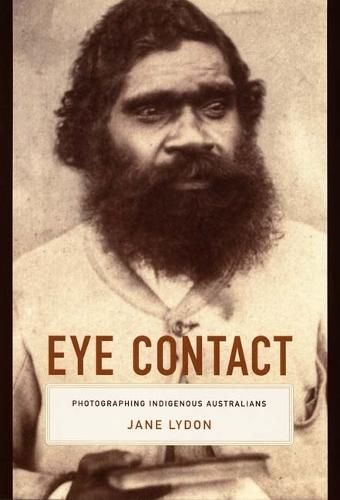
An indigenous reservation in the colony of Victoria, the Coranderrk Aboriginal Station was a major site of cross-cultural contact in late-nineteenth and early-twentieth-century Australia. Coranderrk was located just outside Melbourne, and from its opening in the 1860s the colonial government commissioned many photographs of its Aboriginal residents. The photographs taken at Coranderrk Station circulated across the western world; they were mounted in exhibition displays and classified among other ethnographic ""data"" within museum collections. The immense Coranderrk photographic archive is the subject of this detailed, richly illustrated examination of the role of visual imagery in the colonial project. Offering close readings of the photographs in the context of Australian history and nineteenth and early-twentieth-century photographic practice, Jane Lydon reveals how western society came to understand Aboriginal people through these images. At the same time, she demonstrates that the photos were not solely a tool of colonial exploitation.The residents of Coranderrk had a sophisticated understanding of how they were portrayed, and they became adept at manipulating their representations. Lydon shows how the photographic portrayals of the Aboriginal residents of Coranderrk changed over time, reflecting various ideas of the colonial mission--from humanitarianism to control to assimilation. In the early twentieth century, the images were used on stereotypical postcards circulated among the white population, showing what appeared to be compliant, transformed Aboriginal subjects. The station closed in 1924, and disappeared from public view until it was rediscovered by scholars years later. Aboriginal Australians purchased the station in 1998, and, as Lydon describes, today they are using the Coranderrk photographic archive in new ways, to identify family members and tell stories of their own.
Full Product Details
Author: Jane Lydon
Publisher: Duke University Press
Imprint: Duke University Press
Dimensions:
Width: 15.50cm
, Height: 2.20cm
, Length: 23.50cm
Weight: 0.807kg
ISBN: 9780822335726
ISBN 10: 0822335727
Pages: 336
Publication Date: 25 January 2006
Audience:
Professional and scholarly
,
Professional & Vocational
Format: Paperback
Publisher's Status: Active
Availability: Awaiting stock

The supplier is currently out of stock of this item. It will be ordered for you and placed on backorder. Once it does come back in stock, we will ship it out for you.
Reviews
Jane Lydon's meticulous investigation of the role of photography in the cross-cultural engagement that took place at Coraderrk from the mid-nineteenth century to the early twentieth century unfolds with a narrative drive. The community at Coranderrk comes alive. We care about the residents, how they have been represented in successive periods, and how their descendants now use the photographs to reclaim the past and construct their own narratives. --Roslyn Poignant, author of Professional Savages: Captive Lives and Western Spectacle What makes this study especially rich and important is the way Jane Lydon takes full advantage of photographic theory without imposing it reductively or simplistically. This is particularly impressive because she shows in very nuanced ways that different photographs were produced for different reasons at different times and that these photos embody various ideas about Aboriginality and science. --David Prochaska, co-author of Beyond East and West: Seven Transnational Artists Jane Lydon's meticulous investigation of the role of photography in the cross-cultural engagement that took place at Coranderrk from the mid-nineteenth century to the early twentieth century unfolds with a narrative drive. The community at Coranderrk comes alive. We care about the residents, how they have been represented in successive periods, and how their descendants now use the photographs to reclaim the past and construct their own narratives. --Roslyn Poignant, author of Professional Savages: Captive Lives and Western Spectacle This is a well written book, intelligently conceived and well argued. It is theoretically sophisticated while remaining accessible. --Peggy Brock, Journal of Colonialism and Colonial History [A]useful general reader on mid-colonial attitudes. As a well-written and informative survey of an era in which photography was used for quite specific purposes, it contributes significantly to the first round of interpretative analysis of what is a huge archive of photographs from the period. Lydon also offers several methodologies that Pacific historians might follow should they focus on a single site and a defined body of photographic evidence, ... --Max Quanchi, Journal of Pacific History
Jane Lydon's meticulous investigation of the role of photography in the cross-cultural engagement that took place at Coranderrk from the mid-nineteenth century to the early twentieth century unfolds with a narrative drive. The community at Coranderrk comes alive. We care about the residents, how they have been represented in successive periods, and how their descendants now use the photographs to reclaim the past and construct their own narratives. -Roslyn Poignant, author of Professional Savages: Captive Lives and Western Spectacle What makes this study especially rich and important is the way Jane Lydon takes full advantage of photographic theory without imposing it reductively or simplistically. This is particularly impressive because she shows in very nuanced ways that different photographs were produced for different reasons at different times and that these photos embody various ideas about Aboriginality and science. -David Prochaska, coauthor of Beyond East and West: Seven Transnational Artists Eye Contact is ... a welcome entrant into the interdisciplinary arena of material culture study intersecting with photographic history. It clears a path through a landscape of nostalgia littered with the pictorial histories and genres of illustrated then-and-now documentation... [T]his book brings out this body of photographic work to sit within a soundly researched historical context, and provides useful discussions on the ways in which the photographs meanings were constructed for specific purposes. -- Joanna Sassoon, History of Photography [A] rich verbal and visual text... By tying colonial-era photography to the institutions within which it took place and historicizing the shifting contexts of composition, production, and distribution for the images themselves, Lydon's beautifully produced monograph makes a significant contribution to understanding colonial photographic practice. -- Daniel Fisher, Anthropology and Humanism I found Lydon's book to be a resounding success: it is an enjoyable read; an important, well-timed contribution to the disciplinary fields of history, photography, and anthropology; and an especially welcome addition to scholarship that examines the power of media practices to produce and re-imagine meaning. -- Sabra Thorner, Visual Anthropology Review This is a well written book, intelligently conceived and well argued. It is theoretically sophisticated while remaining accessible. -- Peggy Brock, Journal of Colonialism and Colonial History
Author Information
Jane Lydon is a postdoctoral fellow at the Centre for Australian Indigenous Studies at Monash University in Melbourne. She is the author of Many Inventions: The Chinese in the Rocks, 1890–1930 and a coeditor of Object Lessons: Archaeology and Heritage in Australia (forthcoming).