Overview
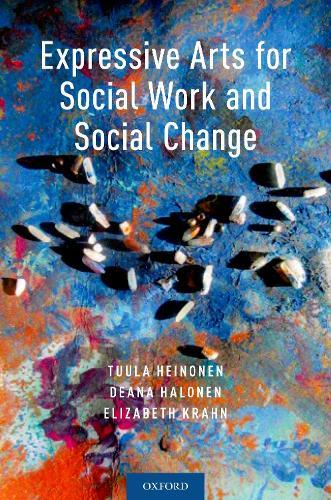
How can social workers integrate expressive arts methods as a complement to their work to better support individual, group, and community growth? Expressive Arts for Social Work and Social Change explores the values and benefits of expressive arts (i.e., visual arts, movement and dance, expressive forms of writing and narrative, music, and performance) and the role they can play in social work practice and inquiry. Although previous research has illustrated the efficacy of expressive arts to individual therapeutic goals, this is the first work that looks at the use of these approaches to fulfill the values, ethics, and principles of the social work profession. The authors draw from current and emerging concepts related to green social work, including individual and collective well-being, Indigenous perspectives and practices, social justice and social action, and individual as well as collective creative expression. This book provides insight and advice that will benefit all human service professionals interested in expressive arts.
Reviews
The rapidly growing field known as expressive arts emerged from the capacity of the arts to address human suffering. Expressive Arts for Social Work and Social Change embraces this belief by exploring how the arts inform the practice of social work as agents for social action, justice, and change. This welcome volume provides readers with a wide range of examples, illustrations, and approaches that social workers and all human service professionals can apply to their work with individuals, families, and communities.> - Cathy Malchiodi, PhD, LPCC, LPAT, ATR-BC, REAT, Executive Director, Trauma-Informed Practices and Expressive Arts Therapy Institute, Louisville, KY This book on expressive arts innovation in social work is heartening, offering theoretical and practical insights, exploring a range of arts approaches, and demonstrating potential for individual and collective healing, empowerment, and transformation. It shows that creative storytelling, expression of feelings, exploration of social issues, and reflection have profound effects for human well-being, ethical practice, and social justice. An invaluable resource for human services practitioners, researchers, and educators seeking the power of arts engagement. - Diane Conrad, PhD, MEd, BEd, BFA, Associate Professor, Department of Secondary Education, University of Alberta Expressive Arts for Social Work and Social Change shows how we need the embodied, hermeneutic elements of arts as a central medium through which people enhance resilience and deal with social adversity and injustice. The book is an excellent and welcome addition to this important direction: it describes a broad range of arts interventions (including photography movement and music in addition to visual art), relates to a broad range of populations, and most importantly, contextualizes these case studies within the Canadian context of ecological and post-colonialist theories of person in place and space. - Ephrat Huss, PhD, MA, Associate Professor and Chair, Arts in Social Work Master's Specialization, Charlotte B. and Jack J. Spitzer Deptartment of Social Work, Ben-Gurion University of the Negev; Author of What We See and What We Say: Using Images in Research, Therapy, Empowerment, and Social Change
The rapidly growing field known as expressive arts emerged from the capacity of the arts to address human suffering. Expressive Arts for Social Work and Social Change embraces this belief by exploring how the arts inform the practice of social work as agents for social action, justice, and change. This welcome volume provides readers with a wide range of examples, illustrations, and approaches that social workers and all human service professionals can apply to their work with individuals, families, and communities.> - Cathy Malchiodi, PhD, LPCC, LPAT, ATR-BC, REAT, Executive Director, Trauma-Informed Practices and Expressive Arts Therapy Institute, Louisville, KY This book on expressive arts innovation in social work is heartening, offering theoretical and practical insights, exploring a range of arts approaches, and demonstrating potential for individual and collective healing, empowerment, and transformation. It shows that creative storytelling, expression of feelings, exploration of social issues, and reflection have profound effects for human well-being, ethical practice, and social justice. An invaluable resource for human services practitioners, researchers, and educators seeking the power of arts engagement. - Diane Conrad, PhD, MEd, BEd, BFA, Associate Professor, Department of Secondary Education, University of Alberta Expressive Arts for Social Work and Social Change shows how we need the embodied, hermeneutic elements of arts as a central medium through which people enhance resilience and deal with social adversity and injustice. The book is an excellent and welcome addition to this important direction: it describes a broad range of arts interventions (including photography movement and music in addition to visual art), relates to a broad range of populations, and most importantly, contextualizes these case studies within the Canadian context of ecological and post-colonialist theories of person in place and space. - Ephrat Huss, PhD, MA, Associate Professor and Chair, Arts in Social Work Master's Specialization, Charlotte B. and Jack J. Spitzer Deptartment of Social Work, Ben-Gurion University of the Negev; Author of What We See and What We Say: Using Images in Research, Therapy, Empowerment, and Social Change
The rapidly growing field known as expressive arts emerged from the capacity of the arts to address human suffering. Expressive Arts for Social Work and Social Change embraces this belief by exploring how the arts inform the practice of social work as agents for social action, justice, and change. This welcome volume provides readers with a wide range of examples, illustrations, and approaches that social workers and all human service professionals can apply to their work with individuals, families, and communities. - Cathy Malchiodi, PhD, LPCC, LPAT, ATR-BC, REAT, Executive Director, Trauma-Informed Practices and Expressive Arts Therapy Institute, Louisville, KY This book on expressive arts innovation in social work is heartening, offering theoretical and practical insights, exploring a range of arts approaches, and demonstrating potential for individual and collective healing, empowerment, and transformation. It shows that creative storytelling, expression of feelings, exploration of social issues, and reflection have profound effects for human well-being, ethical practice, and social justice. An invaluable resource for human services practitioners, researchers, and educators seeking the power of arts engagement. - Diane Conrad, PhD, MEd, BEd, BFA, Associate Professor, Department of Secondary Education, University of Alberta Expressive Arts for Social Work and Social Change shows how we need the embodied, hermeneutic elements of arts as a central medium through which people enhance resilience and deal with social adversity and injustice. The book is an excellent and welcome addition to this important direction: it describes a broad range of arts interventions (including photography movement and music in addition to visual art), relates to a broad range of populations, and most importantly, contextualizes these case studies within the Canadian context of ecological and post-colonialist theories of person in place and space. - Ephrat Huss, PhD, MA, Associate Professor and Chair, Arts in Social Work Master's Specialization, Charlotte B. and Jack J. Spitzer Deptartment of Social Work, Ben-Gurion University of the Negev; Author of What We See and What We Say: Using Images in Research, Therapy, Empowerment, and Social Change
The rapidly growing field known as expressive arts emerged from the capacity of the arts to address human suffering. Expressive Arts for Social Work and Social Change embraces this belief by exploring how the arts inform the practice of social work as agents for social action, justice, and change. - Cathy Malchiodi, PhD, LPCC, LPAT, ATR-BC, REAT, Executive Director, Trauma-Informed Practices and Expressive Arts Therapy Institute, Louisville, KY This book on expressive arts innovation in social work is heartening . . . It shows that creative storytelling, expression of feelings, exploration of social issues, and reflection have profound effects for human well-being, ethical practice, and social justice. An invaluable resource for human services practitioners, researchers, and educators seeking the power of arts engagement. - Diane Conrad, PhD, MEd, BEd, BFA, Associate Professor, Department of Secondary Education, University of Alberta Expressive Arts for Social Work and Social Change shows how we need the embodied, hermeneutic elements of arts as a central medium through which people enhance resilience and deal with social adversary and injustice. The book is an excellent and welcome addition to this important direction. -- Ephrat Huss, PhD, MA, Associate Professor, Charlotte B. and Jack J. Spitzer Deptartment of Social Work, Ben-Gurion University of the Negev; Author of What We See and What We Say: Using Images in Research, Therapy, Empowerment, and Social Change
Author Information
Tuula Heinonen, DPhil, MSW, is Professor in the Faculty of Social Work at the University of Manitoba. Deana Halonen, MSW, is Senior Instructor in the Faculty of Social Work at the University of Manitoba. Elizabeth Krahn, MSW, is a social work counselor in her eighth year of private practice.