Overview
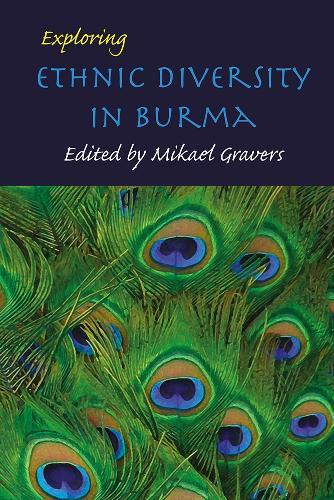
While the image of modern Myanmar/Burma tends to be couched in human rights terms and especially of a heroic Aung San Suu Kyi opposing an oppressive military regime, in reality there are several conflicts with ethnic and religious dimensions, as well as political and ideological differences between the opposition and the ruling military regime. This is not surprising in a country where 30% of the population and much of the land area are non-Burman, and where contradictory tendencies towards regional separatism versus unitary rule have divided the people since before independence. In what is probably the most comprehensive study of Burma's ethnic minorities to date, this volume discusses the historical formation of ethnic identity and its complexities in relation to British colonial rule as well as to the modern state, the present situation of military rule and its policy of 'Myanmarification'. Changes of identity in exile and due to religious conversion are also analysed and discussed. Finally, the book deals with relevant and recent anthropological and sociological theoretical discussions on the ethnic identity, boundaries and space of all the main ethnic groups in Burma. It probes into the complexity and diversity of ethnicity in Burma and it provides more details and up-to-date information than previously collected in one volume.
Full Product Details
Author: Mikael Gravers
Publisher: NIAS Press
Imprint: NIAS Press
Edition: Annotated edition
Volume: 39
Dimensions:
Width: 15.20cm
, Height: 1.70cm
, Length: 22.90cm
Weight: 0.445kg
ISBN: 9788791114960
ISBN 10: 8791114969
Pages: 304
Publication Date: 01 March 2007
Audience:
College/higher education
,
Undergraduate
Format: Paperback
Publisher's Status: Active
Availability: In Print

This item will be ordered in for you from one of our suppliers. Upon receipt, we will promptly dispatch it out to you. For in store availability, please contact us.
Reviews
[B]oth timely and politically highly relevant. It analyses the historical formation of ethnic identity in Burma in relation to British colonial rule and the post-colonial Burmese state with its emphasis on unitary nationalism and its efforts to promote MyanmarificationA . - Jasmin Lorch, Internationales Asienforum, 39 (1-2), 2008 A well-informed academic volume such as this on ethnicity in Burma has been much needed, and any audience will find the chapters richly informative and many of them stimulating. - Hayami Yoko, Southeast Asian Studies, 46 (3), 2008 [O]ffers a much-needed interdisciplinary addition to Southeast Asian Studies in general, as well as Burma studies in particular - the book is the first of its kind in several decades, and represents a crucial step in redressing the fact that much popular discourse conflates Burma Studies with Bamar Studies. - Jane Ferguson, Journal of Southeast Asian Studies, 40 (3), 2009 [T]imely and highly welcome to specialists on Southeast Asia and ethnicity in general. - [T]he volume in its entirety is certainly a storehouse containing a wide array of mutually complementary information and thematic aspects that converge into a rich, multifaceted overall picture unmatched by any other recent publication on Burma. It is simply a must for scholars concerned with Burmese society as well as for anyone interested in the future of this country or the complexities of ethnic identification. - Roland Mischung, Journal of Current Southeast Asian Affairs, 28 (4), 2009 Exploring Ethnic Diversity in Burma is ... a most welcome contribution not only to our understanding of the current situation in this important Southeast Asian country, [but] it also enriches theoretical discourses on ethnicity and nationhood. - [It] is an important contribution to understanding the ethnic factor in present-day Burmese politics. It is also highly recommended to students of other multiethnic societies in Southeast Asia and outside the region. - Volker Grabowsky, Anthropos (103), 2008 This volume ... helps to fill a twofold gap in the scholarly literature in ethnicity in mainland Southeast Asia, namely a lack of evidence from within Burma and a dearth of historical data on ethnic formation. ... The volume as a whole provides a very useful cross-section of research on ethnicity in Burma leading up to a critical juncture in its history. - William Womack, SOAS Bulletin Burma Research (6), 2008
Author Information
Mikael Gravers is an anthropologist now retired from the University of Aarhus but still active. Widely respected for his research on Burmese issues (especially on the Karen of Burma and Thailand).