Overview
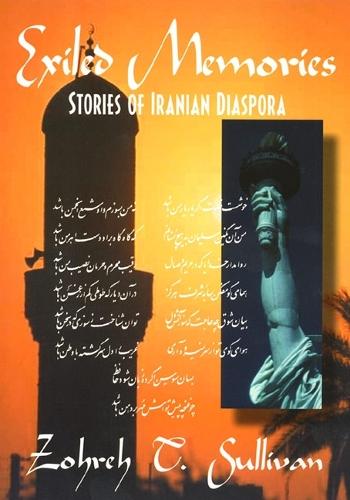
""I feel I am the wandering Jew who has no place to which she belongs. I thought I could settle down, but can't imagine staying. Whenever I bought a bar of soap and two came in the package, I thought there would be no need to buy a package of two because I would never last through the second. Why? Because I knew I was returning to Iran tomorrow. So too, I would buy the smallest size toothpastes and jars of oil. Putting down roots here is an impossibility."" These are the words of one Iranian emigre, driven from Tehran by the revolution of 1979. They are echoed time and again in this powerful portrayal of loss and survival. Impelled by these words and her own concerns about nationality and identity, Zohreh Sullivan has gathered together here the voices of sixty exiles and emigres. They come from various ethnic and religious backgrounds and range in age from thirteen to eighty-eight. Although most are from the middle class, they work in a variety of occupations in the United States. But whatever their differences, here they are all engaged in remembering the past, producing a discourse about their lives, and negotiating the troubled transitions from one culture to another.Unlike many other Iranian oral history projects, Exiled Memories looks at the reconstruction of memory and identity through diasporic narratives, through a focus on the Americas rather than on Iran. The narratives included here reveal the complex ways in which events and places transform identities, how overnight radicals become conservatives, friends become enemies, the strong become weak. Indeed, the narratives themselves serve this function serving to transfer or transform power and establish credibility. They reveal a diverse group of people in the process of knitting the story of themselves with the story of the collective after it has been torn apart. Author note: Zohreh T. Sullivan is Professor of English at the University of Illinois, Urbana-Champaign. She is the author of Narratives of Empire: The Fictions of Rudyard Kipling and editor of the Norton edition of Kipling's Kim.
Full Product Details
Author: Zohreh Sullivan
Publisher: Temple University Press,U.S.
Imprint: Temple University Press,U.S.
Dimensions:
Width: 15.20cm
, Height: 2.30cm
, Length: 22.90cm
Weight: 0.762kg
ISBN: 9781566398428
ISBN 10: 1566398428
Pages: 277
Publication Date: 15 January 2001
Audience:
Professional and scholarly
,
Professional & Vocational
Format: Hardback
Publisher's Status: Active
Availability: Out of stock

The supplier is temporarily out of stock of this item. It will be ordered for you on backorder and shipped when it becomes available.
Reviews
Another underrepresented and often misrepresented community, now a part of the United States of America, has been given voice and songs... This book often brought tears to my eyes and turned on bright lights of insight in my head... --Julia Alvarez, author of How the Garcia Girls Lost Their Accents and In the Time of the Butterflies
Another underrepresented and often misrepresented community, now a part of the United States of America, has been given voice and songs... This book often brought tears to my eyes and turned on bright lights of insight in my head.... -Julia Alvarez, author of How the Garcia Girls Lost Their Accents and In the Time of the Butterflies
Author Information
Zohreh T. Sullivan is Professor of English at the University of Illinois, Urbana-Champaign. She is the author of Narratives of Empire: The Fictions of Rudyard Kipling and editor of the Norton edition of Kipling's Kim.