|
|
|||
|
||||
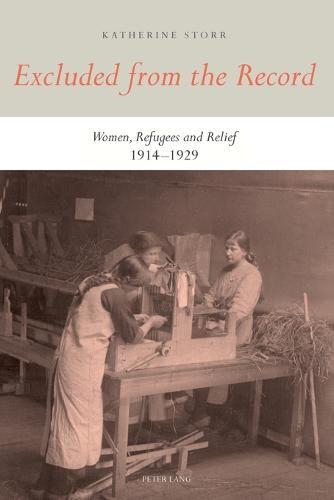
OverviewThis study reveals women’s hitherto ignored lives as refugees and relief workers during the First World War and shortly after. The focus is on coping with and changing the devastating effects of war on civilians, rather than the fighting of it. Wherever fighting took place, people fled from their homes or were trapped behind enemy lines. Most refugees were women and children. While some came to Britain, others remained in or near their country of origin. They were helped, sometimes under bombardment, by Quakers and suffragists. The connection between these women in humanitarian relief is explored, together with the significance of imperialism and national identity. Experience of charity work, suffrage campaigning, relief in previous wars, and personal friendship networks were all important. A geographical overview of these wartime activities provides insights into European civilian experience. The ideological and historical roots of relief work are traced and connections are made with the establishment of new NGOs and the League of Nations. The book offers fresh empirical research and new theoretical approaches to illuminate this significant, but unexplored subject. Full Product DetailsAuthor: Katherine StorrPublisher: Verlag Peter Lang Imprint: Verlag Peter Lang Edition: New edition Weight: 0.470kg ISBN: 9783039118557ISBN 10: 3039118552 Pages: 320 Publication Date: 17 December 2009 Audience: Professional and scholarly , Professional & Vocational Format: Paperback Publisher's Status: Active Availability: In Print This item will be ordered in for you from one of our suppliers. Upon receipt, we will promptly dispatch it out to you. For in store availability, please contact us. Table of ContentsContents: The gendered nature of relief and of being a refugee – Refugee experience and help from Quakers and suffragists – Women’s networks – Imperialists and previous wars – Government involvement – The fall of Antwerp – Suffragists’ relief of Flushing – Dealing with neutrality – Prisoner exchange – Problems of helping refugees in an enemy-occupied area or the war zone – Dealing with difference – Relief workers become refugees – Breaking the blockade and establishing new NGOs – Refugees at the Armistice – The League of Nations.ReviewsStorrs Studie ist ein wichtiges Buch, das es verdient, von jenen beachtet zu werden, die sich mit der Geschichte des Ersten Weltkriegs, der Fluechtlingshilfe, der britischen Quaeker- und Suffragettenbewegung oder der Geschichte des besetzten Belgien und der neutralen Niederlande beschaeftigen. (Maartje Abbenhuis-Ash, Historische Zeitschrift) Author InformationThe Author: Katherine Storr received her D.Phil. in 2004 from the University of Sussex. Following retirement from teaching, she took a cultural studies B.A., and an M.A. and D.Phil. in contemporary history, for which she was funded by the ESRC. Her publications focus on women’s role in the late nineteenth and early twentieth centuries. She is now independently researching the relationship between Quakers, suffragists and refugee relief, together with education for peace and women’s work at the League of Nations. She is a member of the Women’s History Network. Tab Content 6Author Website:Countries AvailableAll regions |
||||