Overview
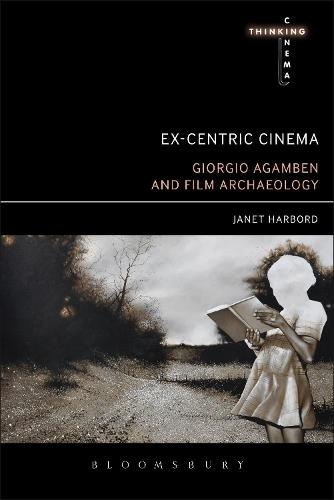
In the beginning, cinema was an encounter between humans, images and machine technology, revealing a stream of staccato gestures, micrographic worlds, and landscapes seen from above and below. In this sense, cinema's potency was its ability to bring other, non-human modes of being into view, to forge an encounter between multiple realities that nonetheless co-exist. Yet the story of cinema became (through its institutionalization) one in which the human swiftly assumed centrality through the literary crafting of story, character and the expression of interiority. Ex-centric Cinema takes an archaeological approach to the study of cinema through the writings of philosopher Giorgio Agamben, arguing that whilst we have a century-long tradition of cinema, the possibility of what cinema may have become is not lost, but co-exists in the present as an unexcavated potential. The term given to this history is ex-centric cinema, describing a centre-less moving image culture where animals, children, ghosts and machines are privileged vectors, where film is always an incomplete project, and where audiences are a coming community of ephemeral connections and links. Discussing such filmmakers as Harun Farocki, the Lumiere Brothers, Guy Debord and Wong Kar-wai, Janet Harbord draws connections with Agamben to propose a radically different way of thinking about cinema.
Full Product Details
Author: Janet Harbord (Queen Mary, University of London, UK)
Publisher: Bloomsbury Publishing Plc
Imprint: Bloomsbury Academic
Dimensions:
Width: 15.20cm
, Height: 2.50cm
, Length: 22.90cm
Weight: 0.558kg
ISBN: 9781628922424
ISBN 10: 1628922427
Pages: 272
Publication Date: 20 October 2016
Audience:
College/higher education
,
Undergraduate
,
Postgraduate, Research & Scholarly
Format: Hardback
Publisher's Status: Active
Availability: Manufactured on demand

We will order this item for you from a manufactured on demand supplier.
Reviews
Ex-centric Cinema introduces readers to a radically different way of thinking about cinema, which is attentive to lost or occluded potentials that can be re-activated. This is the first major study of Agamben's fragmentary work on cinema and the image, and also a major intervention in film studies. Harbord writes with clarity and elegance of expression. Benjamin Noys, Professor of Critical Theory, University of Chichester, UK Both beautifully written and theoretically astute, Ex-centric Cinema powerfully revitalizes film philosophy and methodology, while also providing an indispensable reading of Agamben's work in relation to cinema studies and media archaeology. Asbjorn Gronstad, Professor of Visual Culture, University of Bergen, Norway
Ex-centric Cinema introduces readers to a radically different way of thinking about cinema, which is attentive to lost or occluded potentials that can be re-activated. This is the first major study of Agamben's fragmentary work on cinema and the image, and also a major intervention in film studies. Harbord writes with clarity and elegance of expression. Benjamin Noys, Professor of Critical Theory, University of Chichester, UK
Author Information
Janet Harbord is Professor of Film Studies at Queen Mary, University of London, UK. She is the author of several books on film and philosophies of the moving image, including Chris Marker: La Jetée (2009), The Evolution of Film (2006) and Film Cultures (2002). She is the recipient of grants from the AHRC, EPSRC and the Leverhulme Trust.