|
|
|||
|
||||
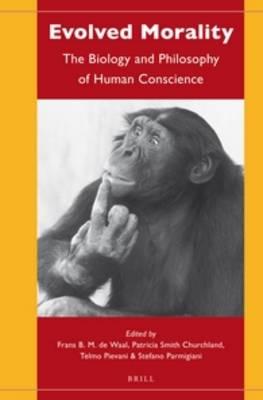
OverviewMorality is often defined in opposition to the natural ""instincts,"" or as a tool to keep those instincts in check. New findings in neuroscience, social psychology, animal behavior, and anthropology have brought us back to the original Darwinian position that moral behavior is continuous with the social behavior of animals, and most likely evolved to enhance the cooperativeness of society. In this view, morality is part of human nature rather than its opposite. This interdisciplinary volume debates the origin and working of human morality within the context of science as well as religion and philosophy. Experts from widely different backgrounds speculate how morality may have evolved, how it develops in the child, and what science can tell us about its working and origin. They also discuss how to deal with the age-old facts-versus-values debate, also known as the naturalistic fallacy. The implications of this exchange are enormous, as they may transform cherished views on if and why we are the only moral species. These articles are also published in Behaviour, Volume 151, Nos. 2/3 (February 2014). Suitable for course adoption! Full Product DetailsAuthor: Frans de WaalPublisher: Brill Imprint: Brill Dimensions: Width: 15.50cm , Height: 1.50cm , Length: 23.50cm Weight: 0.536kg ISBN: 9789004263871ISBN 10: 900426387 Pages: 276 Publication Date: 20 February 2014 Audience: Professional and scholarly , Professional & Vocational Format: Hardback Publisher's Status: Active Availability: Manufactured on demand We will order this item for you from a manufactured on demand supplier. Table of ContentsReviews'Because this collection represents some of the most cutting edge research questions being addressed in the field of animal studies right now, for anyone interested in the nature and development of morality in humans and animals and the relations between the two, this book is well worth considering.' Ben Mulvey in Metapsychology Online Reviews, Feb 3rd 2015 (Volume 19, Issue 6) 'Overall, this is a very well-written and thought-provoking text. Evolved Morality: The Biology and Philosophy of Human Conscience covers such a plethora of meaningful philosophical ideas, it is difficult to do it justice with a brief book review. It would be an excellent text for all social science students. It is sufficiently easy to read but covers a dearth of complex ideas, and therefore, it may help both undergraduate and graduate students learn to critically assess these important philosophical issues. This is a book that promotes critical reasoning about the concept of morality and human nature. Robert Perna in PsycCRITIQUES, June 22, 2015, Vol. 60, No. 25, Article 8 Author InformationTab Content 6Author Website:Countries AvailableAll regions |
||||