Overview
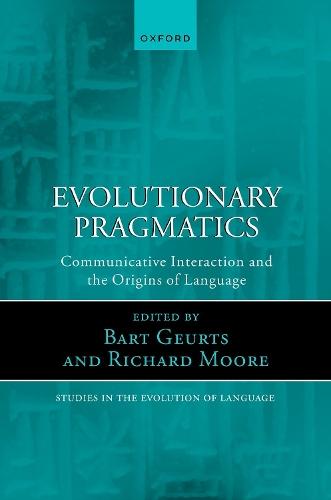
This volume explores the new interdisciplinary field of evolutionary pragmatics, which encompasses research on both the evolution of abilities needed for pragmatics and the role of pragmatics in the evolution of language. The biological evolution of linguistic capacities and the cultural evolution of natural languages were both driven by the communicative interactions of our ancestors; since these communicative interactions are the province of pragmatics, evolutionary pragmatics is the cornerstone of the study of the evolution of language.The chapters in this volume investigate a wide range of pragmatic topics from an evolutionary perspective, including reference, ambiguity, common ground, communicative intentions, and language conventions. The authors also examine a number of topics relating specifically to evolutionary pragmatics, ranging from baboon vocalizations and gestural communication in chimpanzees to formal models of the evolution of signalling systems and the co-evolution of pragmatics and grammar. The range of approaches adopted reflects the interdisciplinary nature of the field, with insights from linguistics, philosophy, psychology, and primatology.
Full Product Details
Author: Bart Geurts (Professor of the Philosophy of Language and Logic, Professor of the Philosophy of Language and Logic, Radboud University Nijmegen) ,
Richard Moore (Associate Professor, Department of Philosophy, Associate Professor, Department of Philosophy, University of Warwick)
Publisher: Oxford University Press
Imprint: Oxford University Press
Volume: 21
Dimensions:
Width: 16.00cm
, Height: 2.50cm
, Length: 24.00cm
Weight: 0.643kg
ISBN: 9780192871206
ISBN 10: 019287120
Pages: 336
Publication Date: 22 July 2025
Audience:
Professional and scholarly
,
College/higher education
,
Professional & Vocational
,
Postgraduate, Research & Scholarly
Format: Hardback
Publisher's Status: Active
Availability: To order

Stock availability from the supplier is unknown. We will order it for you and ship this item to you once it is received by us.
Author Information
Bart Geurts is Professor of the Philosophy of Language and Logic at Radboud University, Nijmegen. His main research interests are in semantic and pragmatic theory, but he has also carried out experimental research and has published on topics related to language development, language change, reasoning, social cognition, and evolution. His many publications include Presupposition and Pronouns (Elsevier, 1999) and Quantity Implicatures (CUP, 2010). Richard Moore is Associate Professor of Philosophy and UKRI Future Leaders Fellow at the University of Warwick, having previously held positions at Humboldt University Berlin and the Max Planck Institute for Evolutionary Anthropology in Leipzig. His Communicative Mind research group conducts philosophical and empirical research on the relationship between communication and theory of mind in human and non-human great apes.