Full Product Details
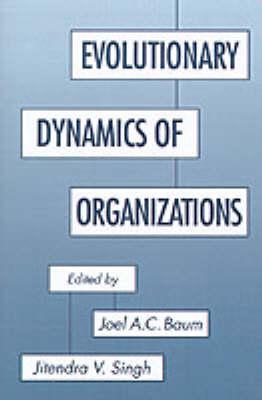
Author: Baum ,
Singh
Publisher: Oxford University Press Inc
Imprint: Oxford University Press Inc
Dimensions:
Width: 15.60cm
, Height: 3.40cm
, Length: 23.20cm
Weight: 0.736kg
ISBN: 9780195085846
ISBN 10: 0195085841
Pages: 528
Publication Date: 16 June 1994
Audience:
Professional and scholarly
,
Professional & Vocational
Format: Paperback
Publisher's Status: Active
Availability: To order

Stock availability from the supplier is unknown. We will order it for you and ship this item to you once it is received by us.
Reviews
<br> Organizations rise and fall. In between, they change--sometimes negligibly, sometimes gradually, sometimes radically. For the scholar who is interested in understanding the latest thinking on organizational evolution and change, this book is critically important. It presents fresh, insightful pieces from many of the leading thinkers on the topic. We can expect to find the Baum and Singh volume on a lot of desks, and represented in many reference lists, through the rest of the 90's.--Donald C. Hambrick, Columbia University<p><br> Goes a long way toward integrating much of organizational studies. --Contemporary Sociology<p><br> During the past decade, evolutionary theorizing has moved from the periphery to center stage in guiding work on organizations. This volume not only underscores this trend, but broadens and enriches it by examining the multiple, nested evolutionary systems--subunit, organization, population, organizational community--relevant to organizational change. --W. Richard Scott, Stanford University<p><br> This is an excellent volume, full of exciting and impressive contributions from a broad range of top-notch scholars. --Walter W. Powell, University of Arizona<p><br> The most intellectually vibrant and sophisticated collection of original works connecting evolution, organization theory, and change. Knowledgeable, timely, and wonderfully challenging. --Paul M. Hirsch, Northwestern University<p><br>
Organizations rise and fall. In between, they change--sometimes negligibly, sometimes gradually, sometimes radically. For the scholar who is interested in understanding the latest thinking on organizational evolution and change, this book is critically important. It presents fresh, insightful pieces from many of the leading thinkers on the topic. We can expect to find the Baum and Singh volume on a lot of desks, and represented in many reference lists, through the rest of the 90's.--Donald C. Hambrick, Columbia University<br> Goes a long way toward integrating much of organizational studies. --Contemporary Sociology<br> During the past decade, evolutionary theorizing has moved from the periphery to center stage in guiding work on organizations. This volume not only underscores this trend, but broadens and enriches it by examining the multiple, nested evolutionary systems--subunit, organization, population, organizational community--relevant to organizational change. --W. Richard Scott, Stanford University<br> This is an excellent volume, full of exciting and impressive contributions from a broad range of top-notch scholars. --Walter W. Powell, University of Arizona<br> The most intellectually vibrant and sophisticated collection of original works connecting evolution, organization theory, and change. Knowledgeable, timely, and wonderfully challenging. --Paul M. Hirsch, Northwestern University<br>
Organizations rise and fall. In between, they change--sometimes negligibly, sometimes gradually, sometimes radically. For the scholar who is interested in understanding the latest thinking on organizational evolution and change, this book is critically important. It presents fresh, insightful pieces from many of the leading thinkers on the topic. We can expect to find the Baum and Singh volume on a lot of desks, and represented in many reference lists, through the rest of the 90's.--Donald C. Hambrick, Columbia University Goes a long way toward integrating much of organizational studies. --Contemporary Sociology During the past decade, evolutionary theorizing has moved from the periphery to center stage in guiding work on organizations. This volume not only underscores this trend, but broadens and enriches it by examining the multiple, nested evolutionary systems--subunit, organization, population, organizational community--relevant to organizational change. --W. Richard Scott, Stanford University This is an excellent volume, full of exciting and impressive contributions from a broad range of top-notch scholars. --Walter W. Powell, University of Arizona The most intellectually vibrant and sophisticated collection of original works connecting evolution, organization theory, and change. Knowledgeable, timely, and wonderfully challenging. --Paul M. Hirsch, Northwestern University