|
|
|||
|
||||
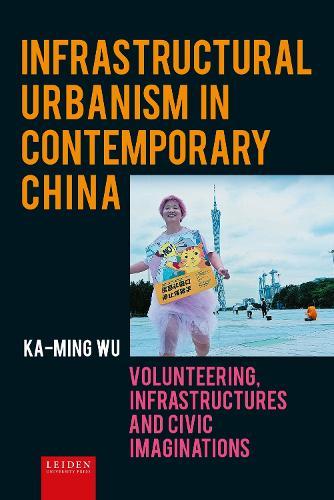
OverviewThis book examines how Chinese citizens negotiate their everyday experiences with urban spaces, improved city infrastructure, and an increasingly tight surveillance regime through volunteering. It asks how citizens connect to city spaces where facilities for transit, culture, and leisure have been substantially upgraded. Drawing on extensive research, the author investigates how citizens conduct volunteer activities that not only promote party-state campaigns and engage with new urban spaces and services, but also experiment with political, social, and cultural rights, including advocating for the rights of people with disabilities and promoting unofficial interpretations of national history. The book argues that volunteering has become an urban practice through which citizens navigate existing hierarchies of urban and rural status, gender, age, and ability, while contesting top-down, mega-event–driven urbanization. It situates Chinese everyday urbanism within the context of China's hosting of multiple international events, its expanding public and digital infrastructures, heightened party-state control, and burgeoning digital activism. The book contributes to the infrastructural turn in urban anthropology and the field of China studies, offering a new understanding of urban rights and public access in contemporary China. Full Product DetailsAuthor: Ka-ming WuPublisher: Leiden University Press Imprint: Leiden University Press ISBN: 9789087285098ISBN 10: 9087285094 Pages: 178 Publication Date: 01 May 2026 Audience: College/higher education , Postgraduate, Research & Scholarly Format: Hardback Publisher's Status: Active Availability: In Print This item will be ordered in for you from one of our suppliers. Upon receipt, we will promptly dispatch it out to you. For in store availability, please contact us. Table of ContentsList of Figures Introduction 1. Ceremonial Volunteers, Mega-events and the Making of Role Model Citizens 2. Elderly Vigilantes? Wayfinding Service or Surveillance in the Capital 3. Museum Storytellers, National Treasures and Critical Guided Tours 4. Stranger Companions in the Dark: The Biopolitics of Sharing the City with the Visually Challenged 5. The Pink Flâneur: Feminist Volunteering in Urban Transits and Landmarks Conclusion Glossary IndexReviewsAuthor InformationKa-ming Wu is Associate Professor in the Department of Cultural and Religious Studies at the Chinese University of Hong Kong. She is a cultural anthropologist of contemporary China, and her work is interdisciplinary in approach at the intersection of Cultural Studies, Anthropology and China Studies. Ka-ming's first monograph is Reinventing Chinese Tradition: The Cultural Politics of Late Socialism (UIP 2015). Her second book Feiping Shenghuo: Lajichang De Jingji, Shequn Yu Kongjian (CUHK 2016) (Living with Waste: Economies, Communities and Spaces of Waste Collectors in China) discusses the socio-cultural impacts of waste. Ka-ming's research and scholarship have developed in concomitance with the field of environmental humanities, with waste studies and critical urban studies as the major pillars. Tab Content 6Author Website:Countries AvailableAll regions |
||||