Overview
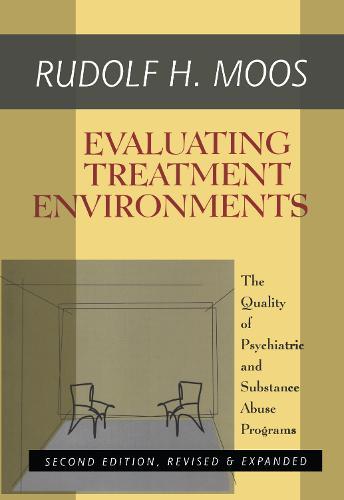
Evaluating Treatment Environments describes how to assess the quality of psychiatric and substance abuse programs and how to use that information to monitor and improve these programs. Its aim is to identify environments that promote opportunities for personal growth, simultaneously enhancing both physical and psychological well-being. Although treatment programs are diverse, Moos asserts that a common conceptual framework can be used to evaluate them, and more emphasis should be placed on the process of matching personal and program factors and on the connections between such matches and patients' outcomes. The book is divided into three main parts. Part I focuses on hospital programs, using a sample of 160 programs throughout the United States. Part II evaluates community programs. Moos describes how to monitor and improve these programs, and assesses program implementation. Part III considers treatment environments, examining factors that shape the treatment environment, patients' satisfaction with and participation in program activities, patients' adaptation and community living skills, and patient-program congruence and the influence of treatment environments on patients with different levels of impairment. It also highlights the importance of the health care workplace and its impact on staff and the treatment environment. Treatment programs vary substantially in their policies and services, especially in what they expect of clients, rules about clients' daily life choices, and to what extent clients must be governed by the program, and whether or not the programs provide health and treatment services. Comparison studies are becoming more important as clients move more quickly from acute in-patient to community residential care. Moos stresses the need to pay special attention to how programs and services affect clients when conducting evaluations. Evaluating Treatment Environments will be a necessary addition to the libraries of mental health service professionals, as well as sociologists, psychiatrists, psychologists, and social workers.
Full Product Details
Author: Rudolf H. Moos
Publisher: Taylor & Francis Inc
Imprint: Routledge
Edition: 2nd edition
Dimensions:
Width: 15.20cm
, Height: 3.00cm
, Length: 22.90cm
Weight: 0.680kg
ISBN: 9781560002949
ISBN 10: 1560002948
Pages: 302
Publication Date: 28 February 1997
Audience:
College/higher education
,
Professional and scholarly
,
Undergraduate
,
Postgraduate, Research & Scholarly
Format: Hardback
Publisher's Status: Active
Availability: In Print

This item will be ordered in for you from one of our suppliers. Upon receipt, we will promptly dispatch it out to you. For in store availability, please contact us.
Reviews
This volume is a significantly updated and rewritten version of the first edition, which was published in 1974. . . . The book (and Moos's work) is remarkable for its focus upon the centrally important issue of treatment content and structure. . . . [T]his is a book to be greeted with enthusiasm. It reminds us of how little we know about what goes on in treatment and it provides a valuable lesson in how such problems can be tackled. Those who know Moos' important research will be pleased to see the return on this book in its updated and improved form. Those who are unfamiliar with his work would be well advised to acquire a copy and to think about the issues raised. --Michael Gossop, Addiction
-This volume is a significantly updated and rewritten version of the first edition, which was published in 1974. . . . The book (and Moos's work) is remarkable for its focus upon the centrally important issue of treatment content and structure. . . . [T]his is a book to be greeted with enthusiasm. It reminds us of how little we know about what goes on in treatment and it provides a valuable lesson in how such problems can be tackled. Those who know Moos' important research will be pleased to see the return on this book in its updated and improved form. Those who are unfamiliar with his work would be well advised to acquire a copy and to think about the issues raised.- --Michael Gossop, Addiction ""This volume is a significantly updated and rewritten version of the first edition, which was published in 1974. . . . The book (and Moos's work) is remarkable for its focus upon the centrally important issue of treatment content and structure. . . . [T]his is a book to be greeted with enthusiasm. It reminds us of how little we know about what goes on in treatment and it provides a valuable lesson in how such problems can be tackled. Those who know Moos' important research will be pleased to see the return on this book in its updated and improved form. Those who are unfamiliar with his work would be well advised to acquire a copy and to think about the issues raised."" --Michael Gossop, Addiction ""This volume is a significantly updated and rewritten version of the first edition, which was published in 1974. . . . The book (and Moos's work) is remarkable for its focus upon the centrally important issue of treatment content and structure. . . . [T]his is a book to be greeted with enthusiasm. It reminds us of how little we know about what goes on in treatment and it provides a valuable lesson in how such problems can be tackled. Those who know Moos' important research will be pleased to see the return on this book in its updated and improved form. Those who are unfamiliar with his work would be well advised to acquire a copy and to think about the issues raised."" --Michael Gossop, Addiction
-This volume is a significantly updated and rewritten version of the first edition, which was published in 1974. . . . The book (and Moos's work) is remarkable for its focus upon the centrally important issue of treatment content and structure. . . . [T]his is a book to be greeted with enthusiasm. It reminds us of how little we know about what goes on in treatment and it provides a valuable lesson in how such problems can be tackled. Those who know Moos' important research will be pleased to see the return on this book in its updated and improved form. Those who are unfamiliar with his work would be well advised to acquire a copy and to think about the issues raised.- --Michael Gossop, Addiction This volume is a significantly updated and rewritten version of the first edition, which was published in 1974. . . . The book (and Moos's work) is remarkable for its focus upon the centrally important issue of treatment content and structure. . . . [T]his is a book to be greeted with enthusiasm. It reminds us of how little we know about what goes on in treatment and it provides a valuable lesson in how such problems can be tackled. Those who know Moos' important research will be pleased to see the return on this book in its updated and improved form. Those who are unfamiliar with his work would be well advised to acquire a copy and to think about the issues raised. --Michael Gossop, Addiction This volume is a significantly updated and rewritten version of the first edition, which was published in 1974. . . . The book (and Moos's work) is remarkable for its focus upon the centrally important issue of treatment content and structure. . . . [T]his is a book to be greeted with enthusiasm. It reminds us of how little we know about what goes on in treatment and it provides a valuable lesson in how such problems can be tackled. Those who know Moos' important research will be pleased to see the return on this book in its updated and improved form. Those who are unfamiliar with his work would be well advised to acquire a copy and to think about the issues raised. --Michael Gossop, Addiction