Overview
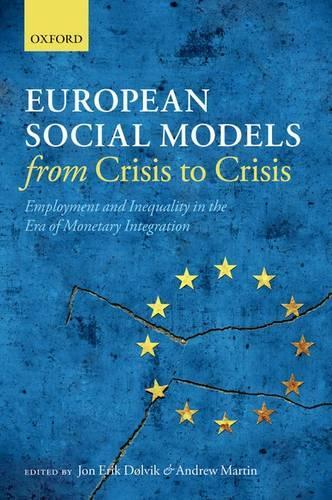
Europeans use 'social models' to refer to the combination of welfare state, industrial relations, and educational institutions jointly structuring what we can think of as the supply-side of the labor market. The dominant view in controversy over the social models has been that in the name of equity they have impaired the labor market's efficiency, thereby causing unemployment. But doubt is cast on this supply-side-only diagnosis by powerful macroeconomic developments, from the Europe-wide recession following Germany's post-unification boom to the deepest economic crisis since the interwar Great Depression, which the Eurozone's truncated economic governance structure transformed into a sovereign debt crisis, threatening the Euro's and even EU's very survival. This book explores the interaction of Europe's diverse social models with the major developments that shaped their macroeconomic environment over the quarter century since the fall of the Berlin Wall. It concludes that this environment rather than the social models are primarily responsible for the immense social costs of the crisis.
Full Product Details
Author: Jon Erik Dølvik (Research Director,, Research Director,, Research Director, Fafo Institute for Labour and Social Research, Oslo) ,
Andrew Martin (Research Associate, Research Associate, Center for European Studies, Harvard University)
Publisher: Oxford University Press
Imprint: Oxford University Press
Dimensions:
Width: 15.60cm
, Height: 2.50cm
, Length: 23.20cm
Weight: 0.694kg
ISBN: 9780198798866
ISBN 10: 0198798865
Pages: 464
Publication Date: 16 February 2017
Audience:
College/higher education
,
Professional and scholarly
,
Undergraduate
,
Postgraduate, Research & Scholarly
Format: Paperback
Publisher's Status: Active
Availability: Manufactured on demand

We will order this item for you from a manufactured on demand supplier.
Reviews
'[T]his is an impressive volume that intelligently raises and answers a multitude of questions, and which has yet to find robust competition. The book is a must for the library of every political economist, comparative social policy scholar, and historically attuned economist.' Robert Hancke, Council for European Studies Reviews 'This is a fascinating book providing a wealth of information and incisive analysis on how monetary integration affects the evolution of social models in Europe. It is required reading for all those who are eager to understand the social dimension of the euro crisis.' Paul De Grauwe, John Paulson Professor in European Political Economy at the London School of Economics and Political Science 'European Social Models from Crisis to Crisis is an amazing volume with sobering conclusions for European welfare state and integration prospects. It is the first collection in welfare regime studies and comparative political economy to show how the European sovereign debt crisis, with its aftershocks of mass unemployment and rising inequality resulted from how monetary integration unfolded since the 1989 fall of the Berlin Wall. By doing so in a highly structured fashion, the volume rightly breaks with the convention of 'methodological nationalism.' It's a first rate, timely and utterly indispensable read for EU and domestic policy makers, welfare state students, political economists and EU integration pundits and academics.' Anton Hemerijck, Professor of Institutional Policy Analysis, VU University Amsterdam, and Centennial Professor of Social Policy, LSE 'This volume delivers a pioneering study of the connection between the development of Europe's monetary system and the evolution of European welfare and labour regimes. Analysing the causes and consequences of the recent crisis, Dolvik and Martin conclude that the divergence within the Eurozone is likely to deepen. Clearly, ignoring the crisis' severe social consequences implies risking disintegration of EMU and destabilisation of the EU. To better reconcile Europe's economic and social objectives, EMU needs further reform. Reading this book will help all who want to work on this in either theory or practice. ' Laszlo Andor, Commissioner for Employment, Social Affairs and Inclusion, European Commission 2010-2014 impressive volume Caroline de la Porte, Transfer
[T]his is an impressive volume that intelligently raises and answers a multitude of questions, and which has yet to find robust competition. The book is a must for the library of every political economist, comparative social policy scholar, and historically attuned economist. Robert Hancke, Council for European Studies Reviews This is a fascinating book providing a wealth of information and incisive analysis on how monetary integration affects the evolution of social models in Europe. It is required reading for all those who are eager to understand the social dimension of the euro crisis. Paul De Grauwe, John Paulson Professor in European Political Economy at the London School of Economics and Political Science European Social Models from Crisis to Crisis is an amazing volume with sobering conclusions for European welfare state and integration prospects. It is the first collection in welfare regime studies and comparative political economy to show how the European sovereign debt crisis, with its aftershocks of mass unemployment and rising inequality resulted from how monetary integration unfolded since the 1989 fall of the Berlin Wall. By doing so in a highly structured fashion, the volume rightly breaks with the convention of 'methodological nationalism.' It's a first rate, timely and utterly indispensable read for EU and domestic policy makers, welfare state students, political economists and EU integration pundits and academics. Anton Hemerijck, Professor of Institutional Policy Analysis, VU University Amsterdam, and Centennial Professor of Social Policy, LSE This volume delivers a pioneering study of the connection between the development of Europe's monetary system and the evolution of European welfare and labour regimes. Analysing the causes and consequences of the recent crisis, Dolvik and Martin conclude that the divergence within the Eurozone is likely to deepen. Clearly, ignoring the crisis' severe social consequences implies risking disintegration of EMU and destabilisation of the EU. To better reconcile Europe's economic and social objectives, EMU needs further reform. Reading this book will help all who want to work on this in either theory or practice. Laszlo Andor, Commissioner for Employment, Social Affairs and Inclusion, European Commission 2010-2014
`[T]his is an impressive volume that intelligently raises and answers a multitude of questions, and which has yet to find robust competition. The book is a must for the library of every political economist, comparative social policy scholar, and historically attuned economist.' Robert Hancke, Council for European Studies Reviews `This is a fascinating book providing a wealth of information and incisive analysis on how monetary integration affects the evolution of social models in Europe. It is required reading for all those who are eager to understand the social dimension of the euro crisis.' Paul De Grauwe, John Paulson Professor in European Political Economy at the London School of Economics and Political Science `European Social Models from Crisis to Crisis is an amazing volume with sobering conclusions for European welfare state and integration prospects. It is the first collection in welfare regime studies and comparative political economy to show how the European sovereign debt crisis, with its aftershocks of mass unemployment and rising inequality resulted from how monetary integration unfolded since the 1989 fall of the Berlin Wall. By doing so in a highly structured fashion, the volume rightly breaks with the convention of 'methodological nationalism.' It's a first rate, timely and utterly indispensable read for EU and domestic policy makers, welfare state students, political economists and EU integration pundits and academics.' Anton Hemerijck, Professor of Institutional Policy Analysis, VU University Amsterdam, and Centennial Professor of Social Policy, LSE `This volume delivers a pioneering study of the connection between the development of Europe's monetary system and the evolution of European welfare and labour regimes. Analysing the causes and consequences of the recent crisis, Dolvik and Martin conclude that the divergence within the Eurozone is likely to deepen. Clearly, ignoring the crisis' severe social consequences implies risking disintegration of EMU and destabilisation of the EU. To better reconcile Europe's economic and social objectives, EMU needs further reform. Reading this book will help all who want to work on this in either theory or practice. ' Laszlo Andor, Commissioner for Employment, Social Affairs and Inclusion, European Commission 2010-2014
'[T]his is an impressive volume that intelligently raises and answers a multitude of questions, and which has yet to find robust competition. The book is a must for the library of every political economist, comparative social policy scholar, and historically attuned economist.' Robert Hancke, Council for European Studies Reviews 'This is a fascinating book providing a wealth of information and incisive analysis on how monetary integration affects the evolution of social models in Europe. It is required reading for all those who are eager to understand the social dimension of the euro crisis.' Paul De Grauwe, John Paulson Professor in European Political Economy at the London School of Economics and Political Science 'European Social Models from Crisis to Crisis is an amazing volume with sobering conclusions for European welfare state and integration prospects. It is the first collection in welfare regime studies and comparative political economy to show how the European sovereign debt crisis, with its aftershocks of mass unemployment and rising inequality resulted from how monetary integration unfolded since the 1989 fall of the Berlin Wall. By doing so in a highly structured fashion, the volume rightly breaks with the convention of 'methodological nationalism.' It's a first rate, timely and utterly indispensable read for EU and domestic policy makers, welfare state students, political economists and EU integration pundits and academics.' Anton Hemerijck, Professor of Institutional Policy Analysis, VU University Amsterdam, and Centennial Professor of Social Policy, LSE 'This volume delivers a pioneering study of the connection between the development of Europe's monetary system and the evolution of European welfare and labour regimes. Analysing the causes and consequences of the recent crisis, Dolvik and Martin conclude that the divergence within the Eurozone is likely to deepen. Clearly, ignoring the crisis' severe social consequences implies risking disintegration of EMU and destabilisation of the EU. To better reconcile Europe's economic and social objectives, EMU needs further reform. Reading this book will help all who want to work on this in either theory or practice. ' Laszlo Andor, Commissioner for Employment, Social Affairs and Inclusion, European Commission 2010-2014
Author Information
Jon Erik Dølvik is Dr.philos, sociologist, and Head of Research at Fafo, Institute for Labour and Social Research in Oslo, where he has worked since the 1980s. Dølvik has published extensively in the field of comparative employment relations, social models, and labour migration in the Nordic and European context. His doctoral thesis was on Europeanization of trade unions and social dialogue in the 1990s. He is a longstanding member of the Editorial Panel of European Journal of Industrial Relations and Transfer -- European Review of Labour and Research. Besides stays as visiting scholar abroad, Dølvik has been member of several government appointed commissions regarding labour market issues and Norway's relationship to the EU, and is much used as expert commentator on such issues in the Norwegian public. Andrew Martin is a Research Associate, Center for European Studies, Harvard University. His publications include Euros and Europeans: Monetary Integration and the European Model of Society (2004), and The Brave New World of European Labor: Trade Union Responses to Economic Crisis in Western Europe (1999, both co-edited with G. Ross). Martin co-edits Open Forum, the interactive CES working papers series.