|
|
|||
|
||||
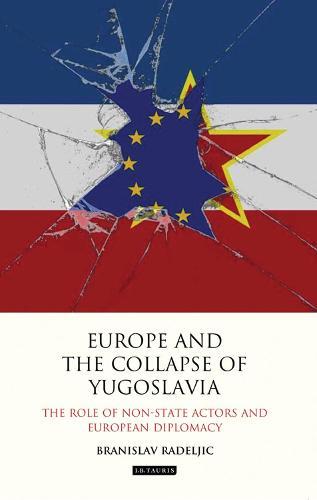
OverviewIn 1992 Yugoslavia finally succumbed to civil war, collapsing under the pressure of its inherent ethnic tensions. Existing accounts of Yugoslavia s dissolution, however, pay little regard to the troubled relationship between the Yugoslav Federation and the European Community (EC) prior to the crisis in the early 1990s, and the instability this created. Here, Branislav Radeljic offers an empirical analysis of the EC s relations with Yugoslavia from the late sixties, when Yugoslavia was under the presidency of Josep Broz Tito, through to the collapse of the Yugoslav federation in 1992, after the rise of Slobodan Milo evi? and the beginning of the Yugoslav Wars. Radeljic explores the economic, political and social elements of these discords, and also places emphasis on the role of Slovenes, Croats and other diasporas focusing on their capacity to affect policy-making at a Europe-wide level. Radeljic argues convincingly that a lack of direction and inadequate political mechanisms within the EC enabled these non-state actors to take centre-stage, and shows how EC paralysis precipitated a bloody conflict in the Balkan region."" Full Product DetailsAuthor: Branislav RadeljicPublisher: Bloomsbury Publishing PLC Imprint: I.B. Tauris Dimensions: Width: 13.80cm , Height: 2.20cm , Length: 21.40cm Weight: 0.303kg ISBN: 9781784533762ISBN 10: 1784533769 Pages: 272 Publication Date: 11 May 2016 Audience: General/trade , Professional and scholarly , General , Professional & Vocational Format: Paperback Publisher's Status: Active Availability: Manufactured on demand We will order this item for you from a manufactured on demand supplier. Table of ContentsReviewsAuthor InformationBranislav Radeljic is a Senior Lecturer in International Politics at the University of East London. Tab Content 6Author Website:Countries AvailableAll regions |
||||