Overview
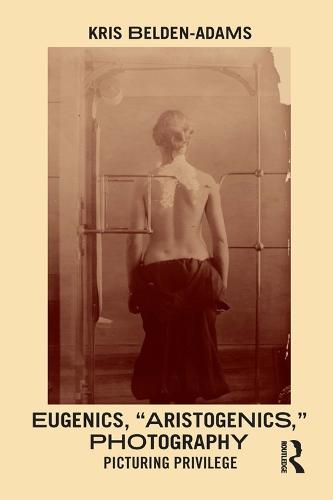
This is the first study to explore the connections between late-19th-century university/college composite class portraits and the field of eugenics – which first took hold in the United States at Harvard University. Eugenics, ""Aristogenics,"" Photography takes a closer look at how composite portraiture documented an idealized “reality” of the New England social-caste experience and explains how, when positioned in relation to the individual stories and portraits of members of the class, the portraits reveal points of non-conformity and rebellion with their own rhetoric.
Full Product Details
Author: Kris Belden-Adams
Publisher: Taylor & Francis Ltd
Imprint: Routledge
Weight: 0.400kg
ISBN: 9780367562687
ISBN 10: 0367562685
Pages: 256
Publication Date: 29 January 2024
Audience:
Professional and scholarly
,
Professional & Vocational
Format: Paperback
Publisher's Status: Active
Availability: In Print

This item will be ordered in for you from one of our suppliers. Upon receipt, we will promptly dispatch it out to you. For in store availability, please contact us.
Reviews
""Clearly argued, thoroughly documented book. Highly recommended. Lower-division undergraduates through faculty; professionals; general readers."" —Choice ""Belden-Adams shows us the importance of reflecting today on photography’s construction of social privilege and investment in American nativism. Ascribing such work to college portraiture from the turn of the twentieth century, she reminds us that our photographic practices have always been political."" —Tanya Sheehan, William R. Kenan Jr. Professor of Art, Colby College, USA ""Belden-Adams’s exceedingly well-researched book dives deep into the problematic waters of nineteenth-century eugenics photography and related uses of the medium. What she finds is that defining racial, criminal, and honorific types through photography held far more purchase in the US than previously known. But her study also shows that the instability of eugenics logic led to spectacular failures of the resulting pictures, particularly as compared to counter efforts at the subtle queering of photography at the same time among similar constituencies."" —Andrés Mario Zervigón, Professor of the History of Photography, Rutgers University, USA ""Clearly argued, thoroughly documented book. Highly recommended. Lower-division undergraduates through faculty; professionals; general readers."" —Choice ""Belden-Adams shows us the importance of reflecting today on photography’s construction of social privilege and investment in American nativism. Ascribing such work to college portraiture from the turn of the twentieth century, she reminds us that our photographic practices have always been political."" —Tanya Sheehan, William R. Kenan Jr. Professor of Art, Colby College, USA ""Belden-Adams’s exceedingly well-researched book dives deep into the problematic waters of nineteenth-century eugenics photography and related uses of the medium. What she finds is that defining racial, criminal, and honorific types through photography held far more purchase in the US than previously known. But her study also shows that the instability of eugenics logic led to spectacular failures of the resulting pictures, particularly as compared to counter efforts at the subtle queering of photography at the same time among similar constituencies."" —Andrés Mario Zervigón, Professor of the History of Photography, Rutgers University, USA
"""Clearly argued, thoroughly documented book. Highly recommended. Lower-division undergraduates through faculty; professionals; general readers."" —Choice ""Belden-Adams shows us the importance of reflecting today on photography’s construction of social privilege and investment in American nativism. Ascribing such work to college portraiture from the turn of the twentieth century, she reminds us that our photographic practices have always been political."" —Tanya Sheehan, William R. Kenan Jr. Professor of Art, Colby College, USA ""Belden-Adams’s exceedingly well-researched book dives deep into the problematic waters of nineteenth-century eugenics photography and related uses of the medium. What she finds is that defining racial, criminal, and honorific types through photography held far more purchase in the US than previously known. But her study also shows that the instability of eugenics logic led to spectacular failures of the resulting pictures, particularly as compared to counter efforts at the subtle queering of photography at the same time among similar constituencies."" —Andrés Mario Zervigón, Professor of the History of Photography, Rutgers University, USA ""Clearly argued, thoroughly documented book. Highly recommended. Lower-division undergraduates through faculty; professionals; general readers."" —Choice ""Belden-Adams shows us the importance of reflecting today on photography’s construction of social privilege and investment in American nativism. Ascribing such work to college portraiture from the turn of the twentieth century, she reminds us that our photographic practices have always been political."" —Tanya Sheehan, William R. Kenan Jr. Professor of Art, Colby College, USA ""Belden-Adams’s exceedingly well-researched book dives deep into the problematic waters of nineteenth-century eugenics photography and related uses of the medium. What she finds is that defining racial, criminal, and honorific types through photography held far more purchase in the US than previously known. But her study also shows that the instability of eugenics logic led to spectacular failures of the resulting pictures, particularly as compared to counter efforts at the subtle queering of photography at the same time among similar constituencies."" —Andrés Mario Zervigón, Professor of the History of Photography, Rutgers University, USA"
Author Information
Kris Belden-Adams is Associate Professor of Art History at the University of Mississippi, USA.