|
|
|||
|
||||
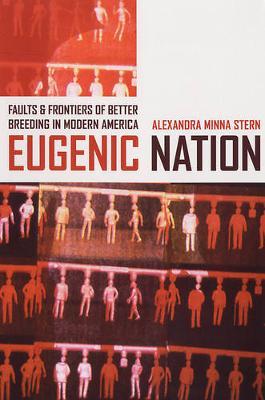
OverviewMany people assume that eugenics all but disappeared with the fall of Nazism, but as this sweeping history demonstrates, the idea of better breeding had a wide and surprising reach in the United States throughout the twentieth century. With an original emphasis on the American West, ""Eugenic Nation"" brings to light many little-known facts - for example, that one-third of the involuntary sterilizations in this country occurred in California between 1909 and 1979 - as it explores the influence of eugenics on phenomena as varied as race-based intelligence tests, school segregation, tropical medicine, the Border Patrol, and the environmental movement. ""Eugenic Nation"" begins in the 1900s, when influential California eugenicists molded an extensive agenda of better breeding for the rest of the country. The book traces hereditarian theories of sex and gender to the culture of conformity of the 1950s and moves to the 1960s, arguing that the liberation movements of that decade emerged in part as a challenge to policies and practices informed by eugenics. Full Product DetailsAuthor: Alexandra Minna SternPublisher: University of California Press Imprint: University of California Press Volume: 17 Dimensions: Width: 15.20cm , Height: 2.20cm , Length: 22.90cm Weight: 0.499kg ISBN: 9780520244443ISBN 10: 0520244443 Pages: 361 Publication Date: 08 August 2005 Audience: Professional and scholarly , Professional & Vocational Format: Paperback Publisher's Status: Out of Print Availability: In Print Limited stock is available. It will be ordered for you and shipped pending supplier's limited stock. Table of ContentsReviewsAuthor InformationAlexandra Minna Stern is Associate Director, Center for the History of Medicine, and Assistant Professor of Obstetrics and Gynecology and American Culture at the University of Michigan. She is coeditor, with Howard Markel, of Formative Years: Children's Health in the United States, 1880-2000 (2002). Tab Content 6Author Website:Countries AvailableAll regions |
||||