Overview
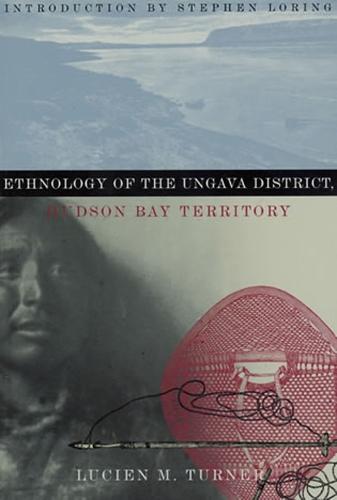
Especially notable for Lucien Turner's descriptions of 19th-century Native material culture, this book was originally published in 1894 as part of the Smithsonian's ""Annual Reports of the Bureau of American Ethnology"" series. The book was written after Lucien Turner arrived at the present-day community of Kuujjuaq on the northern Quebec-Labrador peninsula in 1882. As with his earlier long-term appointments in Alaska, he primarily conducted meteorological, atmospheric and tidal observations for the US Army's Signal Corps. However, he also developed a rapport with the Innu and Inuit, spending his free time studying and recording not only their material culture - including clothing, dwellings, weapons and tools - but also their lifeways, language and stories. His images of the peoples' camps, as well as their formal portraits, are among the earliest examples of photography in the Arctic. This reissue aims to ensure that Turner's work continues to be a classic introduction to the culture of the Innu and Inuit people of northern Quebec and Labrador.
Full Product Details
Author: Lucien M. Turner ,
Stephen Loring
Publisher: Smithsonian Books
Imprint: Smithsonian Institution Scholarly Press
Dimensions:
Width: 15.10cm
, Height: 1.60cm
, Length: 22.70cm
Weight: 0.397kg
ISBN: 9781560989653
ISBN 10: 1560989653
Pages: 189
Publication Date: 17 September 2001
Audience:
General/trade
,
General
Format: Paperback
Publisher's Status: Active
Availability: Out of stock

The supplier is temporarily out of stock of this item. It will be ordered for you on backorder and shipped when it becomes available.
Reviews
""With few exceptions - Inuit shamanistic paraphernalia and Innu hunting charms - the majority of the material Turner collected were artifacts and clothing used in day-to-day activities. The passage of time and the miracle of conservation have transformed these ethnographic minutiae, these objects and materials of relatively minor significance in the past, into treasured cultural icons."" - Stephen Loring, from the introduction.
With few exceptions - Inuit shamanistic paraphernalia and Innu hunting charms - the majority of the material Turner collected were artifacts and clothing used in day-to-day activities. The passage of time and the miracle of conservation have transformed these ethnographic minutiae, these objects and materials of relatively minor significance in the past, into treasured cultural icons. - Stephen Loring, from the introduction.
This is a republished version of Turner's 1894 classic ethnography... The initiative to republish the work came from Innu and Inuit organisations themselves... Loring's 32-page introduction is particularly useful for situating this work. -- David G. Anderson, University of Aberdeen Social Anthropology
Author Information
Lucien M. Turner (1848-1909) contributed significantly to the collections of the Smithsonian Institution; he was the author of Contributions to the Natural History of Alaska (1868). Stephen Loring is an anthropologist at the Arctic Studies Center of the Smithsonian's National Museum of Natural History.