Overview
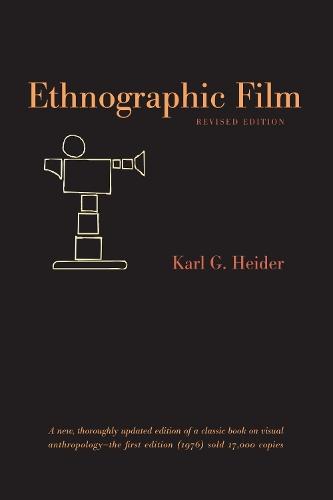
From reviews of the first edition: ""Ethnographic Film can rightly be considered a film primer for anthropologists."" -Choice ""This is an interesting and useful book about what it means to be ethnographic and how this might affect ethnographic filmmaking for the better. It obviously belongs in all departments of anthropology, and most ethnographic filmmakers will want to read it."" -Ethnohistory Even before Robert Flaherty released Nanook of the North in 1922, anthropologists were producing films about the lifeways of native peoples for a public audience, as well as for research and teaching. Ethnographic Film (1976) was one of the first books to provide a comprehensive introduction to this field of visual anthropology, and it quickly became the standard reference. In this new edition, Karl G. Heider thoroughly updates Ethnographic Film to reflect developments in the field over the three decades since its publication, focusing on the work of four seminal filmmakers-Jean Rouch, John Marshall, Robert Gardner, and Timothy Asch. He begins with an introduction to ethnographic film and a history of the medium. He then considers many attributes of ethnographic film, including the crucial need to present ""whole acts,"" ""whole bodies,"" ""whole interactions,"" and ""whole people"" to preserve the integrity of the cultural context. Heider also discusses numerous aspects of making ethnographic films, from ethics and finances to technical considerations such as film versus video and preserving the filmed record. He concludes with a look at using ethnographic film in teaching.
Full Product Details
Author: Karl G. Heider
Publisher: University of Texas Press
Imprint: University of Texas Press
Edition: Revised Edition
Dimensions:
Width: 15.20cm
, Height: 1.30cm
, Length: 22.90cm
Weight: 0.227kg
ISBN: 9780292714588
ISBN 10: 0292714580
Pages: 180
Publication Date: 01 November 2006
Audience:
Professional and scholarly
,
Professional & Vocational
Format: Paperback
Publisher's Status: Active
Availability: In Print

This item will be ordered in for you from one of our suppliers. Upon receipt, we will promptly dispatch it out to you. For in store availability, please contact us.
Reviews
From reviews of the first edition: ""Ethnographic Film can rightly be considered a film primer for anthropologists."" Choice ""This is an interesting and useful book about what it means to be ethnographic and how this might affect ethnographic filmmaking for the better. It obviously belongs in all departments of anthropology, and most ethnographic filmmakers will want to read it."" Ethnohistory
From reviews of the first edition: Ethnographic Film can rightly be considered a film primer for anthropologists. Choice This is an interesting and useful book about what it means to be ethnographic and how this might affect ethnographic filmmaking for the better. It obviously belongs in all departments of anthropology, and most ethnographic filmmakers will want to read it. Ethnohistory
"From reviews of the first edition: ""Ethnographic Film can rightly be considered a film primer for anthropologists."" Choice ""This is an interesting and useful book about what it means to be ethnographic and how this might affect ethnographic filmmaking for the better. It obviously belongs in all departments of anthropology, and most ethnographic filmmakers will want to read it."" Ethnohistory"
Author Information
Karl G. Heider is Carolina Distinguished Professor of Anthropology at the University of South Carolina, Columbia.