|
Overview
Full Product Details
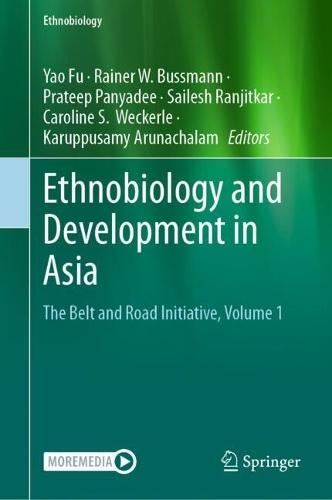
Author: Yao Fu , Rainer W. Bussmann , Prateep Panyadee , Sailesh Ranjitkar
Publisher: Springer International Publishing AG
Imprint: Springer International Publishing AG
ISBN: 9783031919442
ISBN 10: 3031919440
Pages: 688
Publication Date: 14 February 2026
Audience:
Professional and scholarly
,
College/higher education
,
Professional & Vocational
,
Postgraduate, Research & Scholarly
Format: Hardback
Publisher's Status: Active
Availability: Not yet available 
This item is yet to be released. You can pre-order this item and we will dispatch it to you upon its release.
Table of Contents
Connecting Lamtang with Lucknow-Lahore and Lhasa through the Cherry Lens.- The Culinary Uses and Commercialization of Rhododendron Flowers in the Food Cultural Landscape of Sino-Himalayan Region and its Environs.- The Power of Local healers and Their Traditional Knowledge of Medicinal Plants: A Case Study from Kachin State, Myanmar.- Maneuvering zutho, a Traditional Fermented Rice Beer of Nagaland, India.- Bio-resources and Conservation Strategies in the Sikkim Himalaya: Past and Present.- Ethnobotanical Knowledge of the Tamang Community in Central Nepal.- Mountain Oases, Farmland Weeds, Traditional Practices, and Livelihoods in Xizang Autonomous Region, China.- Unveiling the Traditional Wisdom of the Cholistan Desert Plants: Desert Healers of Pakistan.- Ethnobotanical Wisdom: Exploring Indigenous Plant Resources of Thal Desert of Pakistan.- An Ethnobotanical Study of Plants Used by Nomadic People in Central Mongolia.- Ethnobotanical Knowledge and Ecological Wisdom in Honghe Hani Rice Terrace System, Southwest China.- Medicinal Plants Used for Postpartum Care by Kayin Ethnic People: A Case Study of Knowledge Erosion for Medicinal Plants in Myanmar.- Exploring Local Knowledge on Using Figs: A Case Study among the Pa-O People of Myanmar.- Health Practices and Traditional uses of Betel (Piper betle L.) in Myanmar.- Bridging Cultures Through Blossoms: The Role of Edible Flowers in Thailand’s Ethnobiology.- Chiang Mai Local Plants and Gastronomy: A Symbiotic Relationship.- Ethnic People in Border Areas and Their Traditional Plant Use Knowledge.- Vanishing Treasures: Examining the Decline of Scleria poiformis in Northeastern Thailand.- Indigenous knowledge on plant of Van Kieu ethnic group, Quang Tri province, Vietnam.- Vegetable diversity and nutritional value of some local useful plants of Mnong and Ede Ethnic, Dak Lak province, Vietnam.- An Investigation on the Age-old Therapeutics Practiced by the Muthuvan Tribe of Malappuram District, Kerala, India.- Exploring The Phytochemical Composition and Anti-Inflammatory Potential of the Traditional Herbal Formulation from Muthappan Kavu, Kodangad, Kondotty, Malappuram District, Kerala, India.- Ethnobotanical Studies on Kattunaickan Tribes of Janakikkadu, Kozhikode District, Kerala, India.- Ethnomedicinal Review Study on the Tribes of Wayanad District, Kerala State, India.- Ethnomedicinal Plant Utilization by the Irular Tribe in Attappady, Palakkad District, Kerala, India: A Comprehensive Checklist.- An Ethnobiological Approach for Safeguarding Biodiversity in Palakkad District, Kerala, India.- An Ethnobotanical Exploration of Oil Yielding Medicinal Plants from Chitteri Hills, the Eastern Ghats, Tamil Nadu, India.- Development of Ethnobotanical Studies in Indonesia.- Ethnobotany of Traditional Cosmetics in Indonesia.- Unlocking the Potential of Underutilized Fruit Species in Indonesia: Prospects, Challenges, and Conservation Strategies.- Exploring the Botanical Diversity, Cultural Significance, and Conservation of Fruit Plants in Kalimantan.- Traditional Home Remedies of the Karo Ethnic Community: An Ethnobotanical Insight within the Belt and Road Initiative.- Food of Eyebrow: Local Knowledge and Mechanism of Hair Growth Promotion of Isatis tinctoria L. along the Silk Road.- The Potential Distribution and Plant Community Structure of Tea Forests in Guizhou, China.- How a Traditional Chinese Herbal Medicine ‘Goji’ Enters the Global Market and Its Benefits for Local Community Development.- Research of Lycium ruthenicum Murr. (Black Goji Berry): Distribution, Economic-ecological interactions, Medicinal Applications and Cultivation.- The Ecology, Cultural and Economic Values of the Prized Matsutake Mushroom in Japan.- Local Collectors’ Economic Dependence and Management Practices of the Prized Matsutake Mushroom in China.- New Trends in the Consumption and Trade of the Prized Matsutake Mushroom in China.- Java Kapok: Pioneering a New Ecological Sphere for the Belt and Road Cotton Industry.- Medicinal Plant Wealth of Northeastern India: Diversity, Conservation, Trade and Bioprospection for Sustainable Livelihoods.- The Belt and Road with Access and Benefit-Sharing: Theory, Practice, and Potential.- Conservation and livelihood through medicinal plants: a case study from Naxi Communities in Ludian of Yulong County, Northwest Yunnan, China.- Empowering Sustainable Livelihoods and Ethno-ecological Conservation in Nepal's Karnali Region.- Community-based Conservation with Partnership of Ethnobotanical Researchers: A Sustainable Exploration of Piper magen.- Cultural Forest Restoration in a Rubber Plantation Context: A Case study of an Akha Village in Xishuangbanna, China.- Community-based Actions for Climate Change Adaptation: Case study from a Bulang Village in Xishuangbanna, China.- Integrating Ethnobotany and Ecotourism in Chiang Mai, Thailand––A Case Study of Tinniyom Group.- Embracing Daily Dose of Nature: The Shanghai Habitat Garden Network.
Reviews
Author Information
Yao Fu earned her M.Sc. in Environment and Development study at University of East Anglia, UK in 2006 and her doctorate at Kunming Institute of Botany (KIB), Chinese Academy of Sciences in 2013. She is an ethnobotanist, and currently working as an assistant professor in Key Laboratory of Economic Plants and Biotechnology of KIB, China. Rainer W. Bussmann earned his M.Sc. (Diploma) in Biology at Universität Tübingen, in 1993 and his doctorate at Universität Bayreuth in 1994. He is an ethnobotanist and vegetation ecologist, and currently Head of the Department of Botany at the State Museum of Natural History in Karlsruhe, Germany. He is also a Full Professor of Ethnobotany at the Department of Ethnobotany, Institute of Botany, Ilia State University. Prateep Panyadee, serving at the Queen Sirikit Botanic Garden in Thailand, is an ethnobotanist with a background in both Bachelor’s and Doctoral studies in the field. His work largely revolves around understanding the intricate links between plants and human cultures, focusing especially on plant conservation, and detailed database management and taxonomy. He is also contributing to the integration of ethnobotany with ecotourism. In his journey as an ethnobotanist, Dr. Panyadee has been involved in extensive research and has had the opportunity to work with diverse cultural groups, particularly in Thailand. Sailesh Ranjitkar is an Ethnobiologist and Agro-ecologist, with a remarkable academic and professional trajectory. Holding a doctorate from the Kunming Institute of Botany and currently serving as Research Director at N.Gene Solution of Natural Innovation in Nepal, he bridges traditional knowledge with cutting-edge agricultural strategies. Caroline S. Weckerle has served as the Head of the Botanical Garden at the University of Zurich since January 2020 and as a Senior Lecturer (Privatdozentin) in Ethnobotany since December 2018. She earned her Ph.D. in Natural Sciences at the University of Zurich in 2003, completing a dissertation on the morphology, taxonomy, and phytochemistry of selected genera of the Sapindaceae. In 2018, she achieved her habilitation in Ethnobotany. Karuppusamy Arunachalam, Graduated in Botany at Gobi Arts and Science College, Post-Graduation (M.Sc.,) in Plant Science and Doctorate in Botany (Ph.D.) from Bharathiar University. He received the National Fellowship from the University Grant Commission (UGC) in New Delhi and served as a junior/senior research fellow (2011-2014) in the Department of Botany at Bharathiar University, Coimbatore.
Tab Content 6
Author Website:
Countries Available
All regions
|