Overview
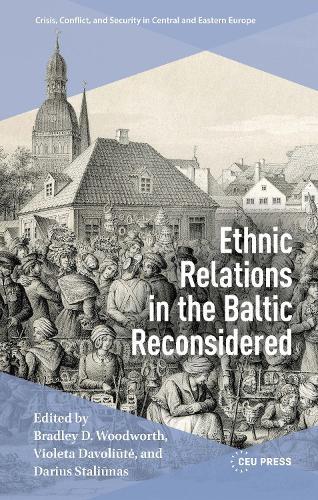
This collected volume offers an original perspective on the Baltic region by examining the intricate relationships between its diverse ethnic groups from the mid-nineteenth century to the present. Rather than focusing solely on national narratives or comparisons of historical development, the book analyzes ethnic relations through the lenses of identity, governance, empire, and violence. The nearly constant redrawing of geographic borders and boundaries among communities during this period destabilized fixed identities, generating novel, hybrid ways of self-identification along with a hardening of oppositions. Innovative forms of coexistence came with violent, sometimes genocidal conflicts. The contributors explore topics such as evolving senses of belonging, the impact of imperial and Soviet rule, instances of cooperation and conflict, and the legacies of historical trauma. By incorporating new sources and interdisciplinary approaches, they update traditional understandings of nations and nationalism in the Baltic region and provide insights relevant to similar regions.
Full Product Details
Author: Bradley Woodworth , Violeta Davoliūtė , Darius Staliūnas
Publisher: Pallas Publications
Imprint: Pallas Publications
Weight: 0.910kg
ISBN: 9789048570447
ISBN 10: 9048570441
Pages: 408
Publication Date: 31 March 2026
Audience:
Professional and scholarly
,
Professional & Vocational
Format: Hardback
Publisher's Status: Active
Availability: Not yet available 
This item is yet to be released. You can pre-order this item and we will dispatch it to you upon its release.
Table of Contents
Introduction Acknowledgements Identities: Ascribed, Contested, and Situational 1. Catherine Gibson, Varieties of In-Betweenness in the Borderlands of the Baltic Provinces: A History of the Term Poluvertsy (Half-Believers) 2. Irina Paert, Negotiating Faith and Ethnicity: Conversions, Social Conflict and the Russian Orthodox Clergy in Estland Province during the 1880s-1900s 3. Jörg Hackmann, Voluntary Associations in the Baltic Region. Accelerator or Inhibitor of Inter-Ethnic Relations? 4. Tomas Balkelis, Living by the Border: Violence, Nation-Making and “National Indifference” in the Polish-Lithuanian Borderland, 1920-1939 Crisis and Governance 5. Andres Kasekamp, Konstantin Päts and Ethnic Minorities: The Political Trajectory of an Estonian Nationalist Authoritarian Leader 6. Klaus Richter, Economic Nationalism, Minority Policies, and the 1930s in Lithuania and Latvia 7. Vladas Sirutavi.ius, Nationality in Cadre Policy in Soviet Lithuania, 1944-1953 8. Karsten Brüggemann, Doing It the “Baltic Way”: Internationalism and the Soviet Roots of the Singing Revolution Legacy of Empire 9. Epp Annus, Spring Flowers and Border Guards: Estonian Narratives of the Soviet Military and Border Troops 10. Ronald Grigor Suny, Exiting Empire: Civil Wars in South Caucasia Versus Civil Peace in the Baltic Republics 11. M.rti.. Kapr.ns, Understanding Hesitancy: The Latvian Russophone Minority and Russia’s Full-Scale Invasion of Ukraine Legacy of Violence 12. Darius Stali.nas, Anti-Jewish Violence in Interwar Lithuania: Pogroms Without Genocidal Elements as a Precondition of the Holocaust? 13. Stanislovas Stasiulis, New Allies – Old Foes: Ethnic Relations on the Pages of Lithuanian Press during the German Occupation, 1941-1944 14. Violeta Davoli.t., The Habitus of Holocaust Reckoning during the Thaw in Soviet Lithuania State of the Field and Pointing the Way Forward 15. Toivo U. Raun, Ethnic Relations in the Baltic Region: Complexity and Coexistence 16. Vello Pettai, Scholarly Research on Ethnic Relations in Estonia and Latvia: A Retrospective Overview Contributors
Reviews
This path-breaking and well-researched collection of essays, by leading experts in the field, seeks to understand the history of the Baltic states—Lithuania, Latvia and Estonia—through an investigation of the relations between the peoples of this region over the past century and a half. It thus concentrates on the implication for these groups of their relations with the hegemonic imperial power, the Tsarist Empire and then the Soviet Union rather than on the emergence of the modern Lithuanian, Latvian and Estonian nations. This provides a novel and innovative way of examining the history of the area, which is compared in the volume to the related, but in some ways dissimilar, developments in the South Caucasus. It is essential reading for all interested in the history of the Tsarist Empire and the Soviet Union, the nature of empire and the development of modern nationalism. . Antony Polonsky, Emeritus Professor of Holocaust Studies, Brandeis University. Chief Historian, Global Education Outreach Project, Museum of Polish Jews in Warsaw This study offers a fascinating new perspective on the dynamics of interethnic collaboration, conflict, and violence in the Baltic region. It sheds new light on the lived experiences of its peoples from the nineteenth century to the present day. . Ulrike von Hirschhausen, Director, German Historical Institute, Washington, D.C. A timely and insightful re-evaluation of ethnic relations across a region notable for its complexity and diversity. Bringing together internationally leading scholars from a range of disciplines, this volume foregrounds the relational and contingent nature of identity, its links to governance, and the impacts it has carried for Baltic societies over the past two centuries. David J Smith, Alec Nove Chair of East European Studies, University of Glasgow.
Author Information
Violeta Davoliūtė is Senior Researcher at the Lithuanian Institute of History and Project Leader of Facing the Past: Public History for a Stronger Europe (Horizon Europe, WIDERA program, 2022–2025). Darius Staliūnas is Chief Researcher at the Lithuanian Institute of History and teaches at Vilnius University. Bradley D. Woodworth is Professor of History at the University of New Haven and Baltic Studies Program Manager at Yale University.
Tab Content 6
Author Website:
Countries Available
All regions
|