Overview
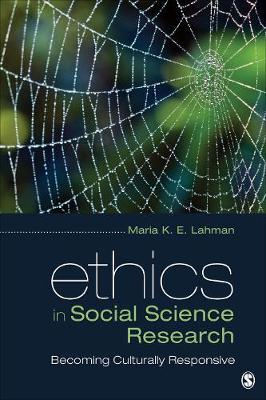
Ethics in Social Science Research: Becoming Culturally Responsive provides a thorough grounding in research ethics, along with examples of real-world ethical dilemmas in working with vulnerable populations.
Full Product Details
Author: Maria K. E. Lahman
Publisher: SAGE Publications Inc
Imprint: SAGE Publications Inc
Weight: 0.430kg
ISBN: 9781506328614
ISBN 10: 150632861
Pages: 312
Publication Date: 14 March 2018
Audience:
College/higher education
,
Tertiary & Higher Education
Format: Paperback
Publisher's Status: Active
Availability: Out of stock

The supplier is temporarily out of stock of this item. It will be ordered for you on backorder and shipped when it becomes available.
Reviews
""Ethics in Social Science Research provides students of social science research with a comprehensive guide to the most challenging ethical concerns in a variety of disciplines. This is an invaluable toolkit."" -- Robert Dahlgren ""This text’s strengths are its emphasis on ethics as an ongoing, relational issue in research (rather than one only of primary concern in the planning stages) and its many concrete case study examples that students can relate to."" -- Jason Crockett ""This text provides much needed guidance and clearly articulates the critical importance of valuing and honoring the rights of the vulnerable when they are engaged as research subjects."" -- Bibhuti Sar ""The text clearly explains the historical development of research ethics and the need for Institutional Review Boards. Its strength is that it challenges researchers to consider research from the participant point of view and develop a personal moral code regarding research."" -- Marilyn Bruin This is a path-breaking, well-crafted text that charts a culturally responsive path for doing qualitative research with vulnerable populations. -- Norman K. Denzin
Ethics in Social Science Research provides students of social science research with a comprehensive guide to the most challenging ethical concerns in a variety of disciplines. This is an invaluable toolkit. --Robert Dahlgren The text clearly explains the historical development of research ethics and the need for Institutional Review Boards. Its strength is that it challenges researchers to consider research from the participant point of view and develop a personal moral code regarding research. --Marilyn Bruin This text provides much needed guidance and clearly articulates the critical importance of valuing and honoring the rights of the vulnerable when they are engaged as research subjects. --Bibhuti Sar This text's strengths are its emphasis on ethics as an ongoing, relational issue in research (rather than one only of primary concern in the planning stages) and its many concrete case study examples that students can relate to. --Jason Crockett
The text clearly explains the historical development of research ethics and the need for Institutional Review Boards. Its strength is that it challenges researchers to consider research from the participant point of view and develop a personal moral code regarding research. --Marilyn Bruin This text provides much needed guidance and clearly articulates the critical importance of valuing and honoring the rights of the vulnerable when they are engaged as research subjects. --Bibhuti Sar This text's strengths are its emphasis on ethics as an ongoing, relational issue in research (rather than one only of primary concern in the planning stages) and its many concrete case study examples that students can relate to. --Jason Crockett Ethics in Social Science Research provides students of social science research with a comprehensive guide to the most challenging ethical concerns in a variety of disciplines. This is an invaluable toolkit. --Robert Dahlgreen
Author Information
Maria K. E. Lahman is a professor of qualitative methodology at the University of Northern Colorado, in Colorado, USA. She is the author of the Sage textbooks Ethics in Social Science Research: Becoming Culturally Responsive and Writing and Representing Qualitative Research. A Mennonite, Maria challenges herself to weave aspects of social justice and peacebuilding into her pedagogy and scholarship. Maria′s scholarship is focused on creating ethical solutions for culturally complex methodological situations, diversity, young children, mothering, and qualitative writing representation.