Overview
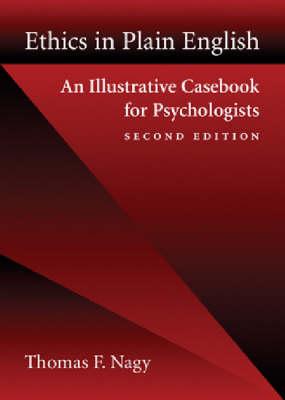
Ethics in Plain English is a practical and engaging resource that shows psychologists how to apply the principles of APA's Ethics Code to the ethical dilemmas they encounter in their daily lives. This second edition has been wholly rewritten and updated to make it consistent with the newly revised standards of the APA Ethics Code (2 2). Each ethical standard is reproduced in its entirety. Then it is translated into everyday language and is followed by a fictional case study that illustrates, in an entertaining way, how the standard might be applied to a real life situation. Examples of both problematic and exemplary behavior in diverse settings are provided. New to this edition are thought-provoking discussion questions after each case study, making the book even more useful for classroom use or self study. The chapters cover general principles of ethical decision making, as well as a broad range of issues relating to professional competence, human relations, privacy and confidentiality, advertising and other public statements, record keeping and fees, education and training, research and publication, assessment, and therapy. This book will help readers navigate a variety of challenging situations and belongs on the bookshelf of every committed psychologist and mental health professional.
Full Product Details
Author: Thomas F. Nagy
Publisher: American Psychological Association
Imprint: American Psychological Association
Edition: 2nd New edition
Dimensions:
Width: 17.80cm
, Height: 2.00cm
, Length: 25.40cm
Weight: 0.621kg
ISBN: 9781591472018
ISBN 10: 1591472016
Pages: 349
Publication Date: 15 January 2005
Audience:
General/trade
,
General
Format: Paperback
Publisher's Status: Out of Stock Indefinitely
Availability: In Print

Limited stock is available. It will be ordered for you and shipped pending supplier's limited stock.
Author Information
Thomas F. Nagy received his doctorate from the University of Illinois at Champaign amp ndash Urbana in 972. He is currently in independent practice in Palo Alto, California, and is a staff psychologist at the Stanford Center for Integrative Medicine, Stanford, California. He also is an adjunct assistant clinical professor at the Stanford University School of Medicine, Stanford, California, and teaches a seminar on ethical and legal issues for the psychology postdoctoral students in the Department of Psychiatry and Behavioral Sciences. For the past 35 years Dr. Nagy's nonclinical professional activities have focused on ethical issues for psychologists. In addition to giving annual workshops and presentations, he has served as chair of the Illinois Psychological Association Ethics Committee ( 982 amp ndash 98 ), was a member of the APA Ethics Committee ( 985 amp ndash 987), served on and chaired the APA Ethics Committee Task Force that revised the Ethical Principles of Psychologists ( 98 amp ndash 992), was a member of the California Psychological Association Ethics Committee ( 988 amp ndash 993), and is currently a member of the Ethics Committee of Stanford University Hospital and other professional associations. He was an oral examiner for the California Licensing Board for years and has participated in forensic work as an expert witness and consultant to attorneys for many years. Dr. Nagy provides psychological services and ethical consultation to psychologists, attorneys, educators, and consumers. He is a fellow of APA's Divisions 29 (Psychotherapy) and 42 (Independent Practice) and is also a fellow of the Society for Clinical and Experimental Hypnosis. He is also a recipient of the Illinois Psychological Association's Special Award for Outstanding Contribution to the Profession of Psychology ( 98 ). Dr. Nagy coauthored Ethics for Psychologists: A Commentary on the APA Ethics Code (APA, 994). He lives in Stanford, California, with his wife, K amp auml ren, where he does wood turning, plays the piano and bass guitar, plays squash, studies astronomy, and spends countless wondrous hours learning about the things that really matter from his grandchild Elise.