Overview
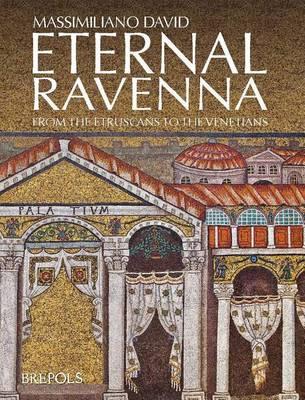
One of the most important cities in the Mediterranean, Ravenna still boasts a series of monuments that have been exceptionally well-preserved, and very often still have their original decorations, mosaics in particular. The great historian Arnaldo Momigliano was right when he said,"" When I want to understand Italian history, I catch a train and go to Ravenna."" Indeed, with its capacity for self-preservation, the city is an outstanding example of town planning. It is still burdened, however, by common places or stereotype-like formulae that have survived until today as the Byzantium of Italy. This is a common, simplified definition that does not grasp the uniqueness and grandeur of the extraordinary Roman city of Honorius and Galla Placidia that experienced an important Byzantine period after Theodoric.For years there has been a vertiginous multiplication of specialised studies, albeit lacking in works, that offered a general overview whilst effectively explaining its main features. A combination of scientific rigour and clarity, this publication outlines the history and town planning of the city from its distant Etruscan origins up to the battle that in 1512 changed its destiny once and for all, when it became part of the pontifical dominion.The whole series of the lavish buildings that were constructed in late ancient times and their decorations (San Giovanni Evangelista, Santa Croce, the Arian cathedral of Santo Spirito, San Apollinare Nuovo, San Vitale and San Francesco), is studied here from a critical, but updated profile and set in the historical context that generated it and in the complex urban situation, that was originally a perfect balance between land and water but then became increasingly precarious.Countless new facts emerged as did much material that was little known or is published here for the first time. With this in mind, there was also a unique opportunity: the possibility to carry out a totally new photograph campaign, which was made possible together with the author thanks to the collaboration of the Archaeological Superintendency of Emilia Romagna, the Superintendency for Architectural and Landscape Heritage of Ravenna, and the Cultural Heritage Office of the Archiepiscopal Curia. What emerged is a Ravenna that is in many ways new, or at least radically renewed, with many surprises for even the most expert scholars.
Full Product Details
Author: Massimiliano David
Publisher: Brepols N.V.
Imprint: Brepols N.V.
Dimensions:
Width: 24.40cm
, Height: 2.80cm
, Length: 33.00cm
Weight: 2.359kg
ISBN: 9782503549415
ISBN 10: 2503549411
Pages: 288
Publication Date: 07 November 2013
Audience:
General/trade
,
General
Format: Hardback
Publisher's Status: Active
Availability: Available To Order

We have confirmation that this item is in stock with the supplier. It will be ordered in for you and dispatched immediately.
Reviews
Published in a large format, the text is lavishly illustrated, incorporating new images taken expressly for this volume covering every facet of the study from Etruscan bronze objects to fourteenth-century frescos. -- Edward M. Schoolman, Bryn Mawr Classical Review
Author Information
Massimiliano David teaches Late Antique Archaeology and Archaeology of the Late Antique City at Bologna University. His interests focus on urban and landscape archaeology, building techniques and subjects related to the history of archaeology. He is a member of the Scientific Board for the journal Felix Ravenna. He has been an official speaker at national and international conferences on classical, Christian and Medieval archaeology. In Milan he coordinated the Mediolapis Project: the systematic catalogue of Milanese stone inscriptions from the first to the twentieth century and is currently in charge of the archaeological mission of Bologna University at Ostia antica, the so-called Ostia Marina Project. This research has brought to light the discovery of the complex of the Sileno Terme where the documentation of crucial moments and new scenarios of city life is being carried out. He published the corpus of Roman and late Roman floors of Mediolanum (I pavimenti decorati di Milano antica: I secolo a.C.-VI secolo d.C., Milan 1996) and edited Frammenti di Roma antica nei disegni degli architetti francesi vincitori del Prix de Rome, 1786-1924 (Novara 1998) and Eburnea diptycha. I dittici d'avorio tra Antichita e Medioevo (Bari 2007). Furthermore, he edited the Italian edition of La fotografi a in archeologia (Milan 1999) and participated in the publication of the book Roma dall'alto (2013).