Overview
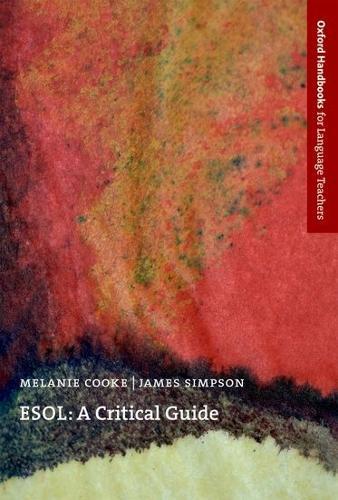
ESOL: A Critical Guide describes the diversity of ESOL learners in terms of their backgrounds and life experiences, ranging from asylum seekers and migrants to people coming from more settled backgrounds. The authors look at how policy makers, teaching institutions, and individual teachers meet the challenge of addressing this huge range of needs and expectations. This book differs from other introductions to ESOL in that it includes coverage of some of the more controversial aspects of the field. Contentious issues such as migration and asylum, citizenship, social exclusion, the economy, and globalization all affect ESOL in different ways, and the authors discuss all these and give a personal perspective based on their own experiences as teachers and researchers. The book is organized into eight chapters: - Chapter 1: 'ESOL in the world' gives a general overview, with a particular focus on England, Wales, and Northern Ireland. - Chapter 2: 'A world of difference' focuses on ESOL students and the different contexts in which they learn. - Chapter 3: 'The challenges of ESOL practice' looks at the field from the teacher's perspective. - Chapter 4: 'The content of ESOL lessons' explores both published materials and student-generated content, and includes a section on taboo topics. - Chapter 5: 'Oral communication' looks at some of the particular challenges of teaching speaking and listening skills in the ESOL classroom - Chapter 6: 'ESOL, literacy, and literacies' includes discussion of the extent to which literacy teaching should be seen as preparation for employment - Chapter 7: 'ESOL and electronic literacy practices' extends the discussion of literacy to include web literacy and different forms of electronic communication - Chapter 8: 'Learning about teaching' describes how teachers can develop through engagement with research. Each chapter also contains activities which can be used for reflection (by individual readers) or for discussion (by classes or groups). There are also suggestions for further reading at the end of each chapter, and a full bibliography at the end of the book.
Full Product Details
Author: Melanie Cooke ,
James Simpson
Publisher: Oxford University Press
Imprint: Oxford University Press
Dimensions:
Width: 16.70cm
, Height: 1.20cm
, Length: 24.60cm
Weight: 0.346kg
ISBN: 9780194422673
ISBN 10: 0194422674
Pages: 198
Publication Date: 14 August 2008
Audience:
ELT/ESL
,
ELT General
Format: Paperback
Publisher's Status: Out of Print
Availability: In Print

Limited stock is available. It will be ordered for you and shipped pending supplier's limited stock.
Reviews
'...an excellent introduction to the world of ESOL for teachers coming into the profession from a traditional EFL background, highlighting for them the key features of the principles of ESOL and the varied characteristics of ESOL learners. It makes essential reading for all.' REFLECT, issue 13, 2010 'A much needed book, and the authors are to be congratulated. It really should be required reading for any new entrant to language and literacy teaching, and teacher educators should make a point of adding it to their core reading lists for Initial Teacher Education courses. It is likely to foster critical and reflective approaches - and this has to be something new teachers, and the profession generally, can only benefit from.' Language Issues, Volume 20/1
'A much needed book, and the authors are to be congratulated. It really should be required reading for any new entrant to language and literacy teaching, and teacher educators should make a point of adding it to their core reading lists for Initial Teacher Education courses. It is likely to foster critical and reflective approaches - and this has to be something new teachers, and the profession generally, can only benefit from.'Language Issues, Volume 20/1 '...an excellent introduction to the world of ESOL for teachers coming into the profession from a traditional EFL background, highlighting for them the key features of the principles of ESOL and the varied characteristics of ESOL learners. It makes essential reading for all.'REFLECT, issue 13, 2010