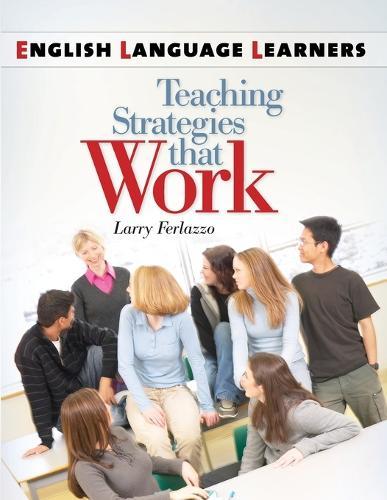
English Language Learners: Teaching Strategies that Work

Author:   Larry Ferlazzo
Publisher:   Bloomsbury Publishing Plc
ISBN:  

9781586835248


Pages:   156
Publication Date:   06 April 2010
Recommended Age:   From 7 to 17 years
Format:   Paperback
Availability:   Manufactured on demand   Availability explained
We will order this item for you from a manufactured on demand supplier.

Our Price $62.00 Quantity:  
Add to Cart

Share |

English Language Learners: Teaching Strategies that Work


Overview

This unique new perspective and method for teaching English Language Learners is the proven result of the author's community organizing career and his successful career in the classroom. Written by an award-winning practitioner, English Language Learners: Teaching Strategies that Work offers educators a five-step methodology for teaching this burgeoning population. Rather than viewing these students through the typical lens of ""deficits"" they might have, the process helps educators recognize and use the assets ELLs bring to the classroom. The five principles around which the process revolves are: building relationships, accessing prior knowledge through student stories, developing student leadership, learning by doing, and reflection. The book shows how these ideas can be used in all subject areas to help ELLs master both content and language using ""high-order"" thinking skills. In addition to providing detailed lessons, the book shares a framework teachers can use to create their own lessons, and it shows how to take advantage of technology and games as teaching tools. References to extensive research studies are included to provide evidence of effectiveness, and each lesson is linked to state standards in English Language development.

Full Product Details

Author:   Larry Ferlazzo
Publisher:   Bloomsbury Publishing Plc
Imprint:   Linworth Publishing, Incorporated
Dimensions:   Width: 21.60cm , Height: 1.30cm , Length: 27.90cm
Weight:   0.454kg
ISBN:  

9781586835248


ISBN 10:   1586835246
Pages:   156
Publication Date:   06 April 2010
Recommended Age:   From 7 to 17 years
Audience:   Primary & secondary/elementary & high school ,  Professional and scholarly ,  Educational: Primary & Secondary ,  Professional & Vocational
Format:   Paperback
Publisher's Status:   Active
Availability:   Manufactured on demand   Availability explained
We will order this item for you from a manufactured on demand supplier.

Table of Contents

"Figures About the Author Acknowledgments Introduction Building Strong Relationships with Students Accessing Prior Knowledge through Stories Identifying and Mentoring Students' Leadership Potential Learning by Doing Reflection CHAPTER 1: Building Strong Relationships with Students What Do You Mean by Building Relationships? What Does Research Say about Building Relationships in the Classroom? Relationships and Classroom Climate Using Schema Student Self-Interest What Are Examples of Building Relationships in the Classroom? Introductions Lesson Plan Additional Student Presentation Projects Writing Projects Games Connecting to Student Self-Interests Reading Projects How Can Technology Be Used to Develop and Deepen Face-to-Face Relationships? How Do You Assess Relationship Building? What Are the Challenges to Making Building Relationships a Priority in the Classroom? Developing a Clear Vision Making Time Talking to Administrators and Other Allies Research State Standards Mandated Textbook CHAPTER 2: Accessing Prior Knowledge through Stories What Do You Mean by Accessing Prior Knowledge through Stories? What Does Research Say about Accessing Prior Knowledge through Stories? What Are Examples of Accessing Prior Knowledge through Stories in the Classroom? Immigration Unit Venn Diagrams K-W-L Charts Two-Part Posters Family Trees Critical Pedagogy Critical Pedagogy Lesson Plan Taking Action How Can Technology Be Used to Access Prior Knowledge through Stories? How Do You Assess Accessing Prior Knowledge through Stories? What Are the Challenges to Accessing Prior Knowledge through Stories in the Classroom? Listening and Engaging Taking Care of Ourselves CHAPTER 3: Identifying and Mentoring Students' Leadership Potential What Do You Mean by Identifying and Mentoring Students' Leadership Potential? What Does Research Say about Leadership Development in the Classroom? Intrinsically Motivated A Sense of Self-Efficacy, Willingness to Take Risks, and Willingness to Learn from Mistakes Willingness to Teach Others What Are Classroom Examples of Leadership Development? Making the Qualities of a Good Learner and Leader Explicit Choices and Power Democracy in the Classroom I Feel Powerful When … ""I Feel Powerful When …"" Lesson Plan Learning Strategies Teaching Others Jigsaw Strategy Teaching Other Classes Comic Strips How Can Technology Be Used to Develop Student Leadership? How Can Student Leadership Development Be Assessed? What Are the Challenges to Making Student Leadership Development a Priority in the Classroom? Accepting Imperfection Planning Limited by Tradition CHAPTER 4: Learning by Doing What Do You Mean by Learning by Doing? What Does Research Say about Learning by Doing? Inductive Teaching Problem-Based Learning Free Voluntary Reading What Are Examples of Learning by Doing in the Classroom? Inductive Model Picture Word Inductive Model Picture Word Inductive Model Unit Plan Inductive Data Sets Implementing Problem-Based Learning What Neighborhood Do You Want to Live In? U.S. Citizenship Implementing Free Voluntary Reading How Can Technology Be Used to Reinforce Learning by Doing? Webquests and Internet Scavenger Hunts Authentic Audience Make a Travel Guide Research Companies Create a How-to Video Develop a Top 10 List Design and Create an Online Book How Do You Assess Learning by Doing? Teaching Inductively Problem-Based Learning Free Voluntary Reading What Are the Challenges to Making Learning by Doing a Priority in the Classroom? The Textbook Student Accountability CHAPTER 5: Reflection What Do You Mean by Reflection? What Does Research Say about Using Reflection in the Classroom? Education Research Brain-Based Learning Student Self-Assessment What Are Examples of Using Reflection in the Classroom? A Learning Log or Reflection Journal Metaphors and Similes for Reflection Metaphor or Simile Student Reflection Lesson Plan Other Special Reflection Projects Reading and Watching about Reflection How Can Technology Be Used to Reinforce Reflection? Online Journals Word Clouds Multimedia and Other Artistic Projects How Do You Assess Reflection? What Are the Challenges to Using Reflection in the Classroom? Afterword Appendix 1: Technology Resources Appendix 2: Classroom Games Works Cited Index"

Reviews

This useful title contains a lot of good information for teachers and English language learners. . . . It is packed with practical, pertinent ideas and activities. Recommended. - Library Media Connection


<p> This useful title contains a lot of good information for teachers and English language learners. . . . It is packed with practical, pertinent ideas and activities. Recommended. - <p>Library Media Connection


Author Information

Larry Ferlazzo teaches English Language Learners at Luther Burbank High School, Sacramento, CA.

Tab Content 6

Author Website:  

Countries Available

All regions
Latest Reading Guide

NOV RG 20252


Shopping Cart
Your cart is empty
Shopping cart
Mailing List