Overview
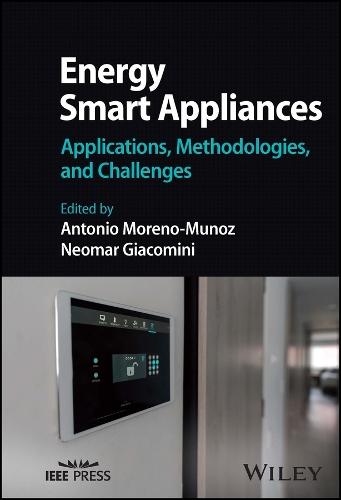
Energy Smart Appliances Enables designers and manufacturers to manage real-world energy performance and expectations by covering a range of potential scenarios and challenges Energy Smart Appliances provides utilities and appliance manufacturers, and designers with new approaches to better understand real-world performance, assess actual energy benefits, and tailor each technology to the needs of their customers. With contributions from a fully international group of experts, including heads of prestigious research organizations and leading universities, and innovation managers of the main appliance manufacturers, Energy Smart Appliances includes discussion on: Enabling technologies for energy smart appliances, covering IoT devices and technology and active energy efficiency measures in residential environments Smart home and appliances, answering questions like ‘Where are we heading in terms of the overall smart homes’ future?’ and ‘What’s the energy impact from smart home devices?’ Demand-side management and demand response, covering overall system/ appliances readiness and ideal energy management scenario to drive demand response Energy smart appliances’ best practices and success stories, including refrigerators, washers, dryers, and more With practical coverage of a wide range of potential scenarios and existing and future challenges, Energy Smart Appliances is an essential learning resource for electrical engineering professionals, equipment manufacturers, and designers, along with postgraduate electrical engineering students and researchers in related fields and programs of study.
Full Product Details
Author: Antonio Moreno-Munoz (Universidad de Cordoba, Cordoba, Spain) , Neomar Giacomini (Whirlpool Corporation, Benton Harbor, USA)
Publisher: John Wiley & Sons Inc
Imprint: Wiley-IEEE Press
Weight: 1.080kg
ISBN: 9781119899426
ISBN 10: 1119899427
Pages: 368
Publication Date: 12 June 2023
Audience:
Professional and scholarly
,
Professional & Vocational
Format: Hardback
Publisher's Status: Active
Availability: Out of stock 
The supplier is temporarily out of stock of this item. It will be ordered for you on backorder and shipped when it becomes available.
Table of Contents
About the Editors xv List of Contributors xvii Acknowledgments xxi Introduction xxiii Antonio Moreno-Munoz and Neomar Giacomini 1 Demand-Side Flexibility in Smart Grids 1 Antonio Moreno-Munoz and Joaquin Garrido-Zafra 1.1 The Energy Sector 1 1.2 The Power Grid 2 1.3 The Smart Grid 5 1.4 Power Grid Flexibility 6 1.4.1 The Need for Flexibility 7 1.4.2 Sources of Flexibility 8 1.4.2.1 Flexible Generation 8 1.4.2.2 Flexible Transmission and Grid Interconnection 8 1.4.2.3 Control Over VRES 9 1.4.2.4 Energy Storage Facilities 9 1.4.2.5 Demand-Side Management 9 1.4.2.6 Other Sources of Flexibility 11 1.5 Power Quality, Reliability, and Resilience 12 1.5.1 Power Quality Disturbances 13 1.5.1.1 Transients 14 1.5.1.2 Short-Duration RMS Variation 16 1.5.1.3 Long-Duration RMS Variation 17 1.5.1.4 Imbalance 17 1.5.1.5 Waveform Distortion 18 1.5.1.6 Voltage Fluctuation 19 1.5.1.7 Power Frequency Variations 19 [1] [1] [1] [1] viii Contents 1.6 Economic Implications and Issues of Poor Power Quality 20 1.7 Internet of Things 24 1.8 The Relevance of Submetering 25 1.9 Energy Smart Appliances 26 Symbols and Abbreviations 28 References 29 2 A Deep Dive into the Smart Energy Home 35 Neomar Giacomini 2.1 Smart Home Ecosystem 35 2.2 Enabling Technologies 44 2.3 Limitations 46 2.4 A Look into a Future Anchored in the Past 51 2.5 Conclusion 59 Symbols and Abbreviations 60 Glossary 60 References 61 3 Household Energy Demand Management 65 Esther Palomar, Ignacio Bravo, and Carlos Cruz 3.1 Introduction 65 3.2 Technical Opportunities and Challenges for DSM 67 3.2.1 Software Solutions 67 3.2.2 Hardware Platforms 69 3.2.3 Communication Infrastructures 70 3.2.4 Communication Protocols 74 3.2.5 Security Concerns 79 3.3 Pilots and Experimental Settings 82 3.4 Conclusions 82 Symbols and Abbreviations 83 Glossary 84 References 86 4 Demand-Side Management and Demand Response 93 Neyre Tekb𝚤y𝚤k-Ersoy 4.1 Introduction 93 4.2 Demand Response vs. Demand-Side Management 94 4.3 The Need for Demand Response/Demand-Side Management 94 4.4 DSM Strategies 95 4.4.1 Energy Efficiency/Energy Conservation 95 4.4.2 Peak Demand Clipping 96 [1] [1] [1] [1] Contents ix 4.4.3 Demand Valley Filling 96 4.4.4 Load Shifting 97 4.4.5 Flexible Load Shaping 97 4.4.6 Strategic Load Growth 97 4.5 Demand Response Programs 98 4.5.1 Types of Loads: Elastic vs. Non-elastic 98 4.5.2 General Approaches to Demand Response 98 4.5.3 Smart Pricing Models for DR 99 4.6 Smallest Communication Subsystem Enabling DSM: HAN 100 4.6.1 General Structure 100 4.6.2 Enabling Communication Technologies 101 4.7 Smart Metering 102 4.7.1 Smart Meters vs. Conventional Meters 102 4.7.2 What Should Consumers Know About the Advanced Metering Infrastructure 104 4.8 Energy Usage Patterns of Households 104 4.9 Energy Consumption Scheduling 106 4.10 Demand Response Options for Appliances 107 4.11 Bidirectional Effects of Demand Response 108 4.11.1 Value of Demand Response for Balancing Renewable Energy Generation 108 4.11.2 Value of Demand Response for Reducing Household Energy Expenses 109 4.12 Consumer Objections and Wishes Related to Smart Appliances and Demand Response 110 4.13 Costs and Benefits of Demand-Side Management 111 Symbols and Abbreviations 113 Glossary 114 References 114 5 Standardizing Demand-Side Management: The OpenADR Standard and Complementary Protocols 117 Rolf Bienert 5.1 History and Creation of OpenADR 117 5.2 Re-development of OpenADR 2.0 120 5.3 How OpenADRWorks 122 5.3.1 Event Service (EiEvent) 125 5.3.2 Opt Service (EiOpt) 127 5.3.3 Report Service (EiReport) 128 5.3.4 Registration Service (EiRegister) 128 5.4 Cybersecurity 130 [1] [1] [1] [1] x Contents 5.5 Other Standards and Their Interaction with OpenADR and Energy Smart Appliances 131 5.6 Energy Market Aspects for Appliances 139 5.7 Typical DR and DSM Use Cases 140 Symbols and Abbreviations 143 Glossary 144 References 144 6 Energy Smart Appliances 147 Neomar Giacomini 6.1 Energy Smart Appliances 147 6.2 Which Appliances? 148 6.3 Smart Energy Controller 150 6.4 Large Home Appliances 151 6.4.1 Dishwashers 151 6.4.2 Dryers 153 6.4.3 Grills and Smokers 155 6.4.4 HVAC 156 6.4.5 Microwaves 158 6.4.6 Refrigerators and Freezers 160 6.4.7 Stoves, Ovens, and Cooktops 162 6.4.8 Washing Machines 163 6.4.9 Water Heaters 165 6.5 Small Appliances 166 6.5.1 Coffee Machines, Blenders, Faucets, Food Processors, Mixers, and Toasters 166 6.5.2 Robotic Lawn Mowers and Electric Tools 167 6.6 Monitoring 167 6.6.1 Energy Monitors, Haptics Sensors,Weather Sensors, and Others 167 6.7 Health, Comfort, and Care 168 6.7.1 Air Purifiers, Humidifiers, Health Monitors, Sleep Sensors, and Tracking Devices 168 6.7.2 Cat Litter Robots, Pet Feeders, and Other Pet-Related Connected Devices 169 6.7.3 Hair Dryers, Brushes, and Straighteners 169 6.7.4 Treadmills, Indoor Exercise Bike, and Other Fitness Equipment 170 6.7.5 Water Filtration Systems 170 6.8 House Automation 171 6.8.1 Blinds & Shades and Light Bulbs 171 6.8.2 Garage Door Opener 172 6.8.3 Sprinklers, Gardening Sensors, and Accent Lighting 172 [1] [1] [1] [1] Contents xi 6.8.4 Smart Power Strips and Smart Power Switches 173 6.8.5 Presence, Proximity, and Movement Sensors 173 6.8.6 Thermostats and Temperature Sensors 174 6.8.7 Vacuum Cleaners, Vacuum Robots, Mop Robots, and Power Tools 174 6.9 Non-appliances 174 6.9.1 Electric Cars and Motorcycles 174 6.9.2 Desktop Computers 175 6.9.3 Modems and Routers 175 6.9.4 Power Banks, Uninterrupted Power Supplies 176 6.9.5 Smartphones, Tablet Computers, Smartwatches, and Video Games 176 6.10 Entertainment 177 6.10.1 Aquariums 177 6.10.2 Audio Systems 177 6.10.3 Televisions and Streaming Receivers (Cast Feature) 178 6.10.4 Virtual Assistants (Multiple Forms) 178 6.10.5 Virtual Reality Goggles and Other Gadgets 178 6.11 Security 179 6.11.1 Alarms, Cameras, Door Locks, and Doorbell Cameras 179 6.12 Conclusion 180 Symbols and Abbreviations 180 Glossary 181 References 181 7 The ETSI SAREF Ontology for Smart Applications: A Long Path of Development and Evolution 183 Raúl García-Castro, Maxime Lefrançois, María Poveda-Villalón, and Laura Daniele 7.1 Introduction 183 7.2 IoT Ontologies for Semantic Interoperability 184 7.3 The SAREF Initiative 186 7.4 Specification and Design of the SAREF Ontology 187 7.4.1 A Modular and Versioned Suite of Ontologies 187 7.4.2 Methodology 188 7.4.3 Version Control and EditingWorkflow 190 7.4.4 Automatization of Requirements and Quality Checks 190 7.4.5 Continuous Integration and Deployment 191 7.5 Overview of the SAREF Ontology 191 7.5.1 Device 193 7.5.2 Feature of Interest and Property 194 [1] [1] [1] [1] xii Contents 7.5.3 Measurement 194 7.5.4 Service, Function, Command, and State 195 7.6 The SAREF Ontology in the Smart Home Environment 196 7.6.1 Energy 198 7.6.2 Water 200 7.6.3 Building 202 7.6.4 City 204 7.6.5 Systems 206 7.7 The SAREF Ontology in Use 207 7.8 Lessons Learnt 209 7.8.1 Specification of Ontology Requirements 209 7.8.2 Stakeholder’sWorkshops 210 7.8.3 Tool Support 210 7.8.4 Ontology Modularization 211 7.8.5 Ontology Patterns 212 7.9 Conclusions and FutureWork 212 Acknowledgments 213 References 213 8 Scheduling of Residential Shiftable Smart Appliances by Metaheuristic Approaches 217 Recep Çakmak 8.1 Introduction 217 8.2 Demand Response Programs in Demand-Side Management 222 8.3 Time-Shiftable and Smart Appliances in Residences 224 8.4 Smart Metaheuristic Algorithms 226 8.4.1 BAT Algorithm 226 8.4.2 Firefly Algorithm (FFA) 228 8.4.3 Cuckoo Search Algorithm 229 8.4.4 SOS Algorithm 231 8.5 Scheduling of Time-Shiftable Appliances by Smart Metaheuristic Algorithms 232 Symbols and Abbreviations 237 Glossary 238 References 238 9 Distributed Operation of an Electric Vehicle Fleet in a Residential Area 243 Alicia Triviño, Inmaculada Casaucao, and José A. Aguado 9.1 Introduction 243 9.2 EV Charging Stations 246 [1] [1] [1] [1] Contents xiii 9.3 EV Services 248 9.3.1 Ancillary Services 248 9.3.2 Domestic Services 248 9.4 Dispatching Strategies for EVs 249 9.4.1 Classification of EV Dispatching Strategies 251 9.5 Proposed Distributed EV Dispatching Strategy 252 9.6 Conclusions 259 Acknowledgments 260 References 260 10 Electric Vehicles as Smart Appliances for Residential Energy Management 263 Indradip Mitra, Zakir Rather, Angshu Nath, and Sahana Lokesh 10.1 Introduction 263 10.2 EV Charging Standards and Charging Protocols 265 10.2.1 EV Charging Standards 265 10.2.1.1 IEC 61851 265 10.2.1.2 SAE J1772 266 10.2.1.3 GB/T 20234 267 10.2.2 Charging Protocols for EV Charging 267 10.2.2.1 Type 1 AC Charger 267 10.2.2.2 Type 2 AC Charger 268 10.2.2.3 CHArge de MOve (CHAdeMO) Protocol 268 10.2.2.4 Combined Charging System (CCS) 268 10.2.2.5 Tesla Charging Protocol 268 10.3 Communication Protocols Used in EV Ecosystem 268 10.3.1 Open Charge Point Protocol 268 10.3.2 Open Automated Demand Response (OpenADR) 269 10.3.3 Open Smart Charging Protocol (OSCP) 269 10.3.4 IEEE 2030.5 269 10.3.5 ISO/IEC 15118 269 10.4 Residential EV Charging Infrastructure 270 10.4.1 Prerequisites to Installation of EV Charge Point 271 10.4.2 EV Charger Connection Requirements and Recommendations 271 10.4.2.1 United Kingdom 271 10.4.2.2 The Netherlands 272 10.4.2.3 Germany 275 10.5 Impacts of EV Charging 275 10.5.1 Impact on Electricity Distribution Network 275 10.5.1.1 Voltage Issues 276 10.5.1.2 Increase in Peak Load 278 [1] [1] [1] [1] xiv Contents 10.5.1.3 Congestion 278 10.5.1.4 Losses 278 10.6 Smart Charging for Home Charging 282 10.6.1 Type of Smart Charging 283 10.6.2 Requirements for Smart Charging 286 10.6.3 Additional Smart Charging Enablers 287 10.7 Residential Smart Energy Management 289 10.7.1 Unidirectional Smart Charging 289 10.7.2 Vehicle-to-Home/Building 292 10.7.3 Vehicle-to-Grid (V2G) 296 10.8 Conclusion 297 List of Abbreviations 297 Glossary 298 References 299 11 Induction Heating Appliances: Toward More Sustainable and Smart Home Appliances 301 Óscar Lucía, Héctor Sarnago, Jesús Acero, and José M. Burdío 11.1 Introduction to Induction Heating 301 11.1.1 Induction Heating Fundamentals 301 11.1.2 Induction Heating History 304 11.2 Domestic Induction Heating Technology 306 11.2.1 Power Electronics 309 11.2.2 Electromagnetic Design 314 11.2.3 Digital Control 315 11.2.4 Efficiency 318 11.3 Advanced Features and Connectivity 319 11.3.1 High-Performance Power Electronics 319 11.3.2 Advanced Control 321 11.3.3 Flexible Cooking Surfaces 322 11.3.4 Connectivity 322 11.4 Conclusion and Future Challenges 325 Symbols and Abbreviations 325 References 326 Index 333
Reviews
Author Information
Antonio Moreno-Munoz is a Professor at the Department of Electronics and Computer Engineering, Universidad de Córdoba, Spain, where he is the Chair of the Industrial Electronics and Instrumentation R&D Group. He received his Ph.D. and M.Sc. degrees from UNED, Spain in 1998 and 1992, respectively. Neomar Giacomini is a Senior Manager for Electronics Hardware development at Whirlpool Corporation. He is an accomplished inventor, developer, and technology aficionado who has worked in Electronics for more than 20 years developing hardware, firmware, and sensors.
Tab Content 6
Author Website:
Countries Available
All regions
|