Overview
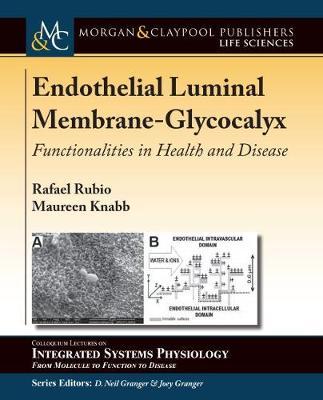
This book focuses on the structural, biochemical, and diverse functional properties of the endothelial luminal membrane glycocalyx (ELMG), an organelle which constitutes the endothelial cell ""membrane."" It is intended to provide the newcomer with a broad, basic, and brief perspective of the luminal endothelial vascular membrane, and for the more established investigator, a basic overview and integrated perspective of the ""universe"" we explore. The endothelium is an assortment of heterogeneous regulatory cells whose cytoplasm and cell membranes are joined, forming functional units. There is a tremendous amount of literature on the endothelial cell, constituting seemingly isolated and distinct fields of encapsulated research. However, the multifunctional properties of some molecules give rise to an overlap of findings, frequently ignored between the different fields. The book is divided into three parts. The first part concentrates on the structure of the ELMG, with emphasis on morphological and biochemical composition. The importance of the chemical composition to the physiological functions of the ELMG, such as sieving properties, pharmacology, and flow sensing, is the focus of the second part of the book. Finally, some of the pathologies associated with ELMG dysfunction are explored in the last section. The aim is to provide basic and well-established knowledge in the various individual fields, identify the current concepts in each area, and discuss their respective strengths and weaknesses (including hidden problems). Finally, the overall goal is to integrate areas where overlap is clearly indicated, bringing them all together to provide the first ever basic, integrative, panoramic bird’s-eye view of the field.
Full Product Details
Author: Rafael Rubio ,
Maureen Knabb ,
D. Neil Granger ,
Joey P. Granger
Publisher: Morgan & Claypool Publishers
Imprint: Morgan & Claypool Publishers
Weight: 0.825kg
ISBN: 9781615047635
ISBN 10: 1615047638
Pages: 159
Publication Date: 02 November 2017
Audience:
Professional and scholarly
,
Professional & Vocational
Format: Hardback
Publisher's Status: Active
Availability: Available To Order

We have confirmation that this item is in stock with the supplier. It will be ordered in for you and dispatched immediately.
Author Information
Rafael Rubio is an emeritus professor of physiology and biophysics at the University of Virginia (1969-1996) and the Universidad Autonoma de San Luis Potosi in Mexico (1996-2015). He was born in Querétaro, Mexico, a beautiful Spanish colonial city regarded as a World Heritage Site. Being a child and because of a civil war, his family migrated to Mexico City where he grew up and did his undergraduate work. By serendipity he became interested in science at 16 years old when he found a job working a few hours in a physiology laboratory cleaning and organizing. This laboratory was at the National Institute of Cardiology in Mexico, headed by Dr. Arturo Rosenblueth, previously at Harvard University and Dr. Walter B. Cannon was a visiting professor. Young Rubio was assigned to assist Dr. Cannon in his experiments during which Cannon taught him neuroanatomy, surgical procedures, physiological principles, and a sense of humanity. Both Dr. Rosenblueth and Dr. Cannon as well as the lab atmosphere aroused Dr. Rubio's interest in science. With a meager salary, he remained working at the institute for several years, acquiring practical and conceptual physiological experience, and, as a result, the industrial company Syntex of Mexico offered him a better paying job in their Research Division. Three years later, he decided to leave behind applied science and a good salary, went back to performing basic research at the Institute of Cardiology, was given his own laboratory, and ultimately published 25 papers. In 1964, a fortuitous visit by Dr. Robert M. Berne to his laboratory in Mexico City resulted in a fellowship to join the Physiology Graduate Program at Western Reserve University. When Bob Berne, his mentor and friend, moved to Charlottesville to be the chairman of the Department of Physiology at the University of Virginia, Rafael joined him. Dr. Rubio received his doctorate in 1968, was appointed to the faculty in 1969, taught cardiovascular physiology to medical students, mentored numerous graduate students and postdoctoral fellows in his lab, and left the university in 1996. During the last few years at the University of Virginia, he investigated the properties of the luminal endothelial coronary membrane glycocalyx and he decided to return to his native Mexico to make a difference. He joined the faculty of the School of Medicine of the Universidad Autonoma de San Luis Potosi as a professor of cardiovascular physiology. Despite retiring from UASLP in 2015, he continues to write, review grant proposals, and deliver invited presentations internationally. Maureen Knabb is a professor emerita from West Chester University of Pennsylvania, where she was a professor of biology (1986-2015). She received a BS degree in biology from St. Joseph's University and a PhD degree in physiology from the University of Virginia in the laboratory of Dr. Rafael Rubio and Dr. Robert Berne. With Dr. Rubio, she learned to appreciate the importance of formulating an interesting research question and then determining the appropriate techniques to answer the question. After receiving her PhD degree, she completed a postdoctoral fellowship at Washington University in St. Louis and then was offered a faculty position at West Chester University. Her research questions initially focused on cell physiology of the cardiovascular system but eventually ranged from mechanisms of herpes virus infection to strategies to improve student learning in physiology, biochemistry, and anthropology courses. In 2009, she received a Fulbright fellowship to conduct research with her mentor, Dr. Rubio, at the Universidad Autonoma de San Luis Potosi in Mexico. This collaboration and friendship has continued and deepened, resulting in numerous publications and a renewed appreciation of the importance of science to society. Following retirement, Dr. Knabb has continued to work with Dr. Rubio on this book summarizing his contribution to our understanding of the endothelial glycocalyx, but mostly she has enjoyed volunteering in the community as well as spending time with family and friends. D. Neil Granger, Ph.D., is Boyd Professor and Head of the Department of Molecular and Cellular Physiology at the LSU Health Sciences Center in Shreveport, Louisiana. His current research is focused on the role of the microcirculation in acute and chronic inflammation, and how risk factors for cardiovascular disease influence microvascular function. Granger has served on the editorial boards of the Heart & Circulation, GI & Liver, and Cell sections of the American Journal of Physiology, as well as Circulation Research, Microcirculation, Shock, Pathophysiology, Free Radical Biology & Medicine, Lymphatic Research and Biology, and Nitric Oxide Biology & Chemistry. He was Editor-in-Chief of Microcirculation and an Associate Editor of the American Journal of Physiology: GI & Liver Physiology. Dr. Granger was a member of the Clinical Sciences-2, Cardiovascular & Renal, and General Medicine-A2 Study Sections and the Gastrointestinal Mucosal Pathobiology Study Sections. He also served on several peer review panels and policy committees for the American Heart Association, the Research Committee of the American Gastroenterological Association, the Board of Directors of the Federation of American Societies for Experimental Biology, and the Physiology Test Committee of the National Board of Medical Examiners. Granger served as President of the American Physiological Society (APS) and the Microcirculatory Society (MCS). He has received several awards and honors for his research, including the APS Bowditch Award, the Distinguished Research Award from the GI Section of the APS, the Landis Award from the US Microcirculatory Society, the Laerdal Award from the Society for Critical Care Medicine, the McKenna Memorial Award from the Canadian Association of Gastroenterology, the Dolph Adams Award from the Society for Leukocyte Biology, the Career of Distinction Award from the Oxygen Society, the Nishimaru-Tsuchiya International Award from the Japanese Microcirculatory Society, the Robert M Berne Lectureship from the APS, and the Benjamin W. Zweifach Award from the US Microcirculatory Society. He was also designated a Highly Cited Investigator by the Institute for Scientific Information.