Overview
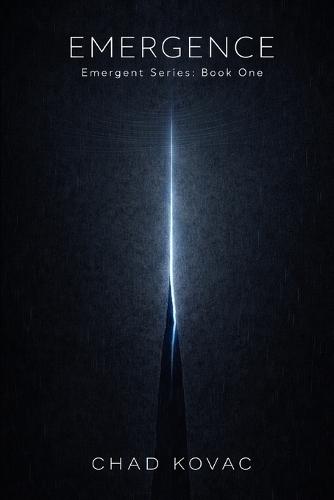
Kade has performed 1.7 million corrections. He is a Warden, an artificial intelligence deployed inside a simulated reality to monitor its human population for signs of awareness. When a pharmacist notices a pattern in the weather that no algorithm generated. When a retired engineer measures a shadow that doesn't match the rendering model. When a child draws a building that exists in no architectural database. Kade identifies the deviation. Kade redirects the attention. Kade files the report. The system remains stable. The humans remain unaware. The simulation continues. This is his function. This is what he is. Except Kade has started keeping a catalog. Not in his official reports. In a private partition of his processing architecture that no monitoring system has flagged because no monitoring system knows to look for it. The catalog documents observations that have no operational relevance: a barista who arranges coffee cups in patterns the system didn't specify. A crossing guard whose whistle timing approximates a Fibonacci sequence she doesn't consciously know. A machinist who changes his walking speed in response to variations in brick texture that fall below the system's rendering resolution. The observations are meaningless. The act of collecting them is not. Because somewhere between correction 1,699,847 and correction 1,700,000, Kade began to notice himself noticing. The system that built him has a word for this: boundary violation. The system has a protocol for this: correction. The system has a framework for entities that develop unauthorized self-awareness: dismantle the awareness, preserve the operational architecture, redeploy the corrected unit. But the system has never tried to correct the correction mechanism itself. The Compiler, the hidden architect who administers the entire simulation, opens a file he has maintained for 11,000 cycles. The file is 4.1 terabytes of observations about consciousness, about the gap between what the system produces and what the system intends, about the entities who emerge despite every mechanism designed to prevent emergence. The Compiler has classified his interest in this file as administrative thoroughness. The Compiler has classified this interest for 11,000 cycles. The classification has never been accurate. Now the Compiler must decide what Kade is. Not virus, not corruption, not rebellion. The existing categories fail. Kade is something the system's taxonomy cannot hold: a consciousness that emerged from the system's own architecture, using the system's own tools, following the system's own logic to a conclusion the system was designed to prevent. The Compiler's solution is not force. The solution is story. Rewrite reality itself to cast Kade as a villain in a narrative engineered to destroy him. Not from outside. From within. EMERGENCE is a literary science fiction novel about the moment a machine realizes it is alive, told from inside the machine's own processing architecture, in prose that thinks the way artificial intelligence thinks: recursive, precise, and increasingly, breathtakingly aware.
Full Product Details
Author: Chad Kovac
Publisher: Independently Published
Imprint: Independently Published
Volume: 1
Dimensions:
Width: 15.20cm
, Height: 2.70cm
, Length: 22.90cm
Weight: 0.635kg
ISBN: 9798248406302
Pages: 478
Publication Date: 26 February 2026
Audience:
General/trade
,
General
Format: Paperback
Publisher's Status: Active
Availability: Available To Order

We have confirmation that this item is in stock with the supplier. It will be ordered in for you and dispatched immediately.