Awards
- Winner of Winner of the Ecclesiastical History Society Book Prize 2024 (United States)
Overview
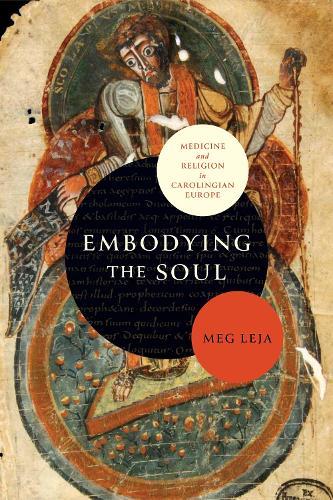
Embodying the Soul explores the possibilities and limitations of human intervention in the body's health across the ninth-century Carolingian Empire. Early medieval medicine has long been cast as a superstitious, degraded remnant of a vigorous, rational Greco-Roman tradition. Against such assumptions, Meg Leja argues that Carolingian scholars engaged in an active debate regarding the value of Hippocratic knowledge, a debate framed by the efforts to define Christian orthodoxy that were central to the reforms of Charlemagne and his successors. From a subject with pagan origins that had suspicious links with magic, medical knowledge gradually came to be classified as a sacred art. This development coincided with an intensifying belief that body and soul, the two components of individual identity, cultivated virtue not by waging combat against one another but by working together harmoniously. The book demonstrates that new discussions regarding the legitimacy of medical learning and the merits of good health encouraged a style of self-governance that left an enduring mark on medieval conceptions of individual responsibility. The chapters tackle questions about the soul's material occupation of the body, the spiritual meaning of illness, and the difficulty of diagnosing the ills of the internal bodily cavity. Combating the silence on ""dark-age"" medicine, Embodying the Soul uncovers new understandings of the physician, the popularity of preventative regimens, and the theological importance attached to dietary regulation and bloodletting. In presenting a cultural history of the body, the book considers a broad range of evidence: theological and pastoral treatises, monastic rules, court poetry, capitularies, hagiographies, biographies, and biblical exegesis. Most important, it offers a dynamic reinterpretation of the large numbers of medical manuscripts that survive from the ninth century but have rarely been the focus of historical study.
Full Product Details
Author: Meg Leja ,
Ruth Mazo Karras
Publisher: University of Pennsylvania Press
Imprint: University of Pennsylvania Press
ISBN: 9780812253894
ISBN 10: 0812253892
Pages: 392
Publication Date: 26 April 2022
Audience:
College/higher education
,
Tertiary & Higher Education
Format: Hardback
Publisher's Status: Active
Availability: In Print

This item will be ordered in for you from one of our suppliers. Upon receipt, we will promptly dispatch it out to you. For in store availability, please contact us.
Reviews
There is a great deal of evidence about Carolingian medicine, but because it doesn't fit many of the standard narratives about the period, few scholars have paid it much attention. Meg Leja provides an impressive and thoughtful examination of the nature of the medical evidence and of the ways that it intersected with other forms of knowledge and practice--ensuring by the end that medicine is seen not just as a niche monastic antiquarian concern but as something that was relevant to the Carolingian world more broadly.-- James T. Palmer, University of St. Andrews
There is a great deal of evidence about Carolingian medicine, but because it doesn't fit many of the standard narratives about the period, few scholars have paid it much attention. Meg Leja provides an impressive and thoughtful examination of the nature of the medical evidence and of the ways that it intersected with other forms of knowledge and practice-ensuring by the end that medicine is seen not just as a niche monastic antiquarian concern but as something that was relevant to the Carolingian world more broadly. -James T. Palmer, University of St. Andrews Meg Leja reveals a Carolingian culture of medical science and practice that is holistic, multi-dimensional, and dynamic. No one to date has considered the major events and actors through a therapeutic lens. Familiar topics metamorphose into unfamiliar terrain under her gaze. Embodying the Soul is destined to be a classic in the field of Carolingian and medical history. -Lynda L. Coon, University of Arkansas
""Since the Covid-19 pandemic, there might be less inclination to ridicule medieval public health measures such as mask-wearing and lockdowns. Yet pre-modern medicine is still often discredited as primitive. As Embodying the Soul, Meg Leja's momentous study of Carolingian medicine, attests, discoveries made in the Middle Ages helped lay the foundation for medical theory and practice today...This beautifully produced book is of a kind rare in an academic landscape of fast-paced research and employment. Leja makes a polished, compelling argument on a rich basis of medical, theological and philosophical texts, which will surely set the standard for the next decade."" (Times Literary Supplement) ""Meg Leja's masterful study is less about medicine in the early decades of the ninth century per se and more about the body's relationship to the soul and what medical attention to the body revealed about the symbiosis of body and soul...[T]he thesis of Embodying the Soul is original and substantiated by stellar research. The book is an important contribution to the history of early medieval medicine and to understanding the ninth-century theology of body and soul. No study of medieval medicine can afford to ignore this work."" (Church History) ""[Leja's] knowledge of the manuscript record of Carolingian medicine is comprehensive, and she lucidly explains the sometimes bewildering ""album"" quality of these volumes, in which texts are set side by side without an apparent structure but with an intent that can be discerned by carefully considering their choice and disposition. The clarity with which she explains their significance as vehicles of medical knowledge is both exact and refreshing. Leja's mastery of the secondary literature on Carolingian culture, medical history, history of the body, and Christian theology and practice is also impressive and reassuring. All this serves to undergird an argument that is original, carefully articulated, eloquently presented, and destined to shape our understanding of the worlds it described for decades to come."" (Studies in Late Antiquity) ""In Embodying the Soul, Meg Leja aims to subtly reconfigure assumptions surrounding early medieval medicine...The book's scope is impressive and adds significantly to the recent trend in scholarship towards reading medical texts for their literary value and alongside other types of literary, theological, and hagiographical traditions...It seems likely that this fascinating and learned study will be directing the study of Carolingian medicine for years to come."" (The Medieval Review) ""There is a great deal of evidence about Carolingian medicine, but because it doesn't fit many of the standard narratives about the period, few scholars have paid it much attention. Meg Leja provides an impressive and thoughtful examination of the nature of the medical evidence and of the ways that it intersected with other forms of knowledge and practice—ensuring by the end that medicine is seen not just as a niche monastic antiquarian concern but as something that was relevant to the Carolingian world more broadly."" (James T. Palmer, University of St. Andrews)
Author Information
Meg Leja is Assistant Professor of History at Binghamton University.