Overview
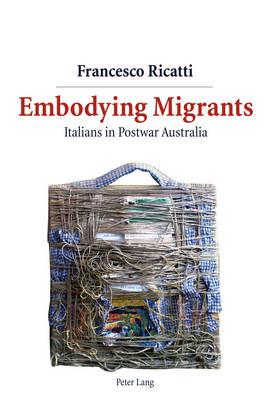
This book constructs a suggestive, dramatic and colourful portrait of migrants’ everyday life in 1950s and early 1960s Australia, by focusing on important aspects such as health, sexuality, self-beautification, love, and morality. The book considers two columns edited by Lena Gustin (Mamma Lena) for the Italian-language newspaper in Australia La Fiamma between 1956 and 1964. Furthermore, the historical analysis is based on hundreds of original letters that Italian migrants wrote in the same years to the two columns or directly to Gustin. Most of these letters were never published in the newspaper, or were strongly edited before publication. Gustin’s selection and editing eliminated most of the explicit references to the body, sexuality, and violence. This ‘editing of the body’ opens up important questions about the construction of Italian ethnic identity by the migrant élites and by scholars.
Full Product Details
Author: Francesco Ricatti ,
Francesco Ricatti
Publisher: Peter Lang AG, Internationaler Verlag der Wissenschaften
Imprint: Peter Lang AG, Internationaler Verlag der Wissenschaften
Edition: New edition
Weight: 0.540kg
ISBN: 9783034304665
ISBN 10: 3034304668
Pages: 331
Publication Date: 24 March 2011
Audience:
Professional and scholarly
,
Professional & Vocational
Format: Paperback
Publisher's Status: Active
Availability: Awaiting stock

The supplier is currently out of stock of this item. It will be ordered for you and placed on backorder. Once it does come back in stock, we will ship it out for you.
Reviews
Perhaps the single most important contribution that Dr Ricatti's text makes is in bringing into sharp focus the too often effaced corporeality of migrant subjectivities, foregrounding the entanglement of bodies, desires, power and knowledge within the category formations of gender, sexuality and race.[...] The strength of this text emerges from a convincing marshalling of interdisciplinary knowledges and theories in order to shed new light on the complex figuration of migrant bodies and identities, once they are situated within their socio-historical contexts. I can see this book being used in migrant and diaspora studies, Australian history, cultural studies, queer studies, and sociological and anthropological studies (Joseph Pugliese, Associate Professor in Critical and Cultural Studies, Macquarie University, Australia) Through his analysis, Ricatti's book has made an extremely important contribution to Italian migrant studies. Indeed, it is difficult to recall any work that covers such an array of individual Italian experiences. Issues raised in this study, such as sexual violence in migrant marriages, have rarely been mentioned in other research on Italian migration, if at all. Ricatti challenges neat generalisations about the lives of Italian migrants and sets out a more critical and complex direction for further historical work. Ricatti should be complimented on his work. (David Brown, Australian Journal of Politics and History 58, 2012/1)
«Perhaps the single most important contribution that Dr Ricatti’s text makes is in bringing into sharp focus the too often effaced corporeality of migrant subjectivities, foregrounding the entanglement of bodies, desires, power and knowledge within the category formations of gender, sexuality and race.[...] The strength of this text emerges from a convincing marshalling of interdisciplinary knowledges and theories in order to shed new light on the complex figuration of migrant bodies and identities, once they are situated within their socio-historical contexts. I can see this book being used in migrant and diaspora studies, Australian history, cultural studies, queer studies, and sociological and anthropological studies» (Joseph Pugliese, Associate Professor in Critical and Cultural Studies, Macquarie University, Australia) «Through his analysis, Ricatti’s book has made an extremely important contribution to Italian migrant studies. Indeed, it is difficult to recall any work that covers such an array of individual Italian experiences. Issues raised in this study, such as sexual violence in migrant marriages, have rarely been mentioned in other research on Italian migration, if at all. Ricatti challenges neat generalisations about the lives of Italian migrants and sets out a more critical and complex direction for further historical work. Ricatti should be complimented on his work.» (David Brown, Australian Journal of Politics and History 58, 2012/1)
Perhaps the single most important contribution that Dr Ricatti's text makes is in bringing into sharp focus the too often effaced corporeality of migrant subjectivities, foregrounding the entanglement of bodies, desires, power and knowledge within the category formations of gender, sexuality and race.[...] The strength of this text emerges from a convincing marshalling of interdisciplinary knowledges and theories in order to shed new light on the complex figuration of migrant bodies and identities, once they are situated within their socio-historical contexts. I can see this book being used in migrant and diaspora studies, Australian history, cultural studies, queer studies, and sociological and anthropological studies (Joseph Pugliese, Associate Professor in Critical and Cultural Studies, Macquarie University, Australia)
Author Information
Francesco Ricatti (PhD, University of Sydney) is Cassamarca Lecturer in Italian at the University of the Sunshine Coast. His articles have appeared in prestigious Australian and international academic journals, including Australian Journal of Politics and History, and History Australia. In 2008 he received the Altreitalie award for the best PhD thesis on Italian migration.