Overview
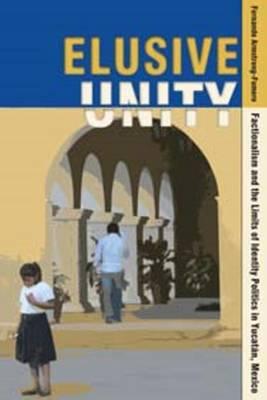
Armstrong-Fumero examines early twentieth-century peasant politics and twenty-first-century indigenous politics in the rural Oriente region of Yucatan. The rural inhabitants of this region have had some of their most important dealings with their nations government as self-identified peasants and Maya . Using ethnography, oral history, and archival research, Armstrong-Fumero shows how the same body of narrative tropes has defined the local experience of twentieth-century agrarianism and twenty-first-century multiculturalism. Through these recycled narratives, contemporary multicultural politics have also inherited some ambiguities that were built into its agrarian predecessor. Specifically, local experiences of peasant and indigenous politics are shaped by tensions between the vernacular language of identity and the intense factionalism that often defines the social organisation of rural communities. This significant contribution will be of interest to historians, anthropologists, and political scientists studying Latin America and the Maya.
Full Product Details
Author: Fernando Armstrong-Fumero
Publisher: University Press of Colorado
Imprint: University Press of Colorado
Dimensions:
Width: 15.20cm
, Height: 1.90cm
, Length: 22.90cm
Weight: 0.453kg
ISBN: 9781607322382
ISBN 10: 1607322382
Pages: 248
Publication Date: 15 August 2013
Audience:
College/higher education
,
Professional and scholarly
,
Tertiary & Higher Education
,
Professional & Vocational
Format: Hardback
Publisher's Status: Active
Availability: Available To Order

We have confirmation that this item is in stock with the supplier. It will be ordered in for you and dispatched immediately.
Reviews
Of a spate of books that have come out in recent years on the intricacies of Maya ethnicity in the Yucatan Peninsula, this work by Smith College anthropologist Armstrong-Fumero, based upon a decade of study, is the most cogent and insightful . . . . A highly readable, very contemporary, important work. Summing up: Essential. P. R. Sullivan, Choice Armstrong-Fumero has done research in one of the areas most frequented by anthropologists yet he has come up with methodological and theoretical insights that go beyond the large body of publications . . . not only a solid contribution to the ethnographic literature, but to indigenous movements in the Western Hemisphere. June Nash, City University of New York Armstrong-Fumero has done research in one of the areas most frequented by anthropologists yet he has come up with methodological and theoretical insights that go beyond the large body of publications . . . not only a solid contribution to the ethnographic literature, but to indigenous movements in the Western Hemisphere. --June Nash, City University of New York
Of a spate of books that have come out in recent years on the intricacies of Maya ethnicity in the Yucatan Peninsula, this work by Smith College anthropologist Armstrong-Fumero, based upon a decade of study, is the most cogent and insightful . . . . A highly readable, very contemporary, important work. Summing up: Essential. P. R. Sullivan, Choice
Of a spate of books that have come out in recent years on the intricacies of Maya ethnicity in the Yucat n Peninsula, this work by Smith College anthropologist Armstrong-Fumero, based upon a decade of study, is the most cogent and insightful . . . . A highly readable, very contemporary, important work. Summing up: Essential. -- P. R. Sullivan, Choice Armstrong-Fumero has done research in one of the areas most frequented by anthropologists yet he has come up with methodological and theoretical insights that go beyond the large body of publications . . . not only a solid contribution to the ethnographic literature, but to indigenous movements in the Western Hemisphere. --June Nash, City University of New York
Armstrong-Fumero has done research in one of the areas most frequented by anthropologists yet he has come up with methodological and theoretical insights that go beyond the large body of publications . . . not only a solid contribution to the ethnographic literature, but to indigenous movements in the Western Hemisphere. --June Nash, City University of New York
Author Information
Fernando Armstrong-Fumero is an assistant professor of anthropology at Smith College. He has conducted research in Maya-speaking communities in Yucatan, Mexico, since 1997.