|
|
|||
|
||||
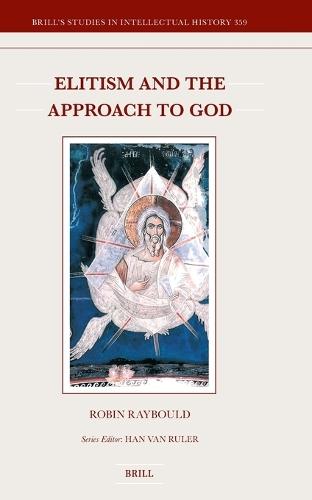
OverviewElitism and the Approach to God investigates a historical and cultural dichotomy in European history which has not hitherto been satisfactorily explained. Why did so many of the most influential “authorities” of the age insist that the nature and mystery of the divine and of God should not be shared with “the vulgar crowd”, that is with the ordinary people, although this appears to be the principal purpose of all other religious teaching throughout the period? Robin Raybould gives examples from the works of more than sixty “authorities” who insisted that the mysteries of the divine should remain secret. He then surveys the attempts of other religious and civic leaders, both pagan and Christian, to investigate, understand and by contrast to share their findings on the nature of God. In a final section he attempts to reconcile these opposing views. Full Product DetailsAuthor: Robin RaybouldPublisher: Brill Imprint: Brill Volume: 359 Dimensions: Width: 15.50cm , Height: 2.10cm , Length: 23.50cm Weight: 0.541kg ISBN: 9789004504288ISBN 10: 9004504281 Pages: 248 Publication Date: 24 July 2025 Audience: Professional and scholarly , College/higher education , Professional & Vocational , Postgraduate, Research & Scholarly Format: Hardback Publisher's Status: Active Availability: Manufactured on demand We will order this item for you from a manufactured on demand supplier. Table of ContentsContents List of Figures Introduction Part 1: The Witness of the Authorities: Reasons to Withhold the Secrets 1 The Ignorant Were Not Initiated 1 Origin of the Rites of Initiation 2 Orpheus 3 The Derveni Papyrus 4 The Mysteries: an Experience of the Divine 5 Plato and the Mysteries of Philosophy 2 Reasons to Withhold the Secrets: the Ignorant Were Not Sufficiently Instructed 1 Pagan Writers 2 Christian Initiation: Jesus Christ 3 Collegia 3 Reasons to Withhold the Secrets: the Ignorant Were Not Worthy (I) – the First Millenium CE 1 The Christian Fathers: Clement of Alexandria 4 Reasons to Withhold the Secrets: the Ignorant Were Not Worthy (II) – the Renaissance Part 2: Strategies to Understand the Divine Mysteries Introduction to Part 2 Section 1: Direct Approaches to the Divine 5 History of the Symbol 6 The Neoplatonists 7 Theurgy, Agalmata and the Divine Names 8 Christian Mysticism 9 Silence as a Medium to Approach God 10 Visions and Dreams 11 The Paradox of Concealing and Revealing Section 2: Indirect Understanding of the Divine Introduction to Section 2, Part 2 12 Poetry and Myth 1 The Myths 13 Allegory 1 Secular and Christian Allegories 2 The Scriptures 3 The Book of Nature 14 The Literary Species 1 Hieroglyphs 2 Enigmas 3 Bestiaries 4 Emblems Part 3: Why the Secrets Were to Be Withheld Introduction to Part 3 15 Disdain for the Unlearned Conclusion 1 The Elite 2 Profanation and the Love of God 3 The Status of Man Bibliography IndexReviewsAuthor InformationRobin Raybould (M.A., LL.M., Cambridge, UK) is an independent scholar studying the symbolic literature of the European Renaissance. He has published, monographs, articles and translations on the subject including a translation and commentary of Karl Giehlow’s Die Hieroglyphenkunde (Brill, 2015). Tab Content 6Author Website:Countries AvailableAll regions |
||||