Overview
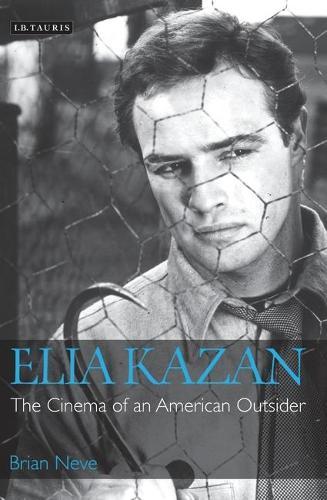
In 1999, Elia Kazan (1909-2003) received an honorary Oscar for lifetime achievement; it was a controversial award, for in 1952 he had given testimony to the HUAC Committee, for which he was ostracized by many. That Oscar also acknowledged Kazan's remarkable contribution to American and world cinema, making such films as ""On the Waterfront"" and ""A Streetcar Named Desire"". Kazan's life in the cinema is due a reassessment, one that is presented expertly and gracefully by Brian Neve in this book, drawing on previously neglected and some hitherto untapped sources. Focussing in particular on the producer-director's post-""On the Waterfront"", New York based independent work, and on his key artistic collaborations, including those with Tennessee Williams, John Steinbeck and Budd Schulberg, Neve gives a fascinating reassessment of Kazan's famed technique with such actors as Marlon Brando and James Dean, and his lifetime concern to provoke and photograph 'authentic' behaviour. He reveals a pattern, through the films, of personally resonant themes, relating for example to ethnicity and the American immigrant myth. He reviews Kazan's style, from the colour and wide screen of ""East of Eden"" to the creative use of location in his Amercian South films, including ""Baby Doll"". He debates the reception of Kazan's work and the controversy - which dogged his career - of his 1952 Congressional testimony. These elements and more make this a very readable and memorable, fresh portrayal of the film career of this ever fascinating director.
Full Product Details
Author: Brian Neve
Publisher: Bloomsbury Publishing PLC
Imprint: I.B. Tauris
Dimensions:
Width: 15.60cm
, Height: 2.80cm
, Length: 23.40cm
Weight: 0.558kg
ISBN: 9781845115609
ISBN 10: 1845115600
Pages: 264
Publication Date: 30 October 2008
Audience:
General/trade
,
General
Format: Hardback
Publisher's Status: Out of Print
Availability: Awaiting stock

Reviews
Elia Kazanâ' s reputation has been kicked around - since his controversial Life Achievement Award at the 1999 Academy Awards and his obituaries four years later - in ways which have seriously obscured an understanding of his work as a filmmaker. Brian Neve's book, by judicious use of archive material (notebooks, letters, scripts) and careful analysis of the films themselves as well as their critical afterlife, at last sets the record straight. The books sensitive treatment of the HUAC hearings of 1952, and well-informed analysis of such key films as 'Viva Zapata', 'On the Waterfront', 'Baby Doll' and the underrated 'The Arrangement', amount to a major critical achievement. 'Elia Kazan: The Cinema of an American Outsider' is less interested in settling old scores than in taking the work of this deep-thinking, driven artist - who made one big mistake in April 1952 - as seriously as it deserves - Christopher Frayling. Working with an impressively wide variety of archival material, including Kazanâ  s personal papers and notebooks, Brian Neve here offers a solidly researched, insightful, and historically grounded portrait of Elia Kazan, his working methods, his 19 feature films from 'A Tree Grows in Brooklyn' (1945) to 'The Last Tycoon' (1976), and his place in the cinematic and social world of his age - Chuck Maland, Professor of Cinema Studies & American Studies, University of Tennessee.
Elia Kazanâ' s reputation has been kicked around - since his controversial Life Achievement Award at the 1999 Academy Awards and his obituaries four years later - in ways which have seriously obscured an understanding of his work as a filmmaker. Brian Neve's book, by judicious use of archive material (notebooks, letters, scripts) and careful analysis of the films themselves as well as their critical afterlife, at last sets the record straight. The books sensitive treatment of the HUAC hearings of 1952, and well-informed analysis of such key films as 'Viva Zapata', 'On the Waterfront', 'Baby Doll' and the underrated 'The Arrangement', amount to a major critical achievement. 'Elia Kazan: The Cinema of an American Outsider' is less interested in settling old scores than in taking the work of this deep-thinking, driven artist - who made one big mistake in April 1952 - as seriously as it deserves - Christopher Frayling. Working with an impressively wide variety of archival material, including Kazanâ  s personal papers and notebooks, Brian Neve here offers a solidly researched, insightful, and historically grounded portrait of Elia Kazan, his working methods, his 19 feature films from 'A Tree Grows in Brooklyn' (1945) to 'The Last Tycoon' (1976), and his place in the cinematic and social world of his age - Chuck Maland, Professor of Cinema Studies & American Studies, University of Tennessee.
Elia Kazan��' s reputation has been kicked around - since his controversial Life Achievement Award at the 1999 Academy Awards and his obituaries four years later - in ways which have seriously obscured an understanding of his work as a filmmaker. Brian Neve's book, by judicious use of archive material (notebooks, letters, scripts) and careful analysis of the films themselves as well as their critical afterlife, at last sets the record straight. The books sensitive treatment of the HUAC hearings of 1952, and well-informed analysis of such key films as 'Viva Zapata', 'On the Waterfront', 'Baby Doll' and the underrated 'The Arrangement', amount to a major critical achievement. 'Elia Kazan: The Cinema of an American Outsider' is less interested in settling old scores than in taking the work of this deep-thinking, driven artist - who made one big mistake in April 1952 - as seriously as it deserves - Christopher Frayling. Working with an impressively wide variety of archival material, including Kazan������s personal papers and notebooks, Brian Neve here offers a solidly researched, insightful, and historically grounded portrait of Elia Kazan, his working methods, his 19 feature films from 'A Tree Grows in Brooklyn' (1945) to 'The Last Tycoon' (1976), and his place in the cinematic and social world of his age - Chuck Maland, Professor of Cinema Studies & American Studies, University of Tennessee.
Author Information
Brian Neve is Senior Lecturer in Politics at the University of Bath. He is the co-editor of 'Cinema, Politics and Society in America' (1986), author of 'Film and Politics in America: A Social Tradition' (1992, 2000) and an associate editor of the New York based film and politics quarterly 'Cineaste'.