Overview
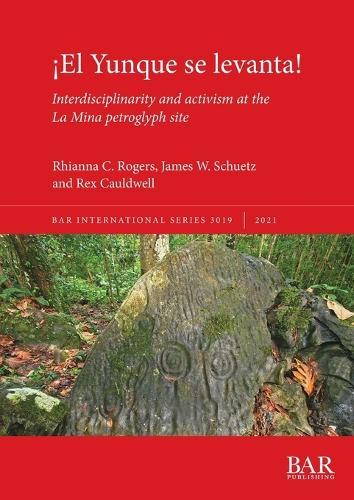
Archaeologists consider Puerto Rico a key geographical location for categorizing native occupations in the Caribbean. However, lack of funding, minimal focus on petroglyph research, and limited historical records has reduced Puerto Rico's contributions to the broader archaeological conversation. This book hopes to alleviate this issue through its interdisciplinary analysis of the La Mina site, a previously unrecorded petroglyph site near the El Yunque National Forest in Municipio de Naguabo, Puerto Rico. The authors' 2015 fieldwork consisted of a Phase I geological and archaeological survey and the cataloguing of Rex Cauldwell's longitudinal photographic study of the site (2006-2018), both of which included the documentation of dozens of previously unrecorded preTaíno/Taíno glyphs. In 2017-2018, they supplemented the initial fieldwork with additional ethnographic data, focusing on the aftermath of recent natural disasters and cultural unrest in the region.
Full Product Details
Author: James W. Schuetz ,
Rhianna C. Rogers ,
Rex Cauldwell
Publisher: BAR Publishing
Imprint: BAR Publishing
Weight: 0.479kg
ISBN: 9781407356433
ISBN 10: 1407356437
Pages: 120
Publication Date: 25 February 2021
Audience:
Professional and scholarly
,
Professional & Vocational
Format: Paperback
Publisher's Status: Active
Availability: Available To Order

We have confirmation that this item is in stock with the supplier. It will be ordered in for you and dispatched immediately.
Reviews
"'This report represents a significant contribution to Caribbean rock art research and its data set will provide the basis for further research in the La Mina region and can be applied for understanding trends in the greater Caribbean arena. The ""activist"" approach and application of data/findings is socially valuable and extends the scope and value of rock art research beyond academia.' Dr Gordon Ambrosino, Auburn University, Auburn, Alabama 'La Mina is clearly an important site and it is also clearly important to the prehistory of the Caribbean. The authors have done a very good job detailing the art in its environmental, cultural, and interpretative contexts. There are good descriptions, photographs, etc. of the rock art as well as the geological context. The methods employed provide key information that will be of great interest to Caribbean archaeologists generally, and rock-art researchers specifically.' Dr David W. Robinson, University of Central Lancashire "
'This report represents a significant contribution to Caribbean rock art research and its data set will provide the basis for further research in the La Mina region and can be applied for understanding trends in the greater Caribbean arena. The activist approach and application of data/findings is socially valuable and extends the scope and value of rock art research beyond academia.' Dr Gordon Ambrosino, Auburn University, Auburn, Alabama 'La Mina is clearly an important site and it is also clearly important to the prehistory of the Caribbean. The authors have done a very good job detailing the art in its environmental, cultural, and interpretative contexts. There are good descriptions, photographs, etc. of the rock art as well as the geological context. The methods employed provide key information that will be of great interest to Caribbean archaeologists generally, and rock-art researchers specifically.' Dr David W. Robinson, University of Central Lancashire
Author Information
Rhianna C. Rogers, PhD is an Associate Professor and Coordinator of the Global Indigenous Knowledge program at SUNY Empire State College. She is a Registered Professional Archaeologist (RPA) with over a decade of experience in academic and tribal archaeology as well has historical preservation and museum studies. Her research focuses on Indigenous peoples in the continental US, Mexico, Ecuador, and Puerto Rico. She is the author of From Ichcanzihoo to Mérida: Documenting Cultural Transition Through Contact Archaeology in Tíhoo Mérida Yucatán (BAR 2011). James W. Schuetz, P.G. is a geologist who specializes in remediation of complex industrial waste sites, geological mathematics, and fundamental geology. His twenty years of experience includes environmental consulting, water resources, and exploration. Jim's quest in life is to improve the world through geology, mentoring, and removing barriers between cultural institutions. Rex Cauldwell is an amateur archaeologist and member of the Asociación Internacional de Arqueología del Caribe (A.I.A.C.) with over 15 years of experience photographing and analysing artifacts of Puerto Rico and the Caribbean. His photographic study of the La Mina site (2006-2018) is the basis of this book and has been published in Ancient America Magazine.