Overview
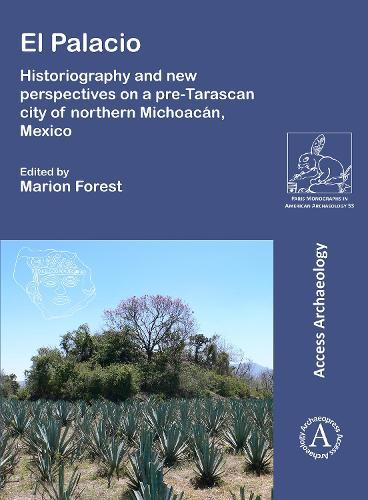
In the centuries that preceded the European conquest in 1521, the central-northern region of the state of Michoacán, West Mexico, was a place of significant socio-political changes materialized by important transformations of settlement pattern and material culture. The archaeological site of El Palacio (also known as La Crucita or Mich. 23), located in the Zacapu Basin, constituted a major center throughout these regional events. The site has been mentioned in the archaeological literature as early as the end of the nineteenth century, and dispersed subsequent research has documented changes in site morphology, function, and degree of integration into interregional networks of cultural interaction. The present volume offers the first monographic publication about El Palacio. It is composed of a series of eleven contributions looking at both legacy and archive data (1896–1995) and results derived from recent archaeological investigations (2012–2017). The systematic review and analysis of the chrono-stratigraphy, material culture, urbanism, and economic and ritual practices at the site yields critical information that allows discussion of the role of El Palacio and the context of its development at both local and extra-local scales, between A.D. 850 and 1521. Beyond this central concern, this volume provides extended material for cultural comparisons with West, Northwest and Central Mexico during this time period, as well as for broader discussions about the complex social mechanisms involved in the rise, transformation, and fall of premodern urban centers.
Full Product Details
Author: Marion Forest
Publisher: Archaeopress
Imprint: Archaeopress Access Archaeology
Edition: Bilingual edition
Dimensions:
Width: 20.30cm
, Height: 1.70cm
, Length: 27.60cm
Weight: 1.550kg
ISBN: 9781789697964
ISBN 10: 1789697964
Pages: 314
Publication Date: 26 November 2020
Audience:
Professional and scholarly
,
Professional & Vocational
Format: Paperback
Publisher's Status: Active
Availability: In Print

This item will be ordered in for you from one of our suppliers. Upon receipt, we will promptly dispatch it out to you. For in store availability, please contact us.
Language: English, Spanish
Reviews
El Palacio is valuable for specialists on West Mexico, but such readable and well-illustrated examples of so many methods and techniques would be highly satisfying for others too. The balance of content and the chapters' lengths and level of detail are very nicely judged. -- Nicholas James * Antiquity, Vol. 95 *
Author Information
Marion Forest received her PhD in archaeology from the University Paris 1 Pantheon Sorbonne and is currently a postdoctoral researcher at the Department of Anthropology of Brigham Young University. She specializes in urbanization processes in western and central Mexico. Her current research includes a survey and excavation field project at Teotihuacan and further developments in the integration of LiDAR data in archaeology.