Overview
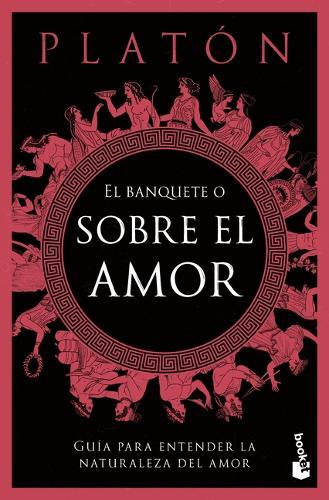
Un texto filosófico capital de la tradición occidental sobre un tema de interés universal e intemporal. «El amor es la producción en la belleza, sea por el cuerpo o sea por el alma.» El tema de este libro no podría tener mayor importancia en nuestras vidas y ser más universal: el amor. Las ideas surgen aquí en el contexto de una reunión de amigos, celebrada tras la cena, dedicada a beber y conversar. Conforme avanza la noche se suceden los parlamentos, y entre las ideas sugeridas sobre eros cabe señalar que trae la felicidad a los hombres, que une a los contrarios, que el amor implica el deseo de lo que es bello y bueno o que el hombre puede elevarse a través de él. El lector no solo descubrirá un texto de una gran hondura, lleno de intuiciones fulgurantes, sino que disfrutará de una obra de enorme altura literaria que ha tenido una influencia capital en la tradición filosófica occidental. ENGLISH DESCRIPTION A foundational philosophical text of the Western tradition on a subject of universal and timeless interest. ""Love is the production in beauty, whether through the body or through the soul."" The theme of this book could not be more important in our lives or more universal: love. The ideas emerge in the context of a gathering of friends, held after dinner, devoted to drinking and conversation. As the night progresses, speeches follow one another, and among the reflections on eros we find that it brings happiness to humankind, that it unites opposites, that love implies the desire for what is beautiful and good, and that through it, man can ascend. The reader will not only discover a text of great depth, full of brilliant insights, but will also enjoy a work of immense literary stature that has had a decisive influence on the Western philosophical tradition.
Full Product Details
Author: Platón ,
Carlos García Gual ,
Luis Roig de Lluis
Publisher: Planeta Publishing
Imprint: Planeta Publishing
ISBN: 9786076391655
ISBN 10: 6076391650
Pages: 144
Publication Date: 16 April 2026
Audience:
General/trade
,
General
Format: Paperback
Publisher's Status: Unknown
Availability: Available To Order

Limited stock is available. It will be ordered for you and shipped pending supplier's limited stock.
Language: Spanish
Author Information
Filósofo griego nacido en el seno de una familia aristocrática, Platón (427 a. C. - 347 a. C.) fue alumno de Sócrates y maestro de Aristóteles. Se dedicaba a la poesía hasta que conoció a Sócrates. A la muerte de este, comenzó una etapa de viajes, en los cuales conoció el pitagorismo, filosofía que tendrá una gran influencia en las teorías y el conocimiento de Platón. Desterrado en varias ocasiones por razones políticas, puesto que intentaba imponer su ideal filosófico en las ciudades, regresó a Atenas y fundó la Academia, donde estudió Aristóteles. Participó activamente en la enseñanza de la Academia y escribió sobre diversos temas filosóficos, especialmente los que trataban de la política, ética, metafísica y epistemología. El conjunto de las obras más famosas de Platón se han denominado Diálogos, debido a su estructura dramática de debate entre interlocutores. A diferencia de Sócrates, que no dejó obra escrita, los trabajos de Platón se han conservado casi completos y por ello se le considera el fundador de la Filosofía académica. Entre sus obras más importantes se cuentan: La República, filosofía política de un estado ideal; el Fedro, una compleja e influyente teoría psicológica, y el Timeo, ensayo de cosmogonía, cosmología racional, física y escatología, influido por las matemáticas pitagóricas. Greek philosopher born into an aristocratic family, Plato (427 BC - 347 BC) was a student of Socrates and teacher of Aristotle. He devoted himself to poetry until he met Socrates. After Socrates' death, he began a period of travels in which he encountered Pythagorean philosophy, which would greatly influence Plato's theories and knowledge. Exiled several times for political reasons, as he tried to impose his philosophical ideal in the cities, he returned to Athens and founded the Academy, where Aristotle studied. He actively participated in the teaching of the Academy and wrote on various philosophical subjects, especially those dealing with politics, ethics, metaphysics, and epistemology. Plato's most famous works are known as the Dialogues, due to their dramatic structure of debate between interlocutors. Unlike Socrates, who left no written work, Plato's writings have been preserved almost in their entirety, and he is therefore considered the founder of Academic Philosophy. Among his most important works are: The Republic, a political philosophy of an ideal state; Phaedrus, a complex and influential psychological theory; and Timaeus, an essay on cosmogony, rational cosmology, physics, and eschatology, influenced by Pythagorean mathematics.